
Do budget cuts equal cuts in safety enforcement?

There are several issues in the United Kingdom at the moment that could affect workplace safety, not including Lord Young’s OHS review.

Great Britain is to undergo enormous funding cuts to most of the civil service.  The Health & Safety Executive (HSE) is to have its budget cut by 35% according to the Trades Union Congress (TUC).

Another issue is that a TUC survey has found:

“Almost half (49%) of safety representatives said that as far as they know, a health and safety inspector has never inspected their workplace…”

The TUC says that the same survey indicates that the threat of inspection is a major motivator to OHS improvements.  In a media release on 1 November 2010 TUC General Secretary Brendan Barber said:
“Knowing that an inspector is likely to visit is one of the key drivers to changing employers’ behaviour and making the workplace safer and healthier.  It is a scandal that nearly half of workplaces in the UK have never been visited by a health and safety inspector.”
And those inspectors are most likely to come from the HSE .  Data from the HSE shows that the number of enforcement notices has hovered around 10,000 each year for the last decade.  The number of prosecutions over that time have steadily declined.
What is really required is the number of the inspections undertaken by the HSE but this information is not included in the latest annual statistics.
If safety improvements are made in businesses due to the threat of an OHS inspection by a regulators, how does the HSE plan to keep the pressure on when it will lose over a third of its budget? Continue reading “Do budget cuts equal cuts in safety enforcement?”
The asbestos Triffid goes national

The union campaign on the eradication of asbestos from the island of Tasmania has entered the national political arena in Australia.  On 29 October 2010, the Australian Minister for Workplace Relations, Chris Evans, announced that Geoff Fary, Assistant Secretary of the Australian Council for Trade Unions, will chair the newly established “Asbestos Management Review” (AMR).

The appointment and chairmanship are an acknowledgement that the trade union movement is the major advocate for occupational, public and environmental safety concerning asbestos in Australia.

Fary will be leaving his ACTU role in November 2010 to take up the new position.

One concern with the AMR, even in its early development is the task of raising awareness.  Chris Evans stated that:

“It is critical that we develop a comprehensive understanding of the scope of the problem and set clear targets as to how we address issues relating to awareness, management and removal of asbestos.”

There is the risk of inactivity on any issue that seeks to raise awareness.  As I wrote twelve months ago:

“The asbestos safety advocates should drop “awareness” from the week’s title because awareness equates to “aspirational targets”, former Prime Minister John Howard’s way of promising much and delivering nothing.  Just as everyone accepts that smoking causes lung cancer and climate change exists, people know that asbestos can kill.  Move away from awareness-raising to action.” Continue reading “The asbestos Triffid goes national”

Australian OHS expert in advisory role on Gulf oil spill

Australian Professor Andrew Hopkins is currently in the United States advising the Chemical Safety Board in its investigation of the Gulf of Mexico oil spill.

Several months ago it was rumoured that Hopkins would be part of the Commission of Inquiry, a rumour quickly denied by Hopkins and others.

According to a media release from FutureMedia, Hopkins will

“…spend several months working at the Board’s office in Denver as well as interviewing company managers in both the US and in London, where BP is headquartered.”

Hopkins has been interviewed by many media outlets in relation to the Gulf Oil Spill and BP’s safety culture due to his investigation of the Texas Oil Refinery explosion at a BP facility in 2005.  Continue reading “Australian OHS expert in advisory role on Gulf oil spill”

OHS in procurement guideline should be the start and not the end

The Chris Maxwell Report into OHS in Victoria is of historical interest now but one concept in particular from the report continues to echo in OHS and Government circles – government departments and authorities as exemplars of workplace safety.

The latest echo of this concept appeared in a WorkSafe Week seminar in Melbourne on 25 October 2010.  The seminar was to discuss the integration of OHS requirements in the procurement of construction services by government.

Maxwell said that

“…the Government as a whole can promote compliance, by being an exemplar of OHS best practice.  The public sector is a very large employer in Victoria and it should lead the way in OHS.”

and that

“…influence can be exerted by governments on dutyholders by making improved OHS performance a condition of eligibility for them to participate in government contract/tender processes.’

Maxwell’s statement came from the application of the parental question about leading by example, role model, “walking the walk”.  How can one expect contractors to operate safely if the client does not?  How can a parent expect good behaviour from children if good behaviour is not shown by the parent?

That government-as-OHS-exemplar continues to be discussed illustrates that the Maxwell statement must have had a considerable sting for government departments in Victoria. Continue reading “OHS in procurement guideline should be the start and not the end”

What academic qualifications are needed to be a safety professional?

The Safety Institute of Australia has been investigating the development of a “core body of knowledge” for OHS in Australia for some years.  Recently the institute released a discussion paper on the proposed accreditation idea for OH&S professionals.  There is some similarity to moves in other countries such as the UK and to the situation in Canada.  Regular contributor Col Finnie comments below:

“……after a read of [the SIA document I] got very confused.   As far as I can see the accreditation thing seems to not paying any regard to the VET (vocational education) sector, and all the OH&S related quals.   Before I make any comment on the proposed accreditation paper I thought I should look for some clarification from people who are more aware of the nitty gritty.  To that end I posted a topic on the SIA Educators forum [members only].   But to reach a bigger audience I have provided a reproduction of the SIA member’s forum post here.

It’s part question, part observation of what seems to be an anomaly in the way the accreditation conversation seems to be heading.  I’m keen to see what you people reckon.   Continue reading “What academic qualifications are needed to be a safety professional?”

Australian business is outraged over OHS changes but is it all piss and wind?

Australian business groups have written an open letter to the New South Wales Government protesting about the decision to continue with some OHS processes specific to New South Wales regardless of previous commitments to support the harmonisation of OHS laws.  As the letter was published as an advertisement  (Page 6 of  The Australian on 20 October 2010), it is not readily available online but the letter needs a little bit of deconstruction to better understand the politics and ideologies behind the letter and the business associations.

The letter says Australian industry signed on to the national harmonisation process because of the need for an effective way of improving safety, fair legal processes and national consistency.  Yes, to some extent but more often industry groups have been calling for a reduction of red tape for the purpose of reducing administrative costs.  Reducing the injuries and fatalities of workers is not the same as “improving the safety of Australia’s workplaces”.

The ideological gap is shown in the argument against the national imposition of “reverse onus of proof”.  The letter uses Victoria as an example of a jurisdiction without the reverse onus of proof and says

“Victoria, which was used as the model for the new national laws and which does not have union prosecutions or reverse onus, has between 30% and 50% better safety outcomes than NSW depending on the measurement used“. (my emphasis)

What is a “better safety outcome”?  Less deaths?  Less cost to business?  Is it fair to compare NSW to Victoria?  And can the variation in “safety outcomes” be directly related to reverse onus of proof?   Continue reading “Australian business is outraged over OHS changes but is it all piss and wind?”

Computer simulations of quad bike risks do not reflect reality

Guest contributor David Robertson discusses the  differences between risk simulations and real risk data in relation to quad bike safety:

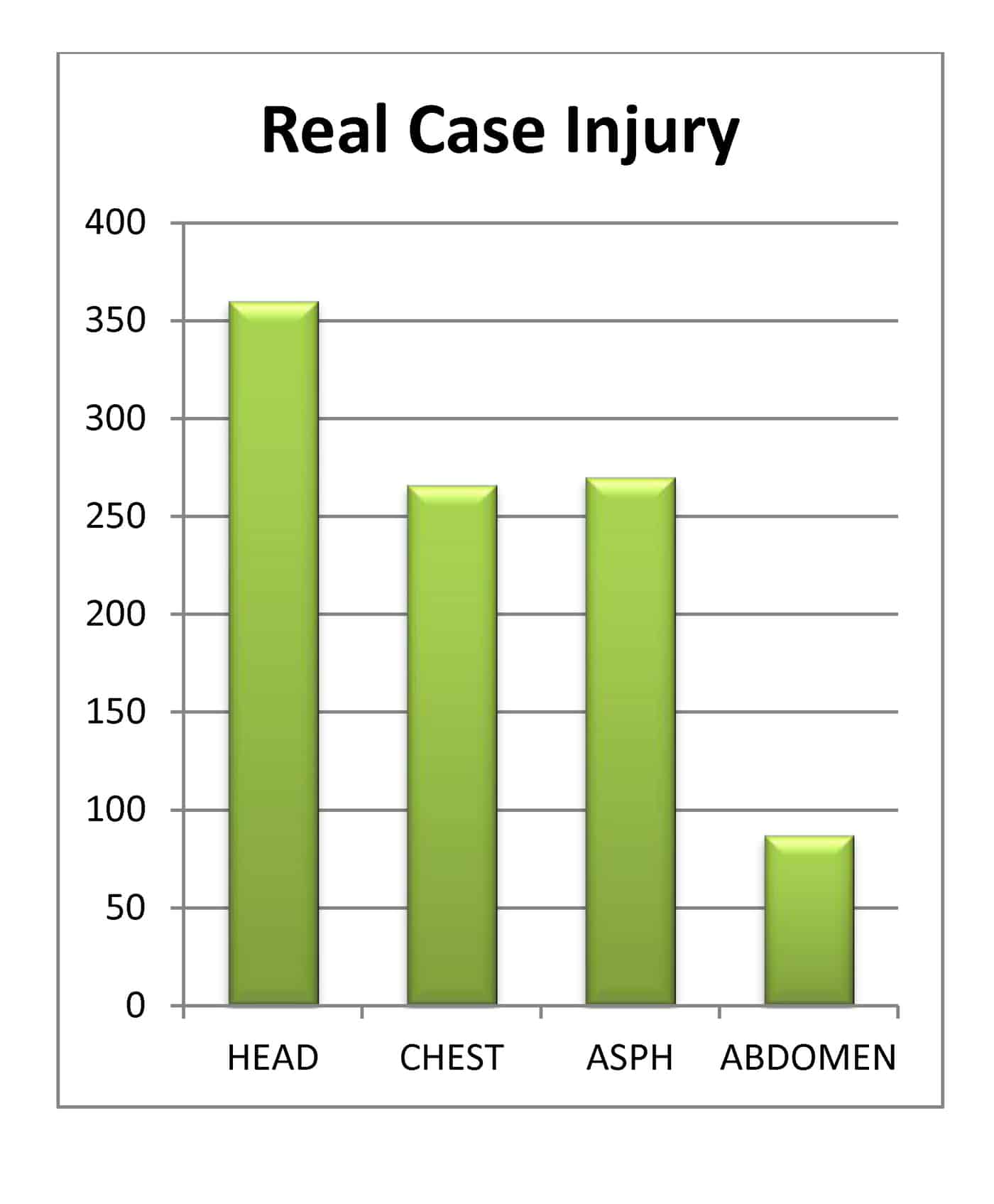
“The motion picture blockbuster “Avatar”, for the time we are in the cinema, would have us believe that Sam Worthington can turn into a giant blue man on a faraway planet.  James Cameron used computers to deliver us this illusion. In science (and particularly with safety) we must be able to distinguish between computers that are valuable tools and computers that don’t represent reality.  Dynamic Research, Inc.(DRI) chose 113 actual quad bike (ATV) accidents to simulate in a computer model.

The first table below shows the injuries DRI record as what really happened from all the 113 cases, but represented as approximate normalized injury cost (ANIC)*.   When DRI’s computer runs the same cases, one would expect a similar result.  The results are shown in the second table (ANIC), note the scale on the left has had to be changed (table 2 should be about 10 times taller if the same scale in table 1 was used) because head injuries rose from 360 points to well over 3000. Equally astonishingly is that abdomen injuries have vanished altogether and chest injuries dropped from 266 to a next to nothing (23). Asphyxiation was not even included in the computer model. Continue reading “Computer simulations of quad bike risks do not reflect reality”

Concatenate Web Development
© Designed and developed by Concatenate Aust Pty Ltd