BHP Billiton receives minimal OHS penalty – time for a new approach

Some time ago a penalty concept circulated in Australia where OHS penalties were implemented as a percentage of as company’s revenue or profit.  The concept gained renewed topicality in mid-July 2010 as BHP Billiton was penalised $A75,000 after the death of a worker, Scott Rigg. (Video report available)

The fine seems paltry for a fatality and more so when the company’s OHS record is taken into account.  As the video report states, BHP Billiton could have been penalised $A200,000 but even this is a relatively small fine for such a company.

The Australian Government has been willing to apply a 40% tax on the mining industry’s profits but is unlikely to apply a percentage penalty in relation to OHS.   Continue reading “BHP Billiton receives minimal OHS penalty – time for a new approach”

Psychological advice on handling people that is broadly applicable

The latest edition of Lawyers Weekly includes an article ostensibly about managing bullies in the legal profession written by psychologist, Dr Chris Day.  The article provides some general tips, though, that are useful to any of us who need to make decisions refreshingly she reflects two options that I offer to my OHS clients on safety matters that do not include bullying.  Dr Day says that any problem can be solved by these actions

  1. “Leave…
  2. Change the situation…
  3. Accept the situation…
  4. Do nothing….”

Leave and change are included in the OHS Hierarchy of Control under different terminology.  Doing nothing is advice that few OHS consultants will give but is a strategy that many small businesses apply.  Their risk management strategy is to press their luck and in some cases this can work.   Continue reading “Psychological advice on handling people that is broadly applicable”

Safety Cases must become a reality in the US

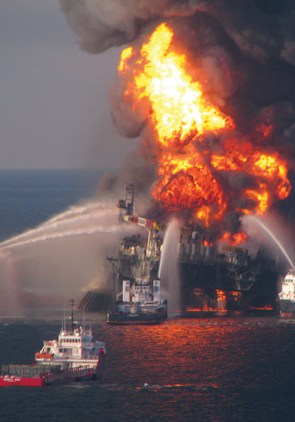
Some of the media, over the weekend, was critical of BP for not applying a Safety Case to the BP/Deepwater horizon oil rig.  The Safety Case is an established method of assessing risk in high-hazard organisations and should have been applied.  Whether such a technique would have made any difference is debatable as it is hypothetical.

Safety Case regimes have proven effective and are used as a default risk setting in many corporations but the story is not only one of a specific Safety Case missed opportunity.  BP is an example of corporate hypocrisy that supports the cynicism of the community to large corporations whose actions do not reflect their commitment. Continue reading “Safety Cases must become a reality in the US”

Apprentice set on fire, bully gets $5k penalty

Most of the Australian media covered the prosecution of the latest of three young men who set fire to a work colleague during their apprenticeships.

As the case was heard in a Magistrates’ Court, the only sources of information on the case are a couple of original media reports and the statement from WorkSafe Victoria which says:

“Matthew Lever, 23, was the third apprentice to be prosecuted after a January 2008 incident where three apprentice mechanics ignited brake-cleaning fluid which they sprayed on another apprentice….

The Ringwood Magistrates’ court today [1 July 2010] convicted Matthew Lever on three charges under the Occupational Health and Safety Act and fined him $5,000. The two other apprentices were convicted on health and safety charges in December 2008, and also fined $5,000 each.” [link added]

WorkSafe says it is “currently investigating a similar incident which occurred in Dandenong in March, where two apprentice mechanics suffered burn injuries after allegedly igniting brake fluid.” Continue reading “Apprentice set on fire, bully gets $5k penalty”

Another Australia emergency organisation faces bullying claims

Emergency service organisations, like the military, are susceptible to accusations of bullying due to the hierarchical command structure on which they are based. 

For decades this type of structure has been seen as a requirement for efficient emergency response or other activities under tight timelines and high expectations.  It would not take much to perceive one’s supervisor saying “move it, move it, move it” or similar, over time as a repeated insult and, being repeated, an instance of bullying.

The Australian Broadcasting Corporation (ABC) is reporting on claims by the former president of the Metropolitan Fire Brigade Board (MFB), Adrian Nye, who was stood down in April 2010.  The ABC says Nye has accused the MFB of having a culture of bullying. 

CEO Graeme Fountain has called in KPMG to investigate Nye’s claims.

There is sufficient evidence to suggest that the hierarchical command structure is no longer compatible with contemporary expectations of respect, health, safety or wellbeing.  Continue reading “Another Australia emergency organisation faces bullying claims”

An executive decision leads to over six deaths

“Don’t put all your eggs in the one basket”.  The first time we hear such a saying is likely to be from our parents or our grandparents but it could equally apply to all the applications of risk management.  Clearly someone at Sundance Resources forgot this wisdom when its board members boarded a plane in Africa to visit a mining site.  The plane crashed and all on board died.

The remaining Sundance executives quickly acknowledged the error in media conferences shortly after the incident even though the decision was understandable.  In safety and workplace parlance, the board took a “shortcut” in safety, an act that would have been soundly disciplined for most workers.

Everybody takes shortcuts at work and sometimes these shortcuts lead to injury or death.  It is easy to say that the cause of an incident is a specific decision, the shortcut but it was not only the Sundance executive’s decision that contributed to the death.  In this instance the board entered a plane that later fell from the sky.  If they had made the same shortcut but on a different plane the outcome would have been very different.

Deaths always have a context to them and present a variety of “what-ifs” when we investigate.  A specific combination of events/decisions/actions/shortcuts lead to a death.  The Sundance shortcut was clearly the wrong decision, at the wrong time, in the wrong place and with the wrong mode of transport but there are more contributory factors that will become evident when the wreckage is fully recovered. Continue reading “An executive decision leads to over six deaths”

New UK podcast on drilling regulation

HSE podcasts are almost always worth listening to.  The June 2010 podcast capitalises on the topicality of offshore oil drilling generated by the BP incident in the Gulf of Mexico.

The podcast is available for listening online

The important element of the podcast is whether such deepwater drilling incidents could occur elsewhere?  This is useful not only for the UK jurisdiction but for Europe and Australia.

The interview discusses the value of a “safety case” regulatory regime and the disadvantages of a prescriptive regime.

Interestingly the UK wells are individually notified to HSE almost a month before drilling is due to commence.  This allows for an assessment of the well design and structure prior to activation.

Clearly, this approach stems from the Piper Alpha explosion in 1988.  The BP Gulf incident can be considered the United States’ Piper Alpha.

It raises the question of did BP, an English company that should have been well aware of the usefulness of the safety case approach to drilling, apply a different approach to its Gulf drilling contractors to that applied elsewhere, and why?  Was BP really committed to “best practice” in safety, or as it called it “beyond the best“?

Concatenate Web Development
© Designed and developed by Concatenate Aust Pty Ltd