‘No Bystanders Rule’​ Bullshit

Guest Post by Dr Rebecca Michalak

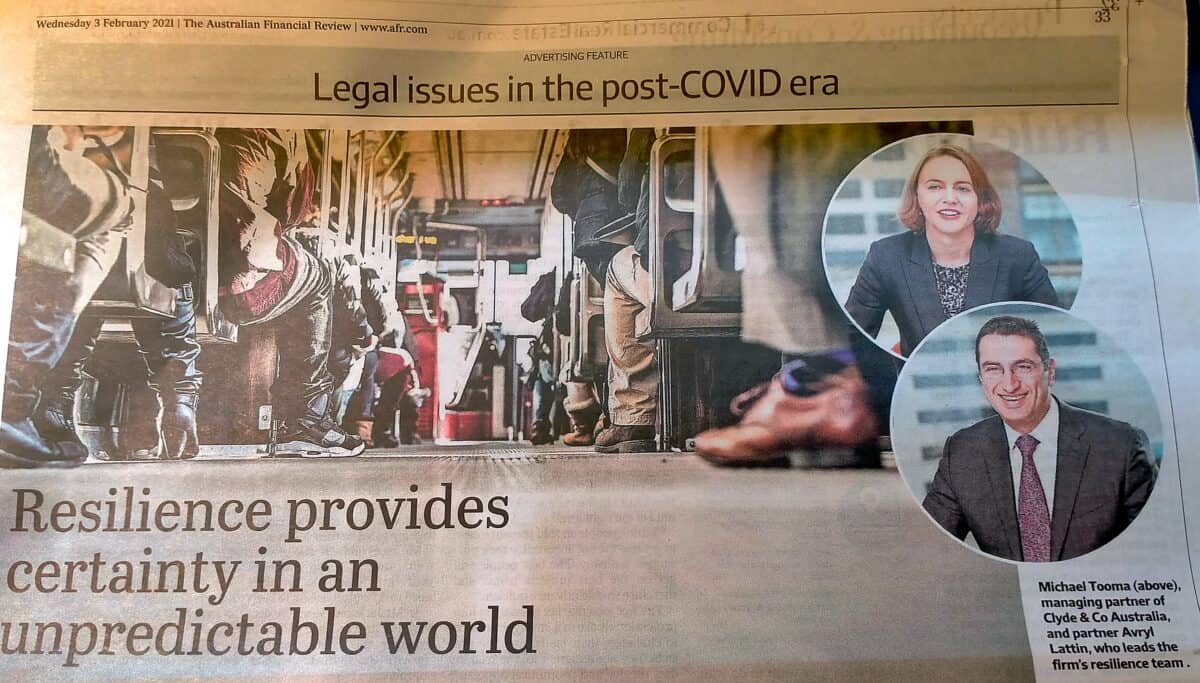
About couple of weeks ago, the Australian Financial Review (AFR) featured a piece on a law firm that had introduced a mandatory approach to reporting sexual harassment – referred to as a ‘no bystanders’ rule. 

To be clear upfront, here is my disclaimer – I am not directly commenting on the law firm in question; there isn’t enough information in the articles to make any objective judgements on that front. The references used from the two media pieces are for illustrative purposes only. Call them ‘conversation starters.’

In the AFR piece, the contractual obligation was outlined to involve: 

“…chang(ing) ‘should’ (report) to ‘must’ – so any staff member who experiences, witnesses, or becomes aware of sexual harassment must report it,” 

with the affiliated claim being,

“That shift really reinforces that there is zero tolerance – and there are no confidences to be kept; it needs to be outed – bystanders [staying silent] will no longer be tolerated.

Continue reading “‘No Bystanders Rule’​ Bullshit”

Behind the OHS words in Parliament

On December 11 2020, Senator Deborah O’Neill (ALP) (unsuccessfully) sponsored a motion that, amongst other things, called on the Government to act on the recommendations of the 2018 inquiry in to industrial deaths and the Boland Review, and to introduce Federal industrial manslaughter laws. That last request will probably never occur under a Conservative government, but does not need to for such laws to be introduced across Australia.

It is good that pressure on important occupational health and safety (OHS) matters is maintained, even if the motion was “negatived”. However, perhaps more interesting was a couple of statements that Senator O’Neill’s actions generated, one of which is deconstructed below.

Subscribe to SafetyAtWorkBlog to continue reading.
Subscribe Help
Already a member? Log in here

Federal leadership misses State action

Australia’s Industrial Relations Minister and Attorney-General, Christian Porter, has popped up on occupational health and safety (OHS) issues several times in the last few weeks. It is fair to say that each time he has not really shone, partly due to political ideology and partly due to constitutional structures. Some of these barriers, the Minister can address.

As mentioned recently, several food delivery drivers have died. Minister Porter was asked specifically about one of these deaths, that of Chow Khai Shien, in Parliament by the Australian Labor Party’s Josh Burns. Porter said that he had talked to representatives of the Transport Workers Union about this type of work, but:

“One of the things that we discussed in that meeting was the fact—that is acknowledged, I think, inside the union—that occupational health and safety for those drivers is, not just predominantly, but essentially, a state based responsibility.”

Subscribe to SafetyAtWorkBlog to continue reading.
Subscribe Help
Already a member? Log in here

Gig work changes that could save lives

The New South Wales government is conducting an inquiry into the gig economy, modern versions of precarious work. There has been five deaths of food delivery workers over the last few months and this has increased media attention on the Inquiry and the issues raised.

On November 28 2020, Joellen Riley Munton, Professor of Law at the University of Technology, Sydney spoke on the Australian Broadcasting Corporations’ AM Program. Out of all the recent media discussions on gig work, Munton’s seemed the most targeted on occupational health and safety (OHS).

Subscribe to SafetyAtWorkBlog to continue reading.
Subscribe Help
Already a member? Log in here

Thanks, but we need more

Statistics are vital to any decisions about occupational health and safety (OHS). Safe Work Australia (SWA) does a great job providing statistical packages based on the data sources it can access. Last week SWA released its 2019 report on “Work-related Traumatic Injury Fatalities” which identified vehicle collisions as, by and large, the most common cause of worker fatalities. This category may be a surprise to many readers but perhaps the most important part of the report is what is omitted.

Subscribe to SafetyAtWorkBlog to continue reading.
Subscribe Help
Already a member? Log in here

The black sheep of safety leadership

Western Australia’s Industrial Manslaughter (IM) laws are now in effect. The same arguments for and against were posed in Parliament and outside as they were in Queensland and Victoria, and the Australian Capital Territory well before that. The IM laws will face the same institutional hurdles to application and offer the same, nominal, deterrent effect.

But WA also prohibited insurance policies that cover the financial penalties applied by the Courts. Such policies may make good business sense in managing risk, but they also remove the pain and deterrence intended in the design and application of Work Health and Safety laws.

Subscribe to SafetyAtWorkBlog to continue reading.
Subscribe Help
Already a member? Log in here

Concussed sportspeople are workers too

David Michaels devoted a whole chapter to sport-related concussions and brain damage in his 2020 book “The Triumph of Doubt“. He wrote about how the National Football League obfuscated over the appearance of concussions and chronic traumatic encephalopathy, and how the the NFL downplayed the injury’s significance by referring to repeated head trauma as Mild Trauma Brain Injury.

The Australian experience is different and this was examined recently in an excellent edition of the ABC radio program, The Ticket. Significantly several interviewees mentioned the injuries in relation to occupational health and safety (OHS) and workers compensation.

Subscribe to SafetyAtWorkBlog to continue reading.
Subscribe Help
Already a member? Log in here
Concatenate Web Development
© Designed and developed by Concatenate Aust Pty Ltd