Political Science (finally) comes to OHS

Improvement in occupational health and safety (OHS) standards has always been the intention of OHS laws. Parallel to this is the intention of the OHS, and allied, professions to continuously improve health and safety through the prevention of harm. However, political leadership on OHS has been scarce over the last few years, especially in the national governments of the United Kingdom, the United States and Australia. So, it is necessary to look beyond the party politics to other sources of change.
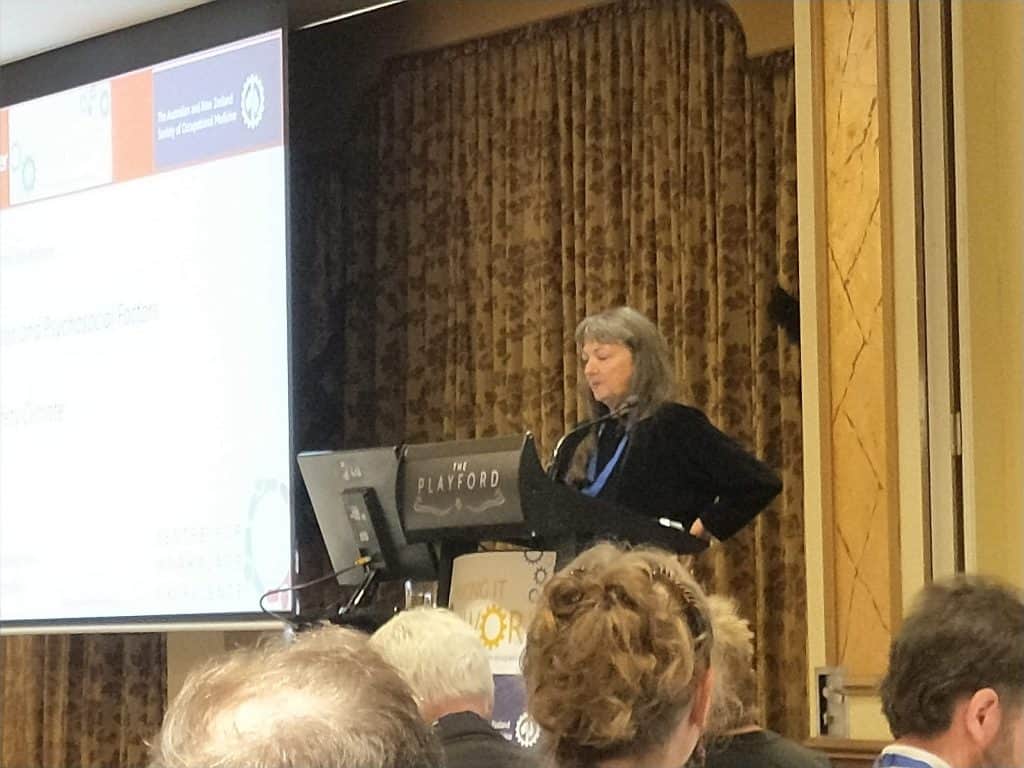
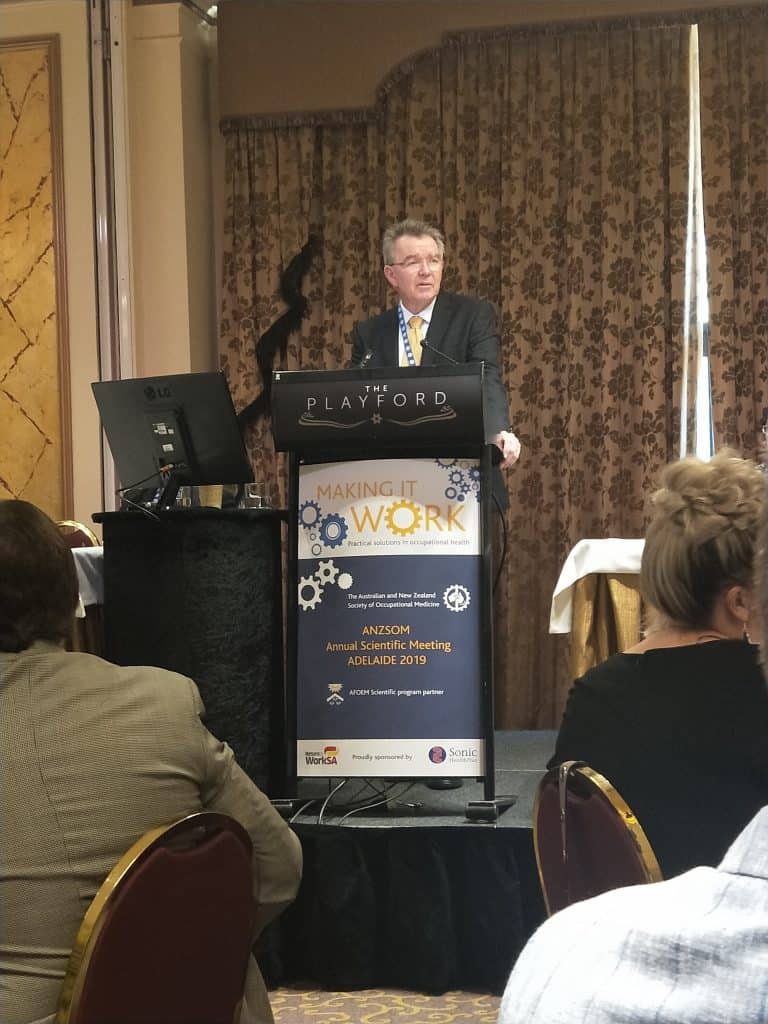
Professor Maureen Dollard speaking at the 2019 ANZSOM Scientific Meeting in Adelaide

At the recent scientific meeting of the Australia and New Zealand Society of Occupational Medicine in Adelaide, prominent academic, Professor Maureen Dollard, introduced a much- needed element of political science into her presentation which was titled “Work Organisation and Psychosocial Factors”. SafetyAtWorkBlog was able to ask Dollard, and fellow presenter Professor Sally Ferguson, about this political context.
Subscribe to SafetyAtWorkBlog to continue reading.
Subscribe Help
Already a member? Log in here

Innovation rather than complaints needed on safety

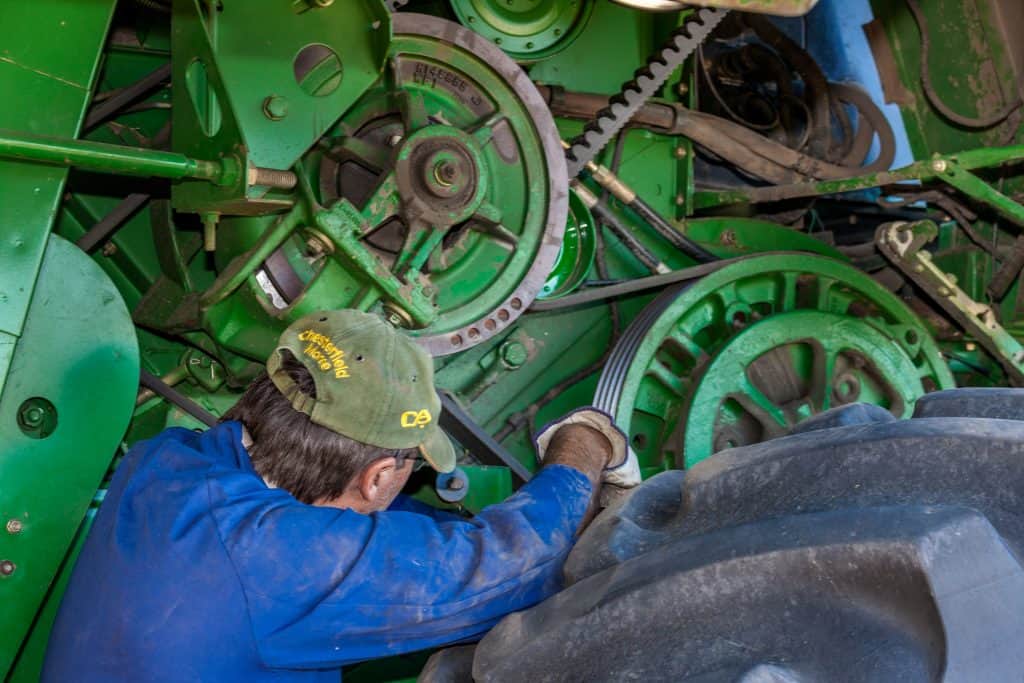
Moree, Australia – November 25, 2010: A farmer performs a maintenance routine on his John Deere combine harvester in Moree a major agricultural area in New South Wales, Australia.

The Victorian “Labor” Government has submitted its Workplace Manslaughter legislation to its Parliament. Debate is likely to begin, in earnest, from November 12, 2019. There were several surprises on which various business associations have expressed concerns, one surprise was that businesses seem to have been ignored by the government.

In many ways, the challenges are less about the legislation than what those business associations plan to do about occupational health and safety themselves.

Subscribe to SafetyAtWorkBlog to continue reading.
Subscribe Help
Already a member? Log in here

New book on a neglected area of OHS research

Helen Lingard and Ron Wakefield have published one of the few books to look at how occupational health and safety (OHS) is structured and managed in government-funded infrastructure projects in Australia. Their new book, “Integrating Health and Safety into Construction Project Management” is the culmination of over a decade’s research into this area. The book is both a summary of that research and a launching pad for designing OHS into future infrastructure projects.

Subscribe to SafetyAtWorkBlog to continue reading.
Subscribe Help
Already a member? Log in here

Silicosis – “we need to licence the industry and we need to regulate the product”

Last year the Scientific Meeting of the Australia and New Zealand Society of Occupational Medicine (ANZSOM) had a fiery discussion on the occupational health and safety (OHS) risks of cutting engineered stone.  The status has changed a lot over 12 months with various Codes of Practice, new exposure limits, a National Dust Disease Taskforce and lobbying from Erin Brockovich.  However the risk of worker exposure seems too have not changed this much because it is employers who are responsible for safe workplaces and there are many layers of OHS-related communication between research and practical application.

Dr Graeme Edwards (pictured above) spoke first in the ANZSOM panel on October 29 and he came out with all guns blazing.

“Prima facie evidence of system failure. That’s what accelerated silicosis means. It is an entirely preventable disease.”

Subscribe to SafetyAtWorkBlog to continue reading.
Subscribe Help
Already a member? Log in here

In cases of wage theft, who investigates the OHS issues?

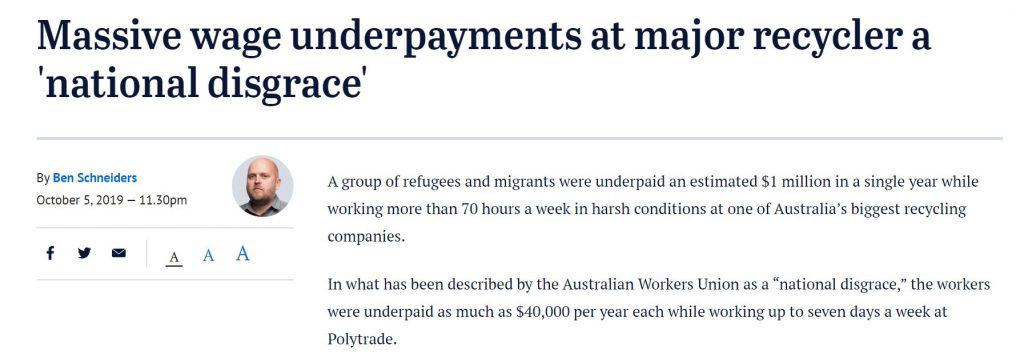
In August 2017, the ABC Four Corners program reported on the dysfunctional glass recycling industry. Following this various media looked at the issue and in September of that year, one recycler, Polytrade, allowed some media into their worksite. The focus was on the “recycling crisis” and occupational health and safety (OHS) did not get a look in but two years on and OHS is now mentioned, but perhaps not as prominently as it could be.

On October 5 2019, The Age newspaper reported on accusations by the Australian Workers Union that workers at Polytrade were underpaid around $40,000 each year. There are many elements to this story such as migrant workers, “wage theft”, which have tapped into topical issues of several years, but the health and safety of the workers has received much less attention.

Subscribe to SafetyAtWorkBlog to continue reading.
Subscribe Help
Already a member? Log in here

“We need to act together to help me get my act together”

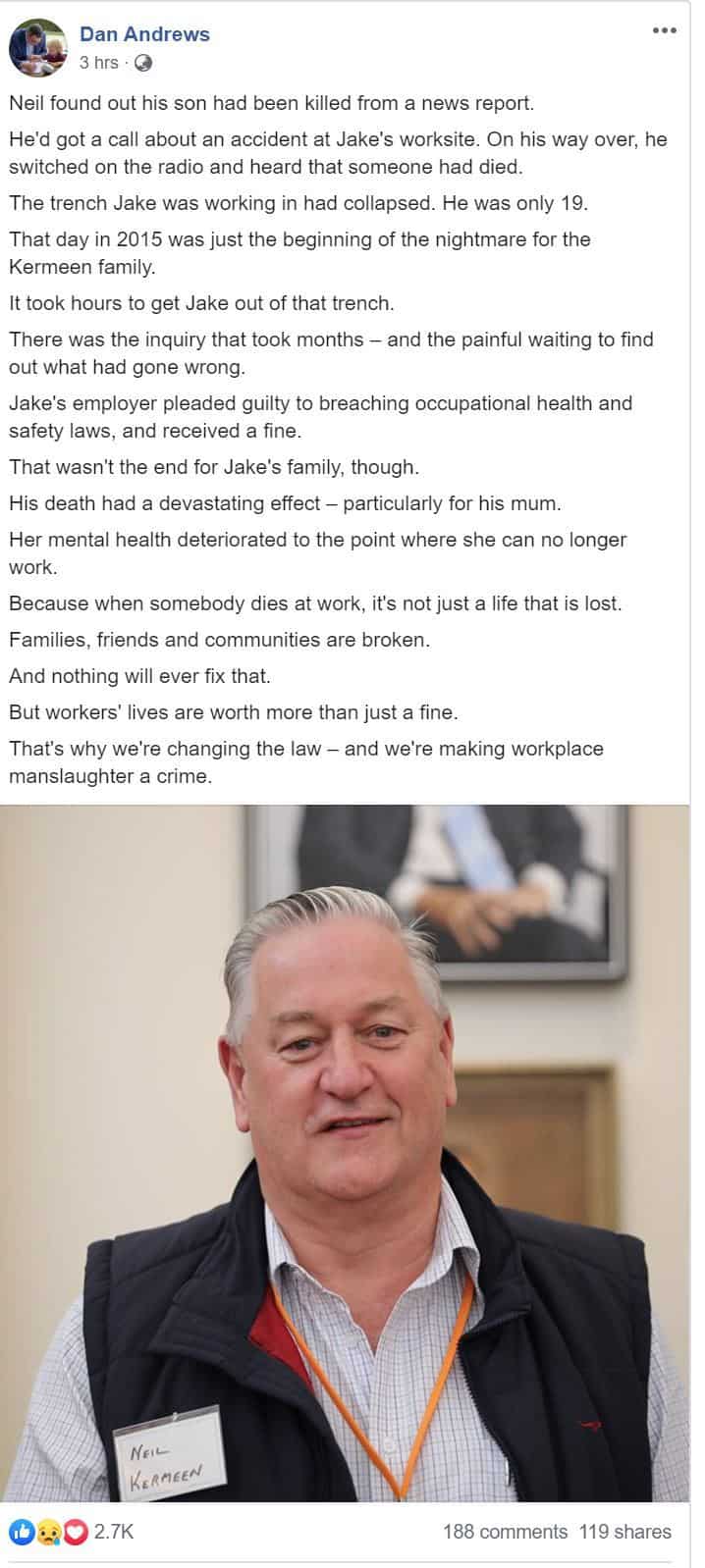
On October 21 2019, Victorian Premier Daniel Andrews posted on Facebook in support of his government’s move to introduce Industrial Manslaughter (IM) laws. He chose the death of Jacob Kermeen and its effect on the family in support of the need for these laws.

It is surely a coincidence that a fatality from a trench collapse was chosen for this exercise. Some of the leading advocates for IM laws are the relatives of two workers who died from a trench collapse in Ballarat in March 2018, a case being prosecuted by WorkSafe Victoria.

Subscribe to SafetyAtWorkBlog to continue reading.
Subscribe Help
Already a member? Log in here

One death may be too many, but it remains a prerequisite for Industrial Manslaughter laws

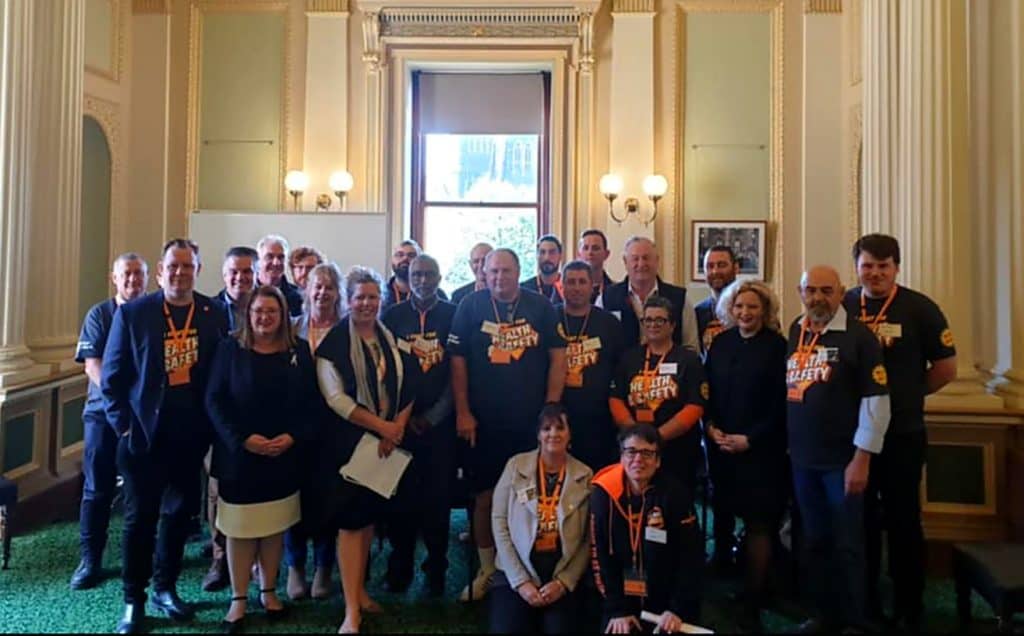
In Victoria there is much anticipation about the introduction of Industrial Manslaughter (IM) laws to the Parliament. Yesterday Minister for Workplace Safety Jill Hennessy and others hosted a meeting for some prominent IM advocates and trade unionists. Part of the reason for the meeting was that this week was the tentative date for the introduction of the IM laws to Parliament. The latest strong rumour is the Victorian Government has privately conceded that the Bill will not pass this year as expected and the Premier is moving to Plan B.

Subscribe to SafetyAtWorkBlog to continue reading.
Subscribe Help
Already a member? Log in here
Concatenate Web Development
© Designed and developed by Concatenate Aust Pty Ltd