SWMS deficiencies are symptoms of bigger OHS challenges

The use and abuse of Safe Work Method Statements (SWMS) has been researched in Australia for several years. SafetyAtWorkBlog has seen a copy of an unreleased report prepared for Safe Work Australia that identifies major problems with the use of SWMS but that makes recommendations which seem unlikely to achieve the level of change required.

The  February 2017 report “The Efficacy of Safe Work Method Statement and WHS Management Plans in Construction” (written by

Subscribe to SafetyAtWorkBlog to continue reading.
Subscribe Help
Already a member? Log in here

Grenfell Tower and other incidents illustrate major deficiencies in OHS perceptions

A recent investigative report into workplace safety at Los Alamos laboratory in the United States included this statement:

“The Center’s probe revealed worker safety risks, previously unpublicized accidents, and dangerously lax management practices at other nuclear weapons-related facilities. The investigation further found that penalties for these practices were relatively light, and that many of the firms that run these facilities were awarded tens of millions of dollars in profits in the same years that major safety lapses occurred. Some were awarded new contracts despite repeated, avoidable accidents, including some that exposed workers to radiation.”

The whole article deserves reading but this paragraph in particular illustrates that deficiencies in procurement apply to large organisations in high risk sectors just as much as it can in the small to medium-sized business sector.  A major reason is that detailed and diligent procurement has been seen as red tape and it seems to have taken disasters like Grenfell Tower to illustrate the moral deficiencies and short-term economic fantasies of

Subscribe to SafetyAtWorkBlog to continue reading.
Subscribe Help
Already a member? Log in here

Real men and work-related suicide

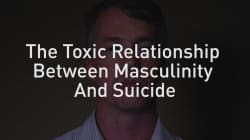
Recently Huffington Post Australia posted a video about male suicides called “Men are killing themselves to be real men”.  Many of the speakers talked about their experiences at work or with work.  The video is highly recommended.

SafetyAtWorkBlog had the opportunity to talk with the Associate Video Editor, Emily Verdouw. Below is an edited transcript.

Subscribe to SafetyAtWorkBlog to continue reading.
Subscribe Help
Already a member? Log in here

safetyculture clarifies its approach to SWMS

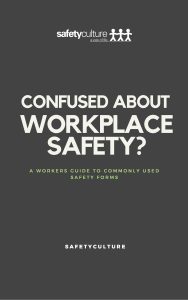
On May 1 2017 safetyculture released an e-book called “Confused about Workplace Safety?” intended to address questions commonly asked of them.  The topic of most interest is their advocacy of Safe Work Method Statements (SWMS), an activity discussed earlier by SafetyAtWorkBlog.

safetyculture states up front that SWMS are for “high risk construction work” as defined by occupational health and safety (OHS) legislation and lists the activities that make up high risk construction work. But then poses a confusing question:

“So why did my principal contractor request that I supply a SWMS for the plastering or turf laying job I just did?”

Subscribe to SafetyAtWorkBlog to continue reading.
Subscribe Help
Already a member? Log in here

Hi-viz and safety – it’s all about the context

High visibility clothing has spread from the work site to the public arena and, as such, has complicated the reasons for hi-viz clothing.  However the fundamental underpinning of high-viz is to contrast against the surrounding environment. This contrast does not only relate to clothing but also signage.

Several years ago, a couple of women from Tasmania visited the offices of SafetyAtWorkBlog to discuss the practicality of hi-viz vests for toddlers and small children.  The hi-viz logic of the work site is easily applied to the public park or farms.  A contrasting colour to the trees or bushland would make it easier to identify someone, like a wayward child.  On a work site, the hi-viz is more about identifying a hazard, whether that be a person, an overhead wire or a work boundary.

Subscribe to SafetyAtWorkBlog to continue reading.
Subscribe Help
Already a member? Log in here

Practicable or practical – let’s call the whole thing off

Jargon can help create a subculture.  This can be positive for those on the inside but relies on excluding others.  Occupational health and safety (OHS) is no different and one of the best illustrations of OHS jargon is “practicable”.  This was emphasised recently in a document released by WorkSafe WA where “practicable” had lost out to “practical”.

The guidance also omitted the duties of builders for the health and safety of those affected by their work.

Subscribe to SafetyAtWorkBlog to continue reading.
Subscribe Help
Already a member? Log in here

Poor worker safety through gov’t disinterest and high unemployment

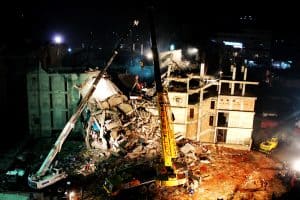
Dhaka, Bangladesh – April 29, 2013: A view of collapsed Rana Plaza building in Bangladesh. Over 1,130 workers of apparel factories were killed and 2500 others were injured when the eight-storey factory build collapsed on the outskirts of Bangladesh capital Dhaka in 2013. Bangladesh is one of the major countries supplying ready-made garments to leading apparel brands of USA and Europe. Bangladesh also earns over US$ 28 billion a year by exporting apparel items.

The current edition of SouthAsia magazine has a short report on occupational health and safety (OHS) in Bangladesh that illustrate the political and social challenges for workers and citizens in a country. The article, “Poor Workplace Safety” (not available online) states that government data for 2016 list more than 1,225 workers killed and over 500 injured.  After these figures, and the fact that Bangladesh has a history of  catastrophic workplace disasters, the author, Mohammad Waqar Bilal, states

“In fact, the issue of workers’ safety has never been considered by the government on a priority basis.”

Continue reading “Poor worker safety through gov’t disinterest and high unemployment”

Concatenate Web Development
© Designed and developed by Concatenate Aust Pty Ltd