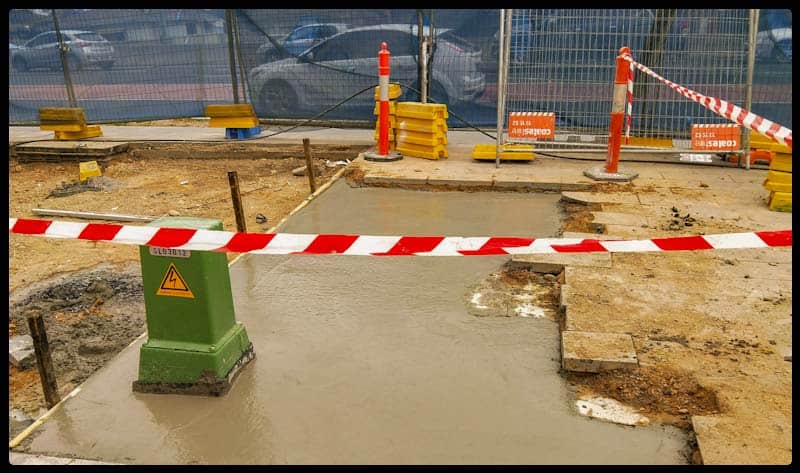
In November last year, Pipecon was found guilty of breaching its occupational health and safety (OHS) duties concerning the deaths of two of the company’s workers in and from a trench collapse. An offence to which the company pleaded guilty. (Details of the incident and prosecution can be found HERE – search for Pipecon). The Ballarat Council has awarded the company a road construction project valued at over $2 million. Should the Council have done so? How does this decision affect the deterrence message that OHS prosecutions are supposed to generate? What does this say about the criteria used in procuring services?
Category: construction
Lymph v Blood – OHS at the Jobs & Skills Summit
If Industrial Relations is the lifeblood of the economy and the nation, then Occupational Health and Safety (OHS) is the lymphatic system, a less well-known supplementary system without which blood circulation fails and the body stops working.
Australia’s Job and Skills Summit that has just concluded focused on the blood. Media analysis offered mixed interpretations. The event was politically stage-managed with many agenda items pre-prepared for the Summit to confirm, but it was not a worthless gabfest, as some (who chose not to attend) have asserted. On the matter of occupational health and safety, there was one new initiative but most of the OHS change, if any, is now more likely to come through the (wellbeing) budget in October.
Evidence provided for structural change in construction safety management
In July 2022, RMIT University release a three-part series on physical and mental health in Australia’s construction industry consisting of Evidence, Exploration and Evaluation. By themselves, they make a strong case for structural reform of the construction sector to improve workers’ mental and physical health.
Silicosis risk controls exempted for the moment
In 2019, Dr Graeme Edwards said this of the cutters of engineered stone:
“We can’t just rely on the industry to self-regulate. We need to licence the industry and we need to regulate the product….. If we can’t do this, [banning] is a realistic option.”
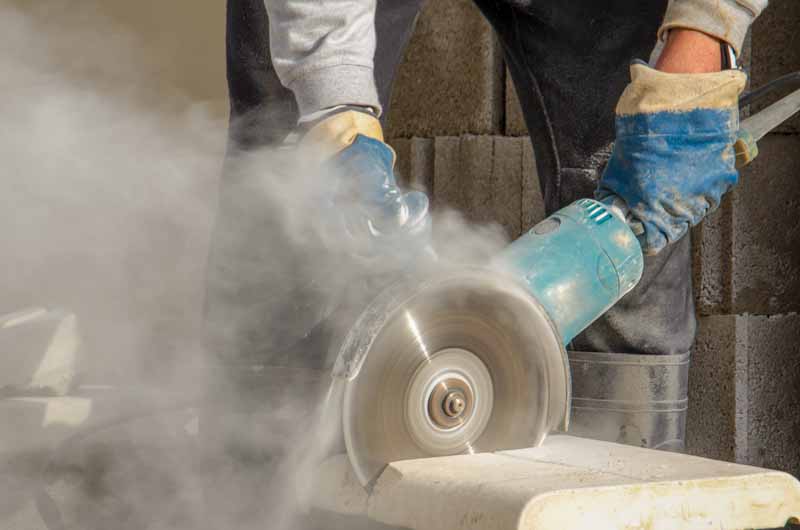
Recent research commissioned by the Australian Council of Trade Unions (ACTU) and conducted by Curtin University seems to support a ban on the import of engineered stone products with such a high level of silica that cutting them, without suitable controls, can lead to silicosis.
A new, safer work schedule or continuing employer “flexibility”?
SafetyAtWorkBlog has kept a watching brief on the Australian construction industry and its attempts to improve its workplace culture. On the initiative of no weekend work, there seems to be some dissatisfaction from Brookfield Multiplex, even though that company is a “contributing member ” of the Construction Industry Culture Taskforce (CICT), which advocates for no weekend work and a cap of 50 hours.
Federal Safety Commission embraces mental health
The Office of the Federal Safety Commission is a weird beast. It originated from Royal Commission in the Building and Construction Industry which many at the time and since saw as a politically motivated exercise. But whereas the Australian Building and Construction Commission which also originated in the Royal Commission, is mired in political and media back and forth, the OFSC has remained relatively clean. This may illustrate the difficulty of arguing against workplace health and safety even when the Commission has a fair bit of safety clutter.
Recently the OFSC joined the workplace mental health movement, a legitimate occupational health and safety element. It will offer little that is new, but the results of its November 2021 member survey do provide a useful insight into the major construction projects and contractors.
Progressive report on construction industry culture
An analysis of the safety culture in Australia’s construction industry was launched in October 2021 by a coalition of construction companies under the Construction Industry Culture Taskforce rubric. The Report proposes some interesting and significant changes including capping the working hours to no more than 50 hours and no weekend work. This suggestion is of enormous significance as it challenges the statements of many construction companies of worker safety being their highest priority.