
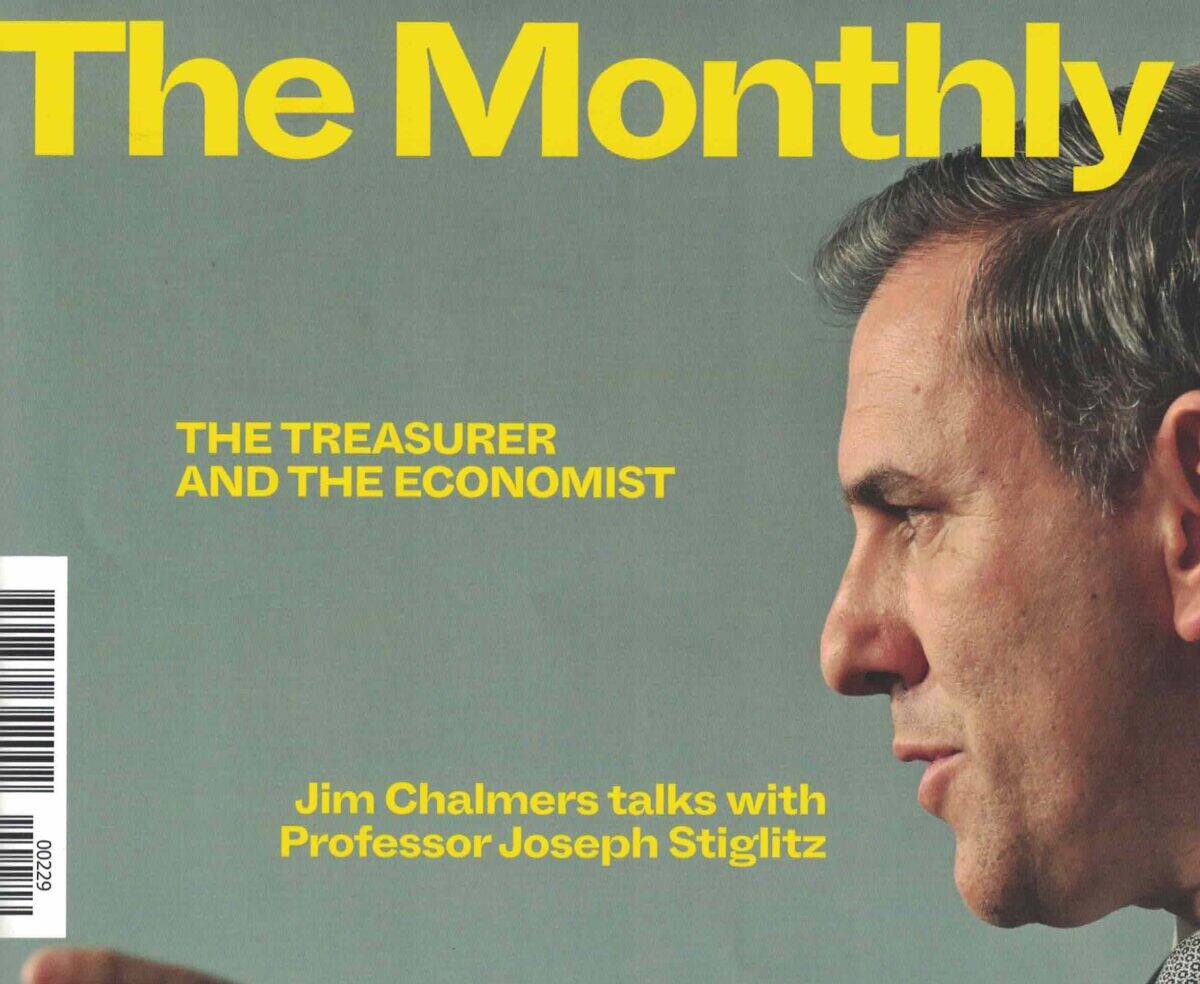
Australian Treasurer Jim Chalmers and economist and Nobel Laureate Joseph Stiglitz are old friends. One of their conversations was turned into the lead article in the February edition of The Monthly (paywalled). Several of their thoughts impinge on how occupational health and safety (OHS) laws are applied and may be reformed.
Category: corporate social responsibility

Why Global Initiatives Won’t Prevent Workplace Harm
Every few years, a new global initiative arrives promising to reshape corporate behaviour. The Sustainable Development Goals (SDGs) were meant to align business with human well-being. The Global Reporting Initiative (GRI) promised transparency. ESG (Environmental, Social and Governance) reporting was sold as the market‑friendly mechanism that would finally make corporations care about people and the planet.
Yet here we are, decades into these frameworks, and the pattern of harm inside workplaces looks remarkably familiar. Catastrophic failures still occur in companies with immaculate sustainability reports. Precarious work continues to expand. Psychosocial harm is rising, not falling. And the gap between what corporations say and what they do has never been wider.
The uncomfortable truth is that these global initiatives are not designed to prevent harm. They are designed to signal responsibility without redistributing power. And harm prevention, as we know from decades of occupational health and safety (OHS) experience, is fundamentally a question of power.

Unsafe Back Then, Unsafe Now. Why Leadership Must Change
To truly understand occupational health and safety (OHS) issues, it is necessary to examine OHS concerns beyond one’s own industry. Recently, this blog has reported on some parliamentary debates on OHS in the horse racing industry. The November edition of The Monthly includes an exposé of the OHS of Australia’s horse racing industry by freelance writer, Madison Griffiths, with lessons for all of us on morality, Godliness, accountability and leadership. The article is paywalled but well worth the purchase.

Australian Football Needs Better Workers Compensation
[Guest post by Eric Windholz]
Last week I again had the pleasure to contribute to the Headfirst: A Concussion Podcast, this time talking about recent developments concerning the compensation of athletes (and in particular, AFL (Australian Football League) players) suffering concussion. The key takeaway – the more things change, the more they stay the same.
Continue reading “Australian Football Needs Better Workers Compensation”
OHS questions to ponder
When wearing a motorcycle helmet and motorscooting to and from the office, I (too?) often think about occupational health and safety (OHS) while, of course, being situationally aware (mostly). It is not quite the same as an isolation tank that turned William Hurt into a caveman and a blob, but the quiet allows contemplation.
Below are some of the questions and thoughts from those sessions. Usually, these percolate for a few weeks into a blog article, but I would appreciate readers’ and subscribers’ thoughts. A prize or reward will be sent to the most engaging subscriber.

OHS context in many mainstream news stories, if you look
Occupational health and safety (OHS) is rarely reported on in the mainstream newspapers but every week OHS is there, adding a contect to a scandal or subtext to a public health risk. Last weekend was no different. The Guardian of September 16, 2023 reported on a review of personal relationships by BP, a prison escape, deaths from air pollution, a more relaxed approach to work, shoplifting and customer aggression, and more.

Is the OHS role in ESG overstated?
The March 2023 edition of Professional Safety, the journal of the American Society of Safety Professionals, included a lead story about the safety professional’s role in ESG (Environment Safety and Corporate Governance) strategies. Its perspective was a little unclear and was based on many assumptions.
One of the problems with the article is the assumption that the occupational health and safety (OHS) professional has a large influence over the decisions of the business. That is rarely the case, and there are many instances of OHS being sidelined or compartmentalised by structural and reporting lines and the exclusion of OHS from key decision forums like Board Meetings. So does OHS have a role and to what extent?