

Wade Needham provides his personal responses to a series of questions regarding psychosocial hazards, offering a fresh and more corporate perspective. This continues the series of articles based on speakers at the recent Psych Health and Safety conference.
Category: culture

Psych Health and Safety Conference 2025: A Step Forward
The 2025 Psych Health and Safety (PHS) Conference, held in Sydney and hosted by FlourishDx, marked a significant evolution from its inaugural event. With over 200 delegates, a larger venue, enhanced facilities, and a more polished exhibition space, the conference built on its foundational success. Centred around four key themes—evidence-based practice, leading mentally healthy workplaces, inclusive work design, and international perspectives—the event delivered a robust platform for professionals from occupational health and safety (OHS) and human resources (HR) to converge on the critical topic of psychosocial health and safety.

NZ OHS reform is all sticks and carrots of questionable quality
Recently, New Zealand’s Minister for Workplace Relations and Safety, Brooke Van Velden, was interviewed for almost half an hour by Jack Tame on her government’s proposed changes to occupational health and safety (OHS) laws. The interview was informative and entertaining, as it explained some aspects of the OHS changes, but also showcased a Minister who was uncomfortable with being questioned.
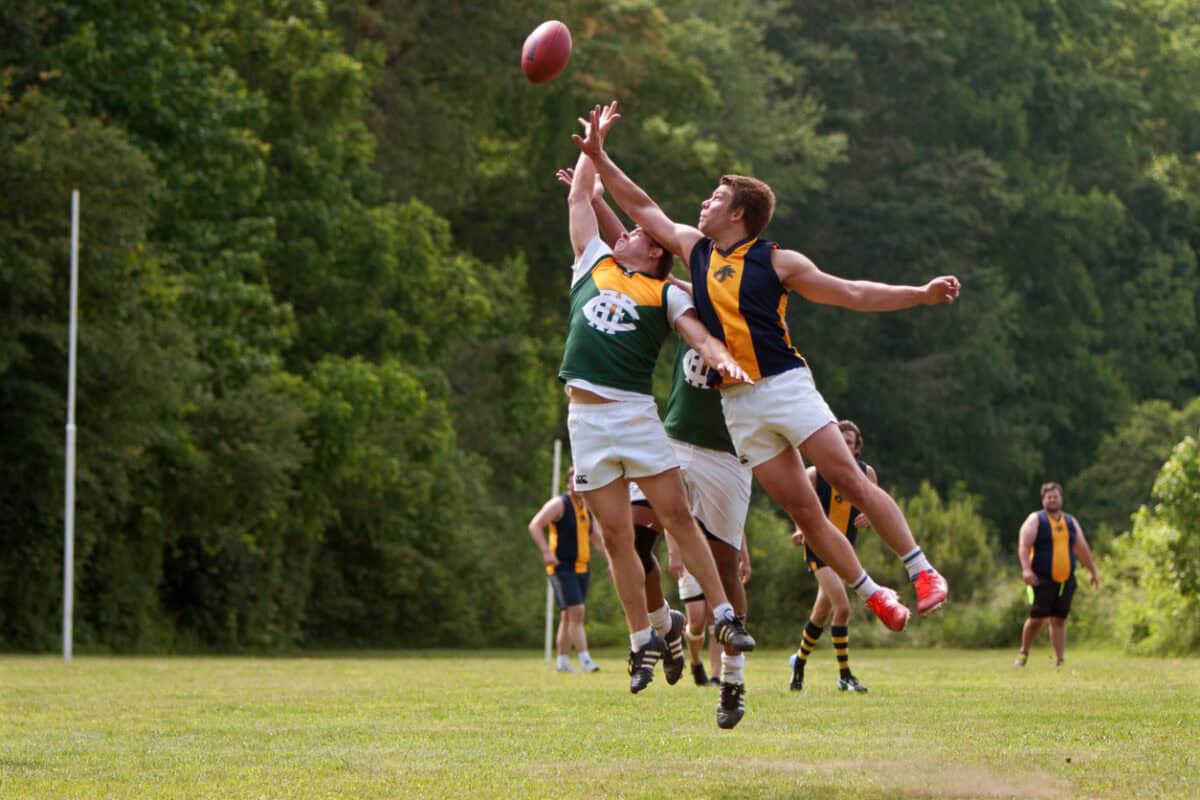
Poor footballer mental health may be a symptom of CTE, but it is the risk of CTE that should be prevented
The concussion risks of sportspeople continue to appear in the media and popular discussions after every suicide, death, or retirement of sportspeople who play contact sports. Recently, Alan Pearce, Professor, Adjunct Research Fellow, School of Health Science, Swinburne University of Technology, wrote an opinion piece for The Australian newspaper (paywalled) that touched on some occupational health and safety (OHS) themes that deserve expanding.
[This article discusses suicide]

Andrew Hopkins article translated for Gen Alpha
Last week, I wrote an article about Andrew Hopkins’ new safety leadership book about Boeing’s management style. It was a popular article, but this last weekend I wondered if I was talking about it in a way that failed to engage with younger readers and potential subscribers. So I asked an Artificial Intelligence program to translate the Hopkins article into language commonly used by Generation Alpha. Below is that translation (some I don’t understand), which offers an interesting linguistic contrast.
New Book Alert: Andrew Hopkins Just Called Out the Corporate Safety Scam 🚨
Andrew Hopkins just dropped a new book, and it’s basically him going full savage on how modern companies—especially Boeing—put profits over people. It’s short (only 81 pages), but it hits HARD. Like, “how did we let this happen?” hard.
Outcomes of an agriculture OHS roundtable
New South Wales recently ran its annual roundtable for the agriculture sector, focusing on workplace health and safety. A joint media release from the Ministers for Agriculture and Work Health and Safety, Tara Moriarty and Sophie Cotsis, respectively, acknowledged that:
“Agriculture remains one of Australia’s most dangerous industries, with consistently high rates of workplace fatalities and serious injuries. In 2024, SafeWork NSW responded to 12 workplace fatalities in the agricultural industry in NSW.”
But what was the outcome of the roundtable?

Acknowledgement of safety
Australia is in federal election mode so new political statements are emerging daily. Recently controversy has arisen about the inclusion of Welcome to Country at non-major events. Many organisations lead their meetings with an Acknowledgement of Country which acknowledges the historical ownership of Australia by its indigenous populations.
Recently while reflecting on the International Workers Memorial Day, occupational health and safety (OHS) professional, Tim Allred, has suggested that the role of an “acknowledgement” could add meaning in other circumstances, such as in relation to workplace fatalities.