
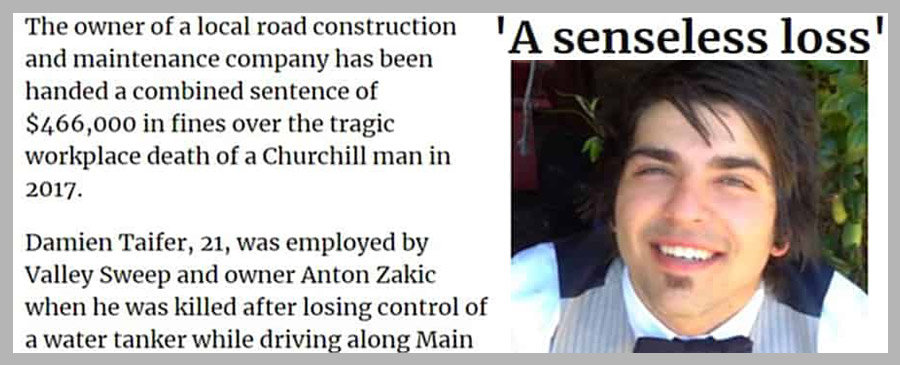
Well before the push for Industrial Manslaughter laws was the occupational health and safety (OHS) offence of “reckless conduct”. A media report from the LaTrobe Valley Express recently showed how one employer’s neglect of basic safety practices and processes resulted in the death on 21-year-old Damien Taifer.
Category: death

What the judge said about Dreamworld, other than the penalty
Some readers raised eyebrows on the article titled “No lessons in the Dreamworld penalty” but the point was that the occupational health and safety (OHS) due diligence and governance lessons were there months ago following the Coroner’s damning findings.
Most of the media’s attention has been on the record size of the financial penalty but looking at Judge Dowse’s decision in the case provides a better understanding of that penalty, the breaches of the safety legislation and the opinions of the judge.
No lessons in the Dreamworld penalty

The iconic Australian theme park, Dreamworld, will never fully recover from the consequences of the deaths of four people after the Thunder River Rapids ride malfunctioned in 2016. The legal journey through the Queensland Courts finished on September 28 2020 with the handing down of a financial penalty of $3.6 million, although others could say the journey ended with the parent company’s, Ardent Leisure’s, plea of guilty, and others may pursue Ardent Leisure for civil penalties, if they can access details of Ardent Leisure’s insurance policies.
Premier Andrews and Industrial Manslaughter becoming a conspiracy
The pursuit of Victorian Premier Daniel Andrews for Industrial Manslaughter (IM) over the spreading of COVID19 from quarantine hotels is developing into a conspiracy if a recent interview with Federal politician, Barnaby Joyce, is any indication.
Previous SafetyAtWorkBlog articles have discussed the opinions on Andrews and Industrial Manslaughter espoused by journalist Robert Gotttleibsen and Ken Phillips. On television on September 28, 2020, breakfast television’s Sunrise program interview the National Party’s Joyce and the Australian Labor Party’s, Joel Fitzgibbon. Host, David Koch, asked Joyce about the resignation of Victoria’s Health Minister Jenny Mikakos over the Hotel Quarantine issues, and Joyce floridly replied:
Industrial Manslaughter frenzy
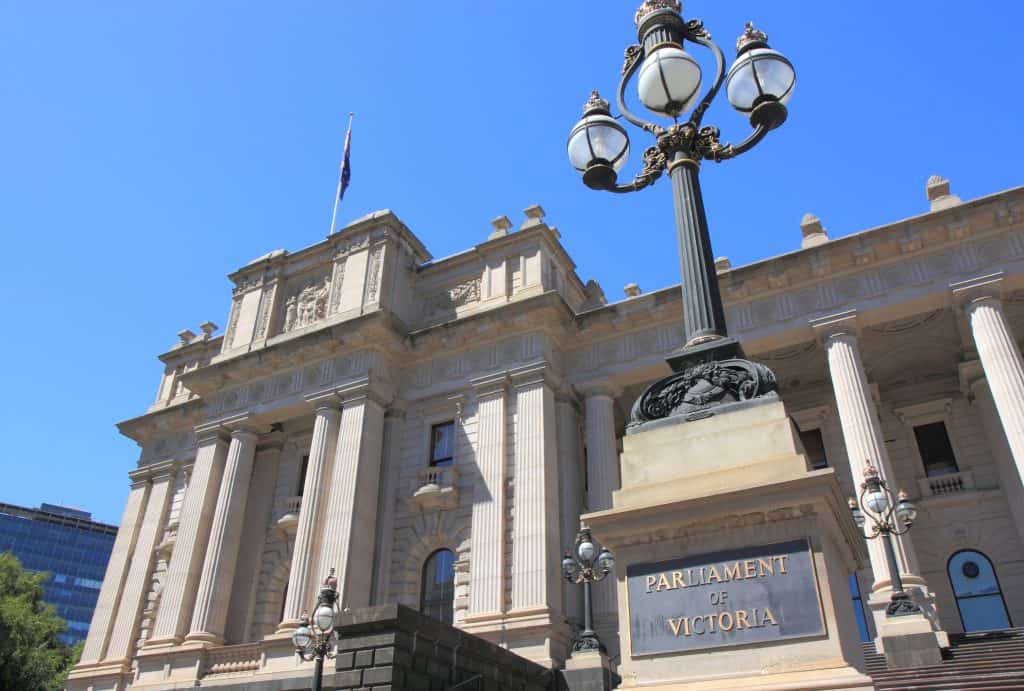
The pursuit of Premier Dan Andrews and the Victorian Government for Industrial Manslaughter reached a frenzy in Parliament on September 4 2020, when Liberal Parliamentarian Tim Smith expressed his opposition to the extension of Victoria’s state of emergency. His florid speech masked his principal, and admirable, aim, to hold the Government accountable.
Farmers want quad bikes…….
The debate over the safety of quad bikes on farms continues but it is increasingly one-sided. The Australian Competition and Consumer Commission (ACCC) and workplace safety advocates continue to hold the line on the need to install operator protection devices (OPDs) to all quad bikes being sold in Australia. Farmers, often supported by commercial interests, want to keep their quad bikes and as they are, because there are no alternative vehicles that are as versatile as the quad bike.
On July 4 2020, the Western Magazine quoted the CEO of the Federated Chamber of Automotive Industries‘ (FCAI) Tony Weber:
“Evidence suggests in some circumstances CPDs do prevent injuries, other times they create more injuries and that’s not a satisfactory outcome we should address the fundamental problem and that is the way in which humans behave around this machine…”
This quote neatly summarises the points of argument in the safety debate which have been reported on extensively in this blog previously – evidence, most benefit, design, use….
Interview with James Curtin
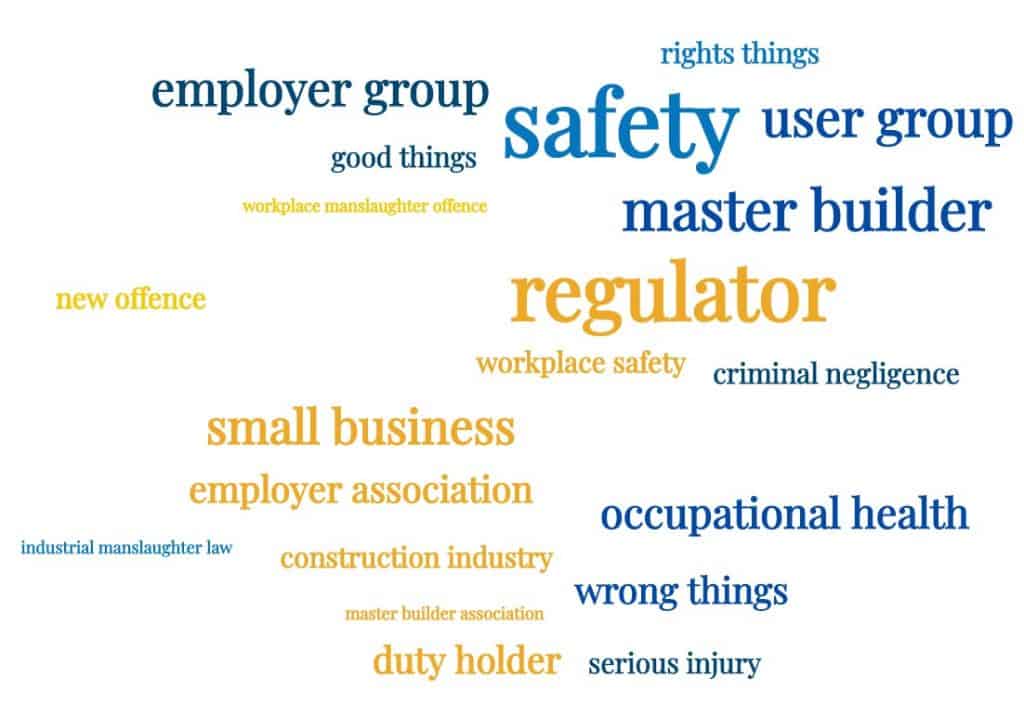
James Curtin and I have been trying to find time to sit down and talk about occupational health and safety (OHS) and Industrial Manslaughter (IM) laws ever since I interviewed trade unionist Dr Gerry Ayres in 2018. The most recent IM laws have recently passed in Victoria and James and I finally found some time to talk.
Below are the personal and professional points that James made in the interview. The rest of the article contains the full interview.
- Workplace manslaughter has not been found to improve safety and pushing ahead with a model that excludes some duty holders from the offence was/ is wrong
- There was no gap in the law that this new offence sought to fill. It was an ideologically fuelled position.
- The model should have been one in all in (like reckless endangerment) or one out all out (and replicate the UK’s Corporate Manslaughter Laws)
- Working for an employer or employee organisation is a great privilege. You need to represent your constituents effectively but in doing so be mindful of any bias. Some Associations represented their members very well throughout this debate. Some did not. That was very disappointing.
- Employers have to take their OHS obligations seriously. WorkSafe play a vital role in regulating Victoria’s OHS laws.
- If you are in business you have to take your obligations seriously. Everyone should have the opportunity to start a business, if they wish, but they must have high regard to their obligations. An effective way of ensuring this is through regulator involvement – proactively and reactively.
- Compliance and enforcement needs to be looked at differently. Larger fines and custodial sentences is not the answer. Each case needs to be dealt with on its merits and enforceable undertakings can play an integral role