Death from a well-known hazard – culture is only part of the answer

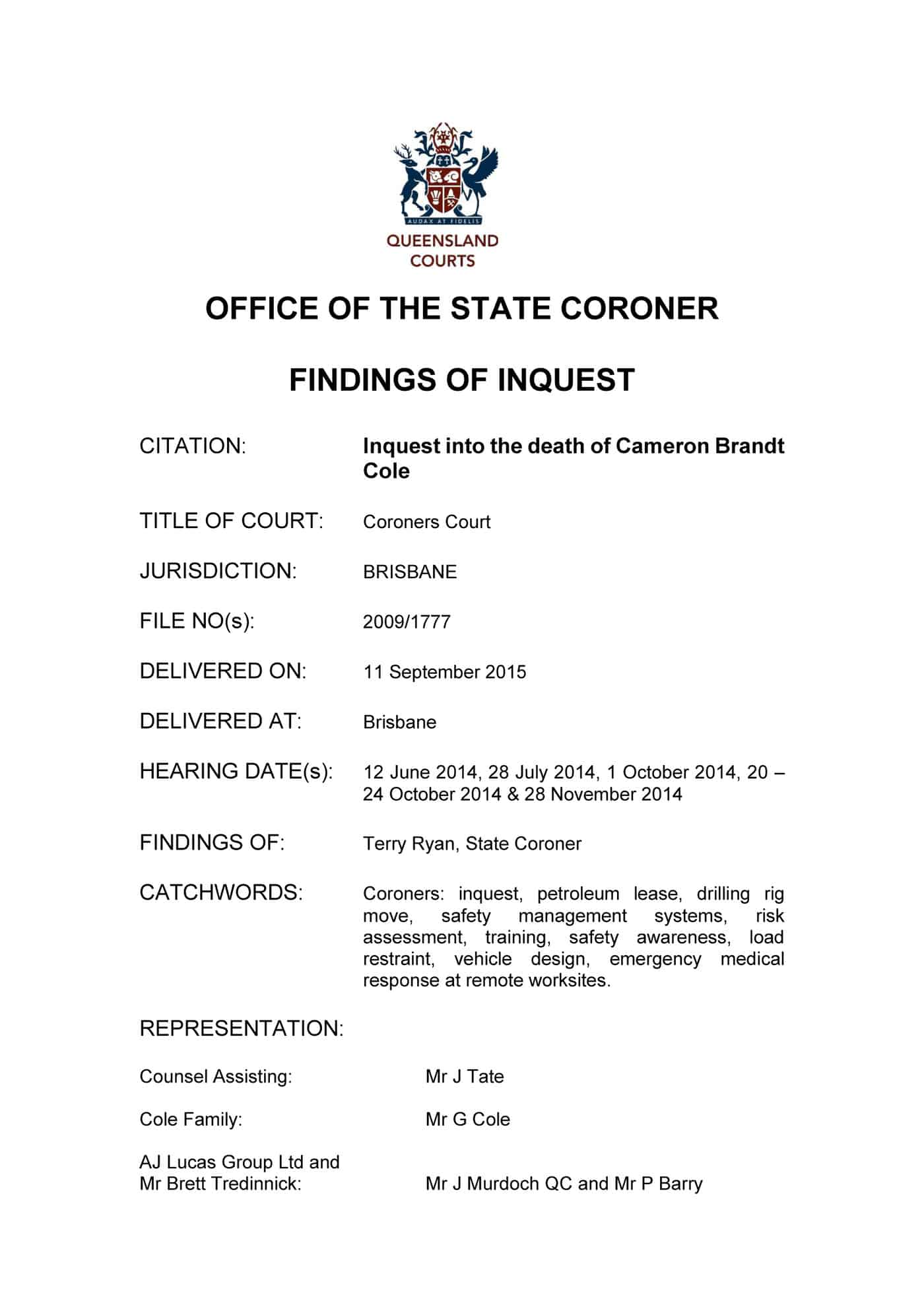
Cover of cif-cole-cb-20150911A coronial finding in Queensland in September 2015 illustrates how daily activities can lead to tragedy but also the role of safety culture.

According to one media report, in investigating the 2009 death of 24-year-old Cameron Cole who was hit as a pipe rack fell from a truck, the Queensland Coroner, Terry Ryan, found that

“…the semi-trailer had been over packed, not properly secured and there was no exclusion zone around the vehicle when the load was being released.”

From this event the Coroner makes many recommendations about the safety management of work practices at that time.  Many of these reflect common work practices that exist to this day on many Australian worksites.

Subscribe to SafetyAtWorkBlog to continue reading.
Subscribe Help
Already a member? Log in here

Conversation about work-related grief

Recently SafetyAtWorkBlog was able to spend some time with Bette Phillips-Campbell, the Manager of GriefWork, a unit of the Creative Ministries Network in Melbourne.  GriefWork provides a range of support services to families of those who have died at work or due to work factors.

The conversation touches on issues including

  • how GriefWork operates and is funded,
  • work-related suicide,
  • worker memorials,
  • the application of restorative justice in the workplace context,
  • how a workplace death affects company executives,

The interview can be accessed at Bette Phillips Interview 2015

If you want more information about GriefWork or how you may be able to help this service, please contact Bette on (61) 03 9692 9427 or by email.

Kevin Jones

Coronial findings and research – another step on the rocky road

cover of Final_Summary_Report4-QBPP_Test_Results_Concl_Recom_Jan-2015The final report into quadbike safety has finally been released by the University of New South Wales in a series of five papers and in the wake of Queensland coronial findings into nine quadbike-related deaths. (A New South Wales inquiry is currently underway)

It has been a

Subscribe to SafetyAtWorkBlog to continue reading.
Subscribe Help
Already a member? Log in here

Learning safety and leadership from drama

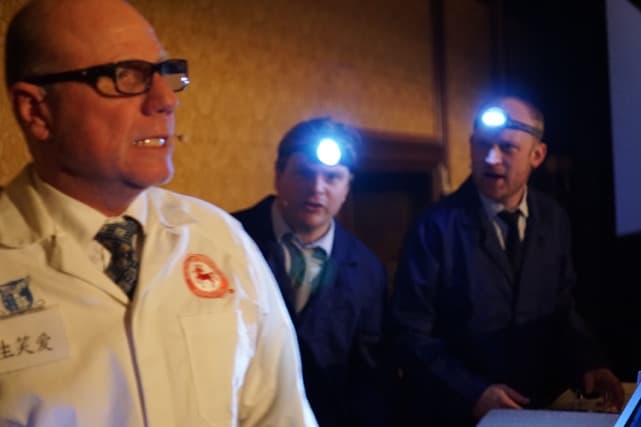
Fukushima playMost professionals, including occupational health and safety (OHS) professionals, support the use of stories or narratives or case studies to explain complex scenarios and situations.  Recently, at the ProSafe 2015 conference in Melbourne, acting and theatrical skills were used to illustrate the humanity behind the nuclear disaster of Fukushima.

To the uninitiated this may sound like quantitative risk assessment of underground mining being explained through interpretative dance by bandicoots, but the actors in the Fukushima disaster scenario were captivating and the power of theatre, even in this small-scale and on a conference podium, was powerful, stimulating and engaging. And with a

Subscribe to SafetyAtWorkBlog to continue reading.
Subscribe Help
Already a member? Log in here

Stanley’s story is powerful and unforgettable

Recently I was telling a colleague to temper their online video strategy and consider extracting the audio tracks from which a podcast strategy coud be developed. The advantage of podcasts is they can be listened to, be more portable, less distraction and, I think, can be more powerful. Earlier this week I listened to a Canadian podcast/documentary about the familial and social effects of a workplace death in the 1950s.

What can you tell me about Stanley?” is not a contrived plea for greater focus on workplace fatalities, as we often get from occupational health and safety regulators.  It is a snippet of family history, a painful and secret family history about the death of an uncle and a brother in a steel mill in the 1950s.  The  podcast looks at coronial records, company records, notes taken at the time by Stanley’s brother and shows that shame that many feel around workplace deaths now, existed then.

I listened to the podcast several days ago but I shiver now when I recall some of the pain and surprise that the family experienced.

“What Can You Tell Me About Stanley” can be listened to as a straight tale of a workplace death and the way such an incident was perceived in the 1950s.  But just as importantly, this should convince people of the power of simplicity in storytelling and social media.  The documentary obviously took months to put together and the revelations to the family are clearly not linear but this effort provides a fascinating 30 minutes for your attention.

Think of Stanley when you are applying your OHS skills.  You’ll be better for it.

Kevin Jones

Concatenate Web Development
© Designed and developed by Concatenate Aust Pty Ltd