
On the eve of International Workers Memorial Day, I attended a seminar about the management of fatalities and serious injuries conducted by a group of risk management and insurance agents. Prevention was not on the agenda which led to some surprising statements.
Category: death
Quiet Outrage inspires
 Last year Professor Andrew Hopkins‘ contribution to occupational health and safety (OHS) was celebrated in Australia. At the event, a publisher was promoting Hopkins’ upcoming autobiography. The book is not an autobiography, it is better.
The book is called “Quiet Outrage – The Way of a Sociologist” and was released in March 2016. Don’t be surprised if you have not heard of this new release. The publisher, Wolters Kluwer, seems to have done next to nothing to promote this book even though Hopkins’ works have been a major seller for the company. Hopkins writes that 90,000 copies of his books have been sold around the world – an extraordinary achievement for an Australian sociologist. Continue reading “Quiet Outrage inspires”
Australia’s ABCC argument is not about safety
Australia’s Prime Minister Malcolm Turnbull is on a pathway to an election. On March 21 2016, the Prime Minister wrote to the Governor-General to continue a convoluted process sparked by the Senate’s refusal to pass laws that will allow the reintroduction of the Australian Building and Construction Commission (ABCC). One of the justifications for the need to pass the laws is to improve workplace safety, as in the excerpt below for the Prime Minsiter’s letter. This position is unjustified.

Continue reading “Australia’s ABCC argument is not about safety”
Suicide Prevention Forum and Mental Health First Aid for workers
In March 2016, the Australian Bureau of Statistics released its latest figures into the causes of death. A lot of media attention was given to the figures showing an increase in the suicide rate. It found that
“Among those aged 15 to 44, the leading causes of death were Intentional self-harm (suicide)…”

On the day those figures were released, the
WorkSafe enters battle over quadbike safety
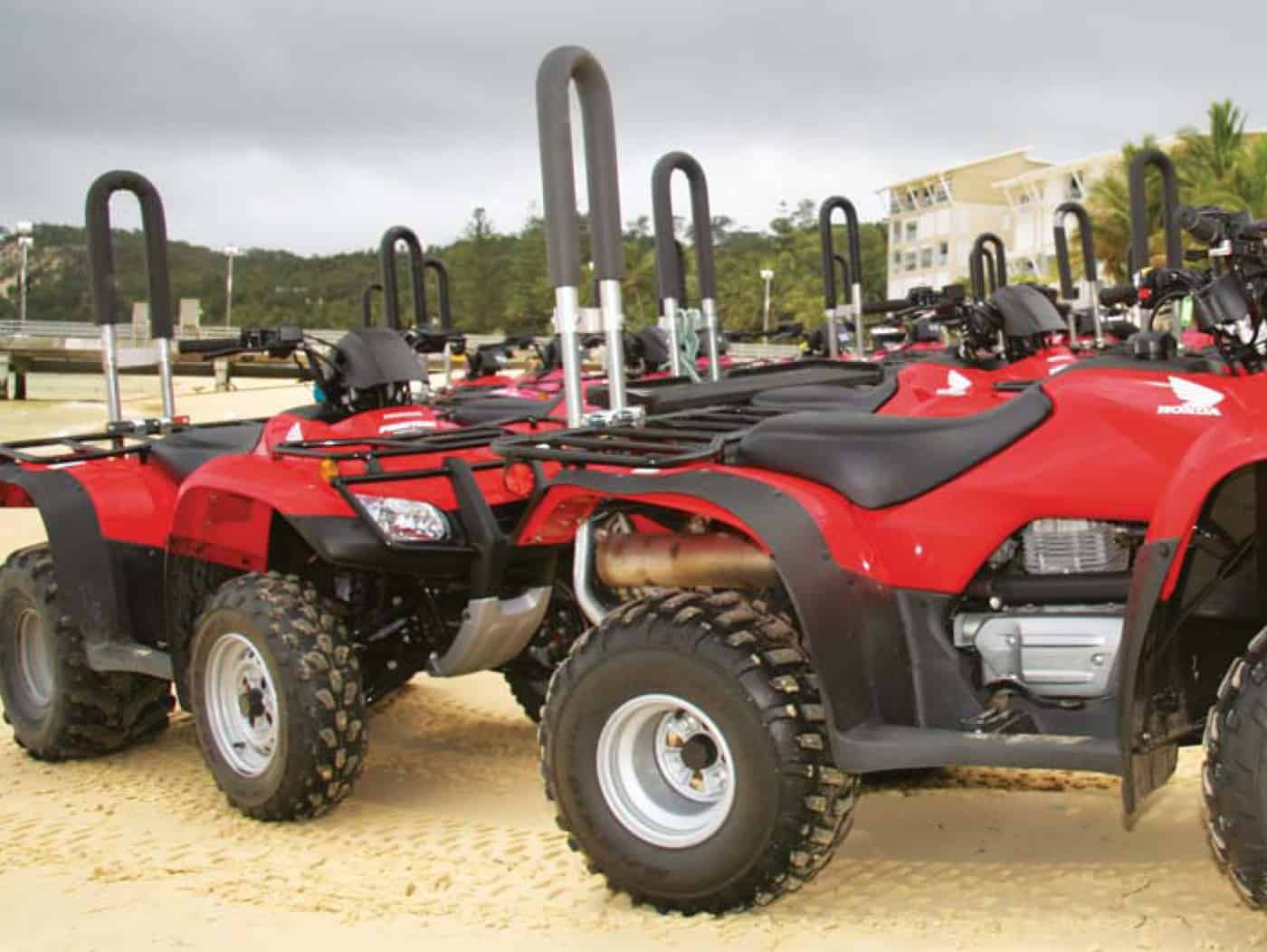 A decision by WorkSafe Victoria about the fitting of crush protection devices (CPD) to quad-bikes (All Terrain Vehicles/ATV) gained the major prominence in the latest edition of a major Australian farming newspaper, The Weekly Times. The newspaper reports that
“WorkSafe Victoria is tightening rules around quad bikes that will see them banned in workplaces unless appropriate rollover protection is fitted.”
Some of the argument over the last 24 hours has been around whether this means that CPDs are mandatory and, as always, cost.
Extracting good from maps of death
Ever since I read the London Encyclopaedia during my honeymoon in England, I have waited for a similar encyclopaedia based on workplace safety. However, the world has changed since then and such an encyclopaedia would most likely to be created as an app.
The London Encyclopaedia is indexed by places, streets and addresses, and so should a “Safety Encyclopaedia” app through a localised map of workplace fatalities.
Stats show quadbikes remain the leading cause of deaths on Australian farms
Dr Tony Lower, Director of the Australian Centre for Agricultural Health and Safety has released his review of farm safety incident statistics for 2015. According to a media release (not yet online), Dr Lower found
“…there were 69 on‐farm injury deaths. The main causes continued to be quads, accounting for 15 cases (22%), with two of these involving children. This is the fifth year in a row where quads have been the leading cause of non‐intentional injury deaths on Australian farms.” Continue reading “Stats show quadbikes remain the leading cause of deaths on Australian farms”