The Challenges of Future Workplaces – Part 1

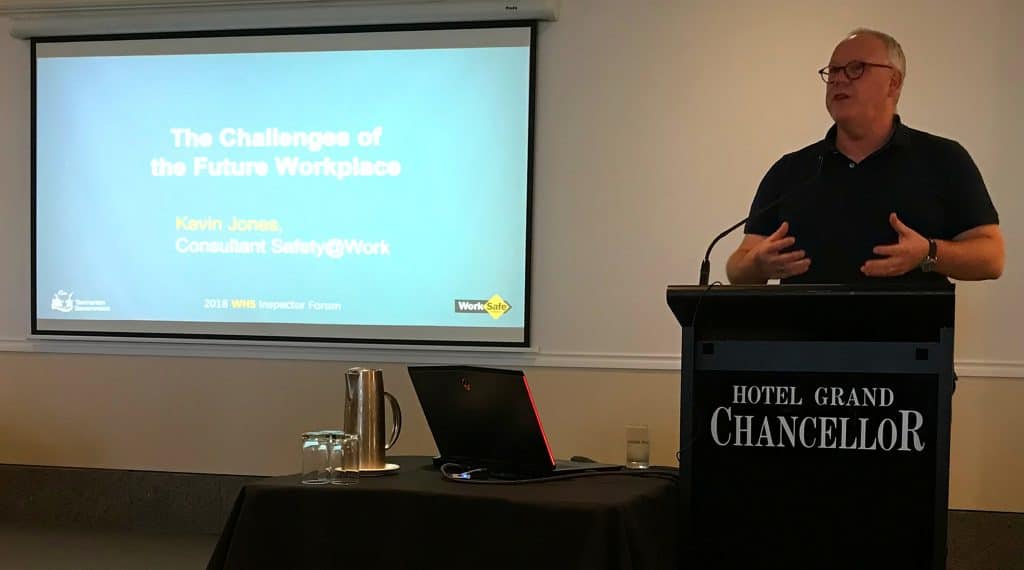
This article is part one of an edited version of a keynote presentation I made at the a special WHS Inspectors Forum organised by WorkSafe Tasmania.  The audience comprised inspectors from around Australia and New Zealand.  I was asked to be provocative and challenging so posed some questions to the audience about how occupational health and safety (OHS) is managed, regulated and inspected.

The audio of the presentation is available at SoundCloud and Podbean and below.

 “The purpose of this session is to provide insight into the future challenges for work health and safety regulators due to changes in the nature of work, the workforce, supply chains, and the social and political environments, and encourage inspectors to consider how the way they do their work may need to change to meet these challenges.”

Be Critical

I encourage you all to analyse what you say, what you are told, what you do and how you do it.  Too often we accept information and our situations uncritically and I want you to question everything, including what you read in this article.

Subscribe to SafetyAtWorkBlog to continue reading.
Subscribe Help
Already a member? Log in here

The risks of having an OHS policy

If you ask a lawyer for advice about any issue related to occupational health and safety (OHS) their first piece of advice is likely to be “write a policy”.  There are good legal reasons for advocating a policy, but policies can also create major problems.  Policies are both a reflection of a workplace and the base on which improvements can be created.

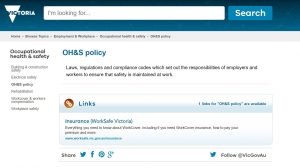
Search for OHS policy guidance from the Victorian Government  and it takes you to a page that describes an OHS policy as

“Laws, regulations and compliance codes which set out the responsibilities of employers and workers to ensure that safety is maintained at work.”

NO it’s not.  The page also directs you to a WorkSafe page about insurance!

WorkSafe Tasmania

Subscribe to SafetyAtWorkBlog to continue reading.
Subscribe Help
Already a member? Log in here

If you don’t prevent, you perpetuate

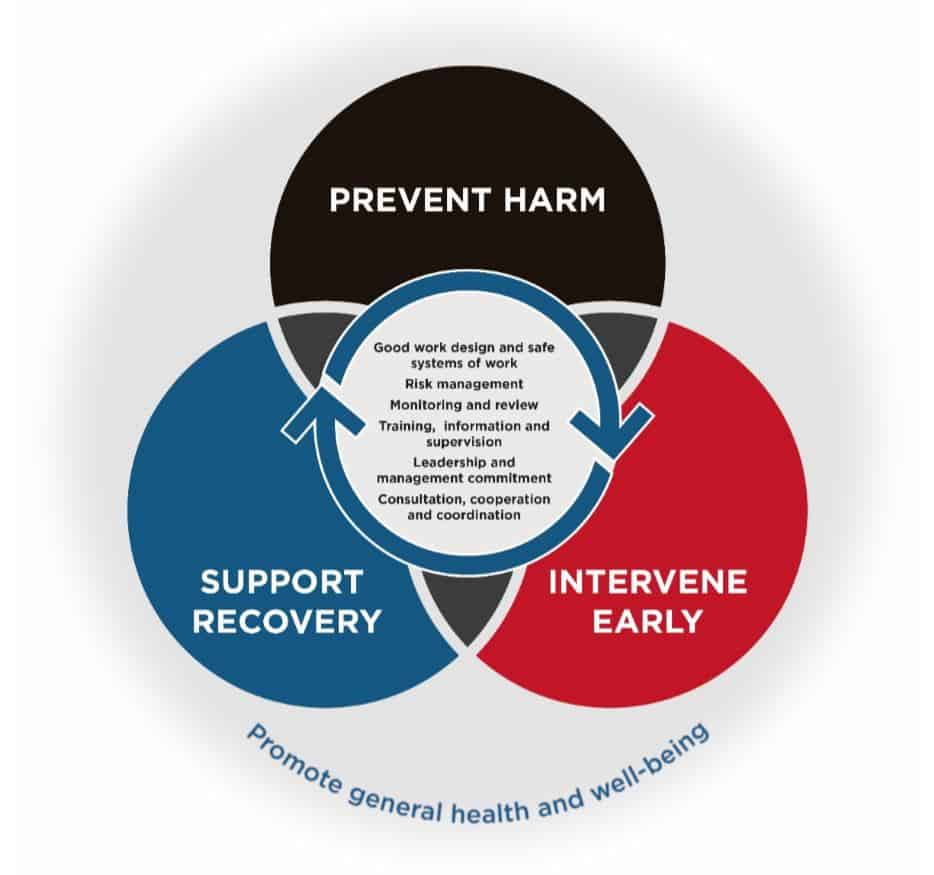
Systematic approach to psychological health and safety

One of the most important occupational health and safety (OHS) guidances released the last couple of years is the Safe Work Australia (SWA) guide “Work-related psychological health and safety: A systematic approach to meeting your duties“, but its significance is not being universally embraced.

Recently Australian law firm, Minter Ellison, released an

Subscribe to SafetyAtWorkBlog to continue reading.
Subscribe Help
Already a member? Log in here

People Risk = OHS for Human Resource professionals

The Governance Institute of Australia hosted a discussion about “Corporate culture and people risk — lessons from the Royal Commission”.  The seminar was worthwhile attending but there was also moments of discomfort.

The reality was that The Royal Commission into Misconduct in the Banking, Superannuation and Financial Services Industry was not discussed in any great detail as it was treated as a ghost hovering behind the discussion but not a scary ghost, almost a ghost of embarrassment.

And it seems that “People Risk” is what the Human Resource (HR) profession calls occupational health and safety (OHS) when it can’t bring itself to say occupational health and safety.

Subscribe to SafetyAtWorkBlog to continue reading.
Subscribe Help
Already a member? Log in here

Stop whingeing and manage OHS properly

The Australian Securities Exchange (ASX) regularly updates the Corporate Governance Principles and Recommendations administered by its Corporate Governance Council.  The Council has recently closed submissions on its consultation on the Fourth Edition.  The submissions are worth looking at to see how occupational health and safety (OHS) fairs, and it is also worth looking for mentions of the “social licence to operate”.

The 3rd edition of the principles provides examples of what it means to be a “good corporate citizen” (page 19),

Subscribe to SafetyAtWorkBlog to continue reading.
Subscribe Help
Already a member? Log in here

Michalak’s evidence should change the wellbeing and OHS industries

Dr Rebecca Michalak has only recently come to my attention, mainly through challenging some of my statements on social media.  I was able to meet her and watch her presentation at the Safety Institute of Australia’s National Health and Safety Conference in May 2018.  It is likely her voice will become heard more broadly in coming years as she challenges elements of the Establishment.

Many elements of Michalak’s conference presentation can also be heard in the Fit For Work Podcast of Sally McMahon but there were a couple of statements that were notable.

Coping Strategies

“I had a theory that it’s not either/or – it’s an “it depends” thing and what I found across all well-being outcomes, six coping strategies and two samples – that’s 48 mediations – it makes no difference and in fact, most coping strategies make well-being worse.” (emphasis added)

Subscribe to SafetyAtWorkBlog to continue reading.
Subscribe Help
Already a member? Log in here

Industrial Manslaughter laws likely for Victoria

With little surprise, at the Australian Labor Party (ALP) Conference in Victoria on 26 May 2018, Premier Daniel Andrews has included the introduction of Industrial Manslaughter laws as a formal part of the campaign for re-election in November 2018.

According to his media release, if re-elected,

“.., employers will face fines of almost $16 million and individuals responsible for negligently causing death will be held to account and face up to 20 years in jail.

A re-elected Andrews Labor Government will make sure all Victorians are safe in our workplaces, with the offence to also apply when an employer’s negligent conduct causes the death of an innocent member of the public..”

There are a lot of steps between an incident and Industrial Manslaughter charges. 

Subscribe to SafetyAtWorkBlog to continue reading.
Subscribe Help
Already a member? Log in here
Concatenate Web Development
© Designed and developed by Concatenate Aust Pty Ltd