More voices raised about quad bike safety

According the Weekly Times newspaper on May 8 2019 (paywalled), Mojo Motorcycles remains committed to the Australian quad bike market. Polaris acknowledges that

“…. ATVs will go the way of the dodo.”

The Farmsafe and National Farmers Federation (NFF) Workforce Committee, Charles Armstrong, has, in Farmonline National, described the threats by Honda and Yamaha as

“….. an astonishingly infantile reaction from otherwise respected multinational companies.”

Subscribe to SafetyAtWorkBlog to continue reading.
Subscribe Help
Already a member? Log in here

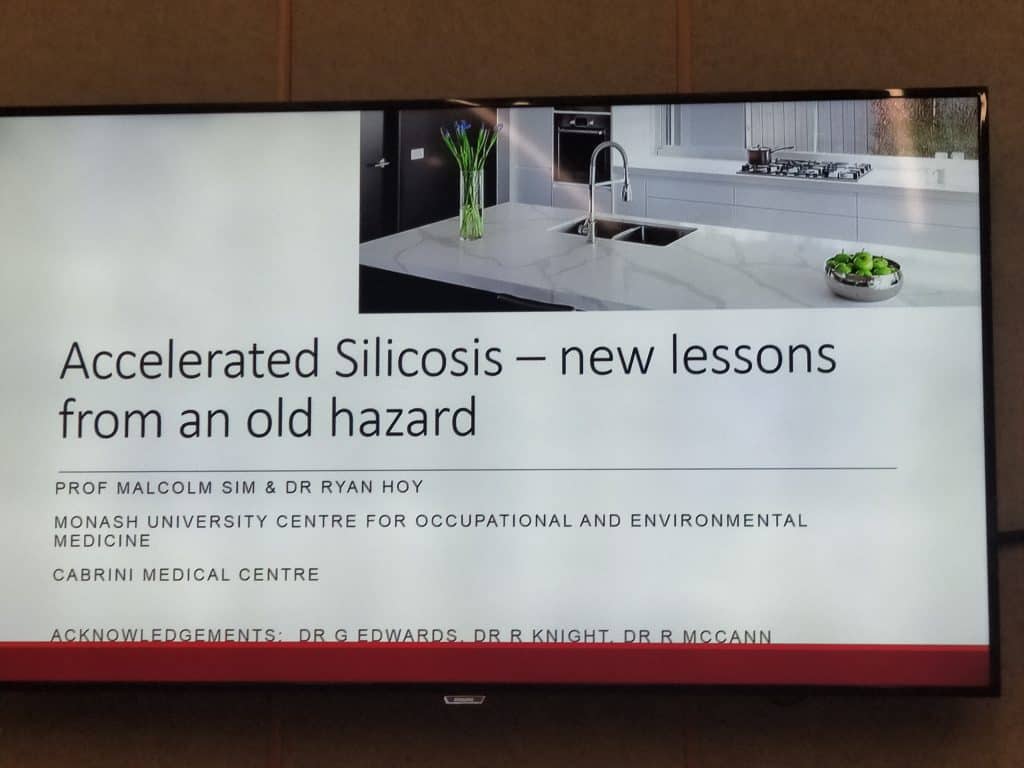
Dust clouds on kitchen benchtops

The Victorian Premier, the Minister for Workplace Safety, Dr Ryan Hoy and others at the silicosis announcement

The Victorian Government has announced that various safety initiatives are being taken on the silicosis risks associated with products described as synthetic stone. This initiative is an important first step in reducing the exposure of workers to silicosis but there are some curiosities in the announcement and WorkSafe Victoria’s accompanying Information Sheet.

The core elements of the government’s action are:

  • “A state-wide ban on uncontrolled dry cutting of materials that contain crystalline silica dust
  • Free health screening for Victoria’s 1400 stonemasons
  • A tough new compliance code for businesses working with silica
  • An awareness campaign to highlight the risks of working with engineered stone”.
Subscribe to SafetyAtWorkBlog to continue reading.
Subscribe Help
Already a member? Log in here

Government Department gets an enforceable undertaking following a workplace death

Yesterday (April 4, 2019) SafeWorkSA dropped charges against the Department of Planning, Transport and Infrastructure (DPTI) over breaches of the workplace health and safety legislations that contributed to the death of 54-year-old Debra Summers, in exchange for an Enforceable Undertaking (EU). This move had been flagged earlier noting that it was unusual to accept an EU when a workplace fatality had occurred.

SafeWorkSA’s Executive Director, Martyn Campbell, spoke exclusively with SafetyAtWorkBlog earlier this week to provide more context to the acceptance of the EU. He has spoken to the Summers family in the preparation of the EU and said that some of the request of the family have been incorporated. He also outlined the circumstances of Debra Summers’ death:

Subscribe to SafetyAtWorkBlog to continue reading.
Subscribe Help
Already a member? Log in here

Answers and clues on workplace bullying and mental health in a small package

Talking about occupational health and safety (OHS) is a critical element so explaining the concept but also strengthening OHS as more and more people understand its socio-economic and organisational context. Sometime this is done through newsletters from OHS Regulators, sometimes by large and/or expensive conferences. Sometimes all of this still fails to reach the right audience.

Mark Stipic, Antony Malmo and Michael Plowright

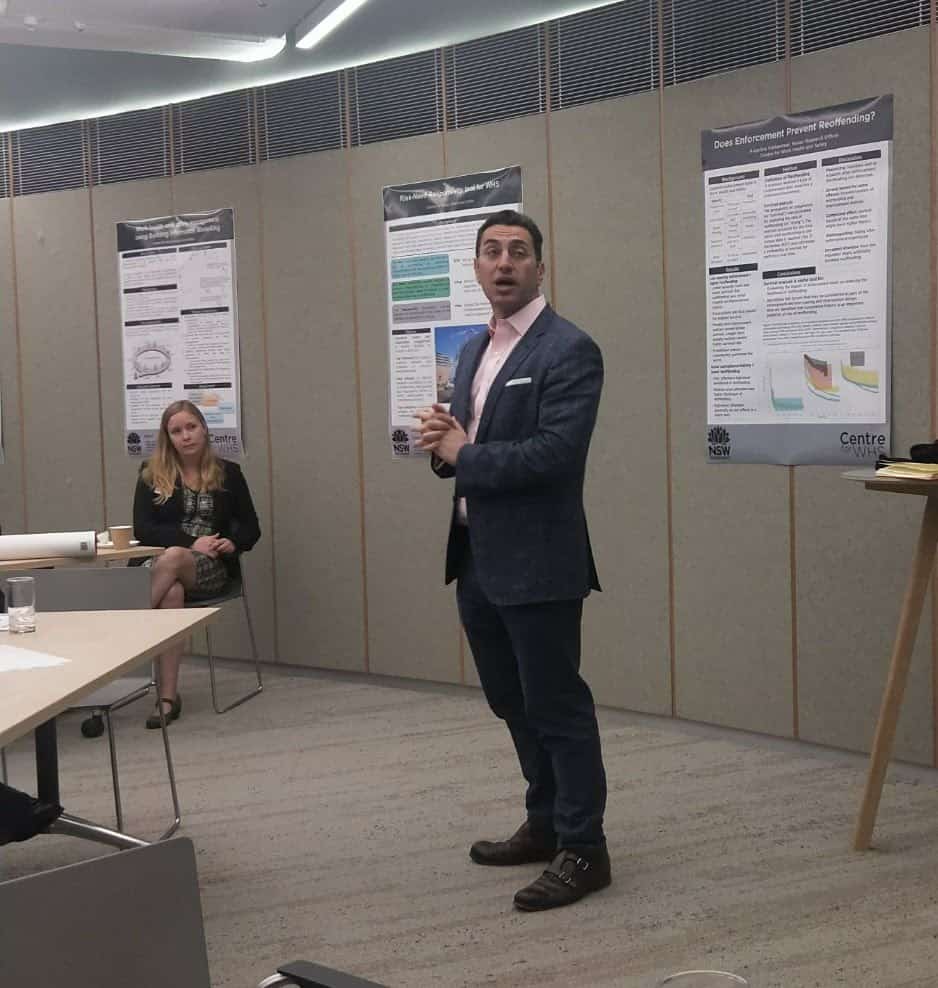
Last week a small seminar was held in the Melbourne suburb of Mulgrave. That seminar was no more than 90 minutes and provided advice from three experts in OHS-related topics related to workplace bullying. These were the psychology of workplace bullying, the management and prevention of it and workers compensation for the resultant mental ill-health.

Subscribe to SafetyAtWorkBlog to continue reading.
Subscribe Help
Already a member? Log in here

Industrial Manslaughter laws for NSW? Sizzle but no steak

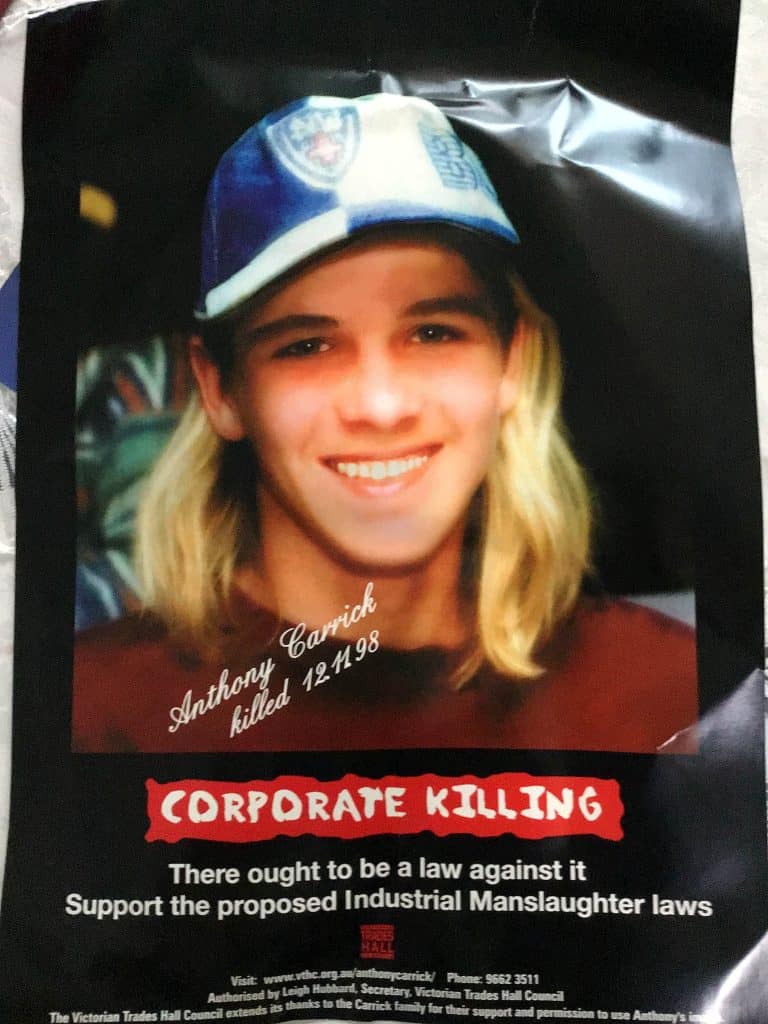
Some trade union and occupational health and safety (OHS) newsletters are stating that the New South Wales Labor Party has pledged to introduce Industrial Manslaughter laws should it win this weekend’s State Election. Looking at the actual pledges shows the commitment may not be as solid as some expect and others hope.

The NSWLabor website related to workplace safety matters seems to make no commitment for the introduction of Industrial Manslaughter laws, only to discuss laws and penalties in comparison to the penalty for manslaughter under other laws:

Subscribe to SafetyAtWorkBlog to continue reading.
Subscribe Help
Already a member? Log in here

Family violence at work, looking at trees instead of forest

Victoria’s Minister for Workplace Safety, Jill Hennessy, has released a media statement about the occupational health and safety (OHS) context of family violence, referencing a WorkSafe Victoria guidance note from January 2018.

Hennessy is quoted saying:

“Employers have a legal obligation to provide a safe workplace for their employees – and that includes doing whatever they can to support workers experiencing family violence.”

But what level or type of support is expected from employers? Family violence is damaging and insidious but also a crime. It is also a subset, or maybe a special type, of workplace violence as is evident by WorkSafe’s reference to its broader violence publication at the end of the family violence guidance note. The publication, A guide for employers Preventing and responding to work-related violence, outlines the employers duty of care, which includes prevention.

Subscribe to SafetyAtWorkBlog to continue reading.
Subscribe Help
Already a member? Log in here

Business groups miss the target on sexual harassment

Two business associations have released the submissions they provided to Australia’s National Inquiry into Sexual Harassment in Australian Workplaces – the Australian Chamber of Commerce and Industry (ACCI) and the Australian Industry Group (AiG). These submissions have been eagerly anticipated as these two groups are politically influential.

ACCI has based its submission on 13 “principles”:

  • Employers oppose sexual harassment
  • Sexual harassment is not good business
  • More Australians need to be able to recognise sexual harassment
  • We need to improve the attitudes Australians bring to work
  • The law needs to support employers in turning values into action
  • We need to recognise/reward learning and change
  • Individuals must be made more accountable for their own behaviour
  • Greater effectiveness does not demand more law
  • Regulation needs to be smart, simple, clear and balanced to be effective
  • Jurisdictional overlap / repetition detracts from effectiveness
  • Businesses have differing capacities and cultures
  • Sexual harassment can be challenging to manage
  • This is a moving target; new sexual harassment risks are emerging

Each one of these sound positive but can be argued over. For instance “sexual harassment can be challenging to manage”. This is less of a principle than a reason, or even an excuse. Sexual harassment is complex to manage as it is not just about poor relationships, it involves a sexual element which involves power and disrespect; power that is sometimes misinterpreted as leadership or part of a manager’s entitlement.

Subscribe to SafetyAtWorkBlog to continue reading.
Subscribe Help
Already a member? Log in here
Concatenate Web Development
© Designed and developed by Concatenate Aust Pty Ltd