At the
Already a member? Log in here

At the
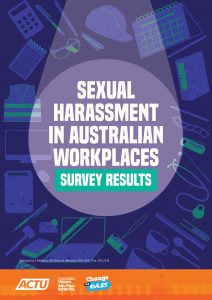 The trade union movement has often been instrumental in affecting and sometimes creating government policy on occupational health and safety (OHS). The latest generation of hazards – psychosocial – can be traced back to a survey late last century of workplace stress conducted by the Australian Council of Trade Unions (ACTU). This week the ACTU released its survey into sexual harassment at work.
The current survey should not be seen as representative of any social group other than trade union members even though the survey was completed by 10,000 of them. Also, this survey is far less likely to be as newsworthy as last century’s surveys as the agenda on workplace sexual harassment has already been established by reports from groups like Universities Australia and, especially, the current work by the Sexual Discrimination Commissioner and the Australian Human Rights Commission. It is also likely to be covered, probably as a secondary issue, in the various mental health inquiries scheduled for 2019.
The ACTU survey provides additional information to our understanding of sexual harassment at work but certainly not the whole picture.
This article is part one of an edited version of a keynote presentation I made at the a special WHS Inspectors Forum organised by WorkSafe Tasmania. The audience comprised inspectors from around Australia and New Zealand. I was asked to be provocative and challenging so posed some questions to the audience about how occupational health and safety (OHS) is managed, regulated and inspected.
The audio of the presentation is available at SoundCloud and Podbean and below.
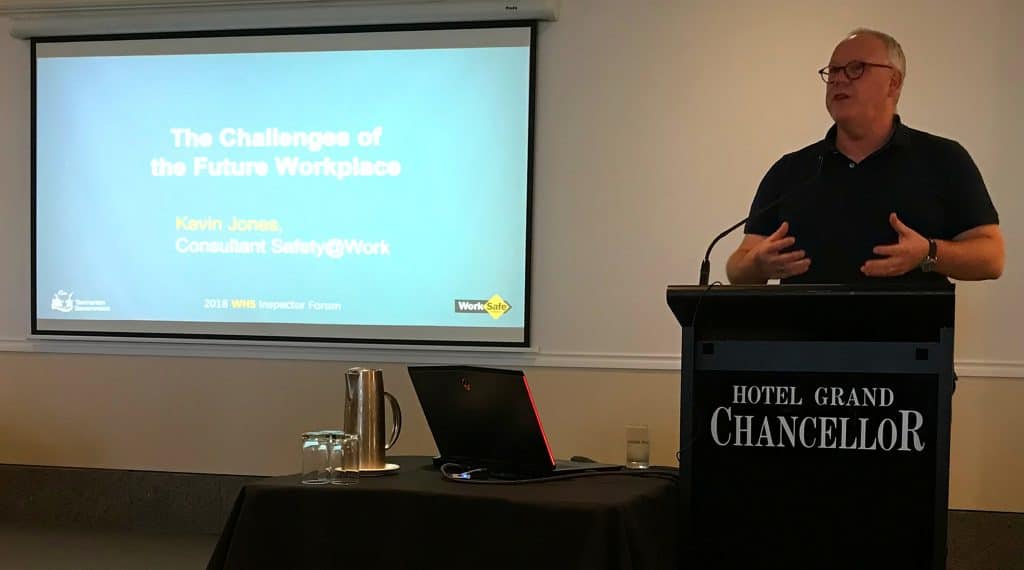
“The purpose of this session is to provide insight into the future challenges for work health and safety regulators due to changes in the nature of work, the workforce, supply chains, and the social and political environments, and encourage inspectors to consider how the way they do their work may need to change to meet these challenges.”
Be Critical
I encourage you all to analyse what you say, what you are told, what you do and how you do it. Too often we accept information and our situations uncritically and I want you to question everything, including what you read in this article.
“The Aussie sausage sizzle safety scandal suggests safety is simply something that some citizens are certain starts slips in store and on cement. A safety source says that some stores are succumbing to scurrilous suggestions that makes safety sound silly.” (Copyright: Kevin Jones)
 Some Australia occupational health and safety (OHS) professionals have been frothing up about the controversy (?) over the decision of Bunnings Warehouse to encourage the charities who run the sausage sizzles to place the cooked onions between the sausage and the slice of bread to reduce the risk of slips from onions falling off the top of the sausage in bread (a form of snack that some Australians call a “dog in a blanket”).
The issue that gained
 If all you knew about occupational health and safety (OHS) was what you read in the physical or online newspapers , you would not know anything about safety management – or maybe anything positive. It takes being involved with managing safety in the real world to understand how OHS operates in the real world. But even then we only learn from our own experiences.
The 92-page coronial finding into the death of Jorge Castello-Riffo, released last week, is a tragic and detailed case study of OHS in the real world and should be obligatory reading for OHS professionals and those trying to understand the push for increased OHS, penalties and corporate accountability. Below I look at just one section of the Coronial Findings in this article – the Coroner’s responses to a set of proposed recommendations.
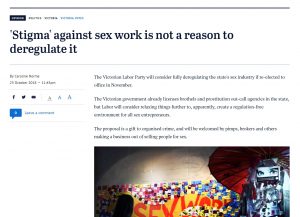 Dr Caroline Norma had an opinion piece published in The Age newspaper on October 24 2018 that fails to acknowledge the occupational health and safety (OHS) duties of Victorian businesses operating sexual services. SafetyAtWorkBlog has looked closely at OHS in this industry sector before and has previously communicated with Dr Norma on sex work safety. Dr Norma’s current article illustrates a common perspective on workplace safety and health issues where one set of legislation dominates the public policy conversation rather than the multidisciplinary approach.
It is necessary to clarify Dr Norma’s opening statement:
“The Victorian Labor Party will consider fully deregulating the state’s sex industry if re-elected to office in November.”
According to the 2018 Platform of the Victorian Australian Labor Party (ALP), in the context of Human Rights and Equal Opportunity, the ALP will:
“recommend that the Victorian Law Reform Commission consider decriminalisation of all sex work in Victoria as per other systems recognised internationally by human rights organisations.” (page 87)