Morality in business

A good safety manager is one who is aware of the social context of the job and the social consequences of injury on employees.  The manager also needs to consider the operational parameters of the company.  This is a difficult balancing act that many spend their careers trying to attain.  But what if morality or legislative obligation was removed from the workplace, or was never there in the first place.  How would employees be treated then?

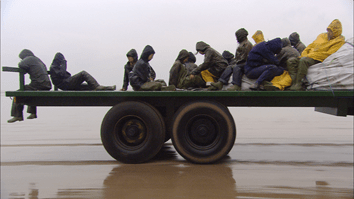
GHOSTS is a movie, ostensibly, about one person, Ai Qin, who travelled illegally from China to England in order to earn a living, a living that she believed she could not achieve in China.  As the opening scenes of the film show, she, and many others, are drowning in Morecambe Bay when the tide comes in rapidly while they are picking cockles.  The reality behind this fictional film radically changed England’s approach to gangmasters and resulted in prosecutions of the operators of the cocklepicking business.  Those operators were found responsible for the deaths of 23 cocklepickers in 2004.

ghosts-19to-the-beach-close-low

As with many memorable films, the story of a single individual can fascinate and shame us at the same time.  GHOSTS is not an enjoyable film as the hardship and the choices faced are uncomfortable to watch but it is an important film for many reasons. One is that gangmasters, and immoral companies, do not exist in a vacuum.  Minor bribery, institutional ignorance, laziness and a disregard for human life are shown by various characters throughout the film.  There are combinations of these elements which push Ai Qin into certain decisions where others would be provided with options.

Another is that we need to be reminded of these events.  Often workplace tragedies fade as quickly as the media’s interest in them.  People often follow events only as long as they are on the telly but this habit provides an extremely skewed view of reality.  People are not expected to follow all issues, or be passionate about all the issues.  That way lies madness, confusion and inaction.  It is necessary to filter our ideological passions while retaining an interest in other related matters.  We categorise our priorities in relation to our resources, emotions and circumstances at one particular time.

But investigations take time and the truth often appears years later, sometimes when the heat in an issue has diminished, or we have had to reprioritize, or the media is looking elsewhere.  Outrage is always more attractive to the media than reason but we need to follow issues to their conclusion.  This is why families revisit the heartache of a fatality by sitting through coronial inquests or prosecutions.  They need to know the truth and find some answer to why the world has turned out as it has.

The conditions for trafficking, illegal migration and unregulated work continue in England today, just as they do in most countries.  GHOSTS is not a film about sex trafficking.  But whether people are being trafficked for sex, fruit picking, working in supermarkets or in take-away kitchens, is irrelevant.  Trafficking is inhumane and must be actively discouraged.

The issue will grow in its economic, human rights and political significance.

It may be heresy to apply the hierarchy of controls outside the workplace safety domain but if safety professionals investigated the contributory factors behind trafficking, it would be hard to argue against the elimination of the hazard for a lower order control measure.  If all physical journeys begin with a single step, then cultural change can begin with a single thought.

Kevin Jones

Victim support fund – http://www.ghosts.uk.com/

Beaconsfield Coroners report update

There have been several media reports of the disappointment in the findings felt by Larry Knight’s family but little else in the media, particularly over the weekend when some retrospection could have been expected.

However, the Tasmanian workplace relations minister, Lisa Singh, issued a statement last week.  The most significant parts of the statement are

“I was pleased that the coroner Mr Rod Chandler noted in his report that the inspectorate was adequately staffed,” Ms Singh said. “I accept his criticism that at the time of the rock fall that killed Mr Knight, Workplace Standards was not sufficiently resourced to handle some issues of mine safety. That has now been rectified.

“I am seeking further advice on his recommendation that an audit of the office be undertaken each year to ensure that it is properly fulfilling its statutory duties.”

According to a statement from the law firm Maurice Blackburn

“Maurice Blackburn Special counsel Kamal Farouque, who acted as Counsel for the Knight family and the AWU throughout the Coronial Inquest, said that Coroner Rod Chandler’s findings include several major criticisms including:

  • ground support at the mine was inadequate;
  • the mine failed to put in place a comprehensive, rigorous and properly documented risk assessment process; and
  • if a thorough and systematic risk assessment process had been conducted, the likelihood of Mr Knight’s death occurring would have been reduced, perhaps significantly.

“What is plain is that the Coroner has made findings that indicate safety deficiencies,” Mr. Farouque said.

“A lesson to be learned from Mr Knight’s tragic death is the critical importance of proper risk management practices to worker safety, particularly in the mining industry,” Mr. Chandler found.”

Now we wait to see who implements those lessons.

Kevin Jones

CEO loses job over safety failures

Health funding and management is a constant political issue.  The attention increases hugely during election campaigns like the one that is currently occurring in the Australian state of Queensland.

This week the leader of the opposition parties, Lawrence Springborg, called for the release of a government report into the sexual attack on a nurse and security in Torres Strait islands.  SafetyAtWorkBlog has written repeatedly on OHS issues associated with the attack in February 2008.  Springborg has pledged increased safety resources for remote area nurses.

Queensland Health reports on 25 February 2009 that the CEO of the Torres Strait District’s health service CEO has been stood aside as a result of the government’s investigation.  The statement reads

“Director-General Michael Reid said the Crime and Misconduct Commission had reviewed the report by the Ethical Standards Unit and was satisfied with the investigation.
“Some allegations that members of the Torres Strait and Northern Peninsula Health Service District executive did not act appropriately were upheld by this investigation,” he said. “We accept this investigation has found serious faults in the way Queensland Health staff responded to this critical incident and we are taking immediate action.”
The CEO of the Torres Strait-Northern Peninsula District has been stood down, effective immediately, while her role with Queensland Health is under further consideration.”

Many of the issues raised relate to possible corruption and improper behaviour by the Queensland Health and others.  These are the political points that Springborg is likely to chase.  

In terms of occupational health and safety, the focus of this blog, Queensland Health says

“There is substantial evidence that there has been a systemic failure by the Torres Strait and Northern Peninsula Health Service District to acknowledge and address workplace health and safety issues within the District over a long period of time.”

“There is sufficient evidence to conclude, on the balance of probabilities, that members of the Torres Strait and Northern Peninsula Health Service District (TSNPHSD)
Executive responded inappropriately and insensitively when notified of the alleged rape of a Remote Island Nurse on Mabuiag Island on or around 5 February 2008.”

“Further, there is sufficient evidence exists to find, on the balance of probabilities, that the repatriation of the remote area nurse from the outer islands as not managed or coordinated at a level cognisant with the seriousness of the events which had occurred.”

It is no wonder the CEO of the health service has lost her job.  It is a little surprising that more, and more prominent, heads have not rolled.  It is suspected that this may be one of the aims of the opposition politicians during the current election campaign.

To return to our core issue of OHS and accountability, this result clearly indicates that senior executives, particularly in the public sector in this instance, must take a preventative approach to the health, safety and security of their staff, wherever the employee is located.

Kevin Jones

International Women’s Day (of safety)

The global theme for the 2009 International Women’s Day (8 March 2009) is 

“Women and men united to end violence against women and girls”

The organising committee is at pains to stress that although this is a global theme, individual nations, individual states and organisations are able to set their own themes.  Some themes already chosen include

  • Australia, UNIFEM: Unite to End Violence Against Women 
  • Australia, QLD Office for Women: Our Women, Our State 
  • Australia, WA Department for Communities: Sharing the Caring for the Future 
  • UK, Doncaster Council: Women’s Voices and Influence 
  • UK, Welsh Assembly Government: Bridging the Generational Gap

Given that Australian health care workers suffer occupational violence, amongst many other sectors, and that employers are obliged to assist workers who may be subjected to violence at work or the consequences of non-work-related violence, it seems odd that so often the major advocates of International Women’s Day remain the unions.

It is also regrettable that many of the themes internationally and locally are responding to negatives rather than motivating action from strengths.

As is indicated from the list above, the public sector agencies are keen to develop programs around the international day.  The societal and career disadvantages of women are integral to how safety is managed.  

Stress, violence, adequate leave entitlements, security, work/life balance, chronic illness – all of these issues are dealt with by good safety professionals.  Perhaps a safety organisation or agency in Australia could take up the theme of “Safe work for women” and look at these issues this year using gender as the key to controlling these hazards in a coordinated and cross-gender fashion.

In support of women’s OHS (if there can be such a specific category), readers are reminded of an excellent (and FREE)  resource written by Melody Kemp called Working for Life: Sourcebook on Occupational Health for Women

Kevin Jones

Workplace bullying – interview with Lawrence Lorber (2002)

In April 2002, I interviewed Lawrence Lorber of US law firm Proskauer Rose on workplace bullying.  It was at the height of the Enron collapse and corporate behaviour towards staff was gaining a lot of attention.  Over the last fortnight I have been researching some of the management books and concepts concerning leadership, emotional intelligence, modern expectations of managers – all of which could be thrown into “workplace culture.”

As I was reading back issue of the SafetyATWORK magazine, I used to published, there seemed to be valuable comments from Lawrence that remain relevant.  Below is an extract of the interview.  The full interview is available HERE

SAW: In Australia, the approach to workplace bullying seems to be coming from a systemic management system rather than one relying on psychological assessment.

LL: The highly competitive and highly contentious nature of what is coming out about Enron, the “up or out” atmosphere is one aspect of a system that can lead to managers or co-workers to engage in bullying. The characteristics of being tough or abrasive may be necessary to get ahead in the organisation. The environment can encourage or create bullying tendencies. However, not everybody turns into Attila the Hun in a highly competitive environment. Others survive without taking on the attributes of the bully.

Psychological testing is frequently applied in the States with regard to executive promotions. Dealing with bullying does require a combination of the systemic and individual approach. I work for some companies who are publicly perceived as fairly aggressive, there are tough people there who I might not want to work for but they are effective. They might be perceived as bullies. But looking at bullying as an environmental issue does mask the problem.

SAW: Managers sometimes need to motivate a staff member, perhaps, by rebuking them. The receiver of the rebuke may perceive that as bullying. How can we balance these perceptions?

LL: There were management books in the States in the 1980s, which encouraged management by intimidation. At one point that was the vogue. After the movie PATTON came out, everyone wanted to be General Patton.

If you look at a harsh manager who is demanding in an abrasive manner, that could be bullying.

How do you define bullying? Do you define it by your own reaction? A very US example is sex harassment. Is harassment in the eyes of the beholder? Does it have to be a reasonable woman who believes she is being harassed? In the circumstance where the bully is a male and the recipient is a female, frequently that becomes harassment.

SAW: That is a problem for the managers where for the last 30 years, harassment, bullying and discrimination has been handled outside the OHS field, in Human Resources. Now there are national and international moves to combat bullying because of the stress at work issues. I haven’t seen that approach in the United States.

LL: Here it’s not health and safety. Our definition of harassment is an “intimidating atmosphere”. That can also be a definition of bullying.

I don’t think it will be considered as a health and safety issue because workplace stress is not a field that is devoid of regulation. It is simply being regulated in a different context-employment discrimination and to a lesser extent under the disability laws. 


SafetyATWORK magazine April 2002 cover image

Eliminate the hazards

The first control measure on the “hierarchy of controls” is to eliminate the hazard.  OHS consultants and professionals should always consider ways to achieve this.  It may prove to be impractical, or politically unpopular, but it should always be discussed or recommended.  Reports and submissions that do not consider this control measure can be considered invalid.

In late-January 2009, the organic farmers in Australia reminded the media that its farming members are developing a safer industry for the customer and the producer.  This industry has boomed in Australia since the 1970’s in as a result of a desire and commitment to “eliminate the hazard”.

Interviews conducted by Biological Farmers of Australia (BFA) to help  discover why producers ‘go organic’ reveal a high number of farmers consider the switch for the health of themselves and their families.

Rob Bauer (Bauers Organic Farm, Qld), one of Australia’s largest organic horticultural growers, says he turned to organic farming 27 ago after farmers in his area became ill with cancer.

He says he wanted to decrease health risks associated with synthetic farm chemicals.

“I started thinking about farming differently after growing up in the Lockyer Valley (Qld) where friends and family passed away in their fifties after years of intensive agrichemical production.”

He says neurological problems, tumours, and cancer were among the chronic diseases he watched take their toll on his local farming community.

“I wasn’t comfortable with producing food using harsh farm chemicals for consumers,” he says.

Steve Skopilianos, commercial lettuce producer from Ladybird Organics in Keilor (Vic) looked into organics when he started a family.

“We had been applying pesticide blends with no understanding of their effect on people and employees.  There were times prior to organic conversion where I would not take my own produce home for my family to eat.”

Biodynamic producers of macadamias are happy to avoid high levels of agrichemicals typically used on the nuts.

“Working without a high exposure to synthetic chemical farm products is a weight off your mind,” says Marco Bobbert, from Wodonga Park Fruit and Nuts macadamia plantation (Qld), certified biodynamic since 1987.

He says direct chemical exposure could easily occur on conventional farms from accidents in production. “All it takes is a broken spray pipe.”

He says it is not just organic farmers who are concerned – “All farmers try to minimise their contact with chemicals on-farm. But organic production actively works toward negating that risk”.

Research has shown there is good reason for producers’ concern – a high exposure to some farm chemicals can lead to major health problems.

Particularly problematic substances include organophosphate insecticides and pesticides, which have been connected to several types of cancer, sterility and cognitive deficits (1).

The agrichemical endosulfan is one example of a highly toxic  organochlorine cyclodiene) insecticide still in use in Australia.

1. (1) Ciesielski, S, Loomis, D, Rupp Mims, S, Auer, A, Pesticide Exposures, Cholinesterase Depression, and Symptoms among North Carolina Migrant Farmworkers; American Journal of Public Health, 1994.

Management failures and a rape of a five-month-old baby

Earlier this year, SafetyAtWorkBlog reported on the attack on a nurse in the Torres Strait Islands north of Australia, the investigation of the issue by Queensland Health and the mechanisms introduced to get the working conditions and accommodation up to a safe level.  In this case there was a clear link between occupational health and safety and the security of a worker.

OHS law in Australia obliges workers and those in control of a workplace to ensure the safety of people on their premises.  Last week the Northern Territory government received a report (081128vol1-f9c6d46d-75d5-4a5e-95e7-7c040ae6600c1) into the security measures at the Royal Darwin Hospital.  This hospital has undertaken fantastic medical work in the past, most noticeably, on a large scale following the bombings in Bali in October 2002.

However it failed to prevent the rape of a five month old female infant on 30th March 2006, while the indigenous baby was an inpatient.

Carolyn Richards, the Health & Community Services Complaints Commissioner, said in her report

As a result of a complaint reported to the Health & Community Services Complaints Commission an investigation was undertaken by the Director of Investigations, Mrs Julie Carlsen, who is employed as the Director of Investigations (DI) Health &  Community Services Complaints Commission.

This report highlights that the Department of Health & Community Services (DHCS) needs to implement effective risk control mechanisms to minimise the risk of an assault on a vulnerable inpatient in the Royal Darwin Hospital (RDH). The investigation has led to the conclusion that DHCS (DHF) and RDH have not complied with the applicable Australian Standard. It has also revealed that crucial information has been withheld from an expert engaged by RDH to review security arrangements and from the DHCS (DHF) Security Manager based at RDH. This report also details inadequacies and failings by those responsible for managing RDH who have failed for over two years to implement and maintain better security for patients in the Paediatric Ward. It is published with the hope that it will cause DHCS (DHF) and RDH to give higher priority to improving its risk management and security procedures.

The Commissioner’s conclusions are worth including here so that OHS professionals and security officers can establish appropriate procedures for their workplaces.pages-from-081128vol1-f9c6d46d-75d5-4a5e-95e7-7c040ae6600c1

1. On 30th March 2006:

  • There were no arrangements in place on the Paediatric Ward to ensure the safety and inviolability of vulnerable patients.
  • No risk assessment had been conducted.
  • The arrangements in place did not comply in any aspect with the Australian Standard which sets the benchmark for proper security.
  • There was no control on access to the Ward or to the patients.
  • The staff had not received adequate training, and possibly none at all, about the risks arising from lack of security arrangements.
  • In 2002 RDH had commissioned and received an expert consultant’s assessment and report on security arrangements at RDH. The Terms of Reference did not require 5B to be assessed. By 30 March 2006 the recommendations in the report had not been implemented in Ward 5B. This failure can only be described as shameful.
  • Following the rape of the infant police were not notified for about 2 hours.

2. Action taken by RDH after the rape to improve security was: (a) slow (b) inadequate, and (c) has not been adequately evaluated or reviewed to determine its effectiveness

3. RDH has a Security Manager on site as well as an NT Police member stationed at the hospital. Neither has been asked to evaluate the security on the Paediatric Ward either before or after the rape of the infant.

4. Staff working on the Paediatric Ward have not been trained at their induction on the elements of security arrangements to reduce the risk to vulnerable patients nor has there been adequate ongoing training of staff before or after the 30th March 2006 incident.

5. In 2007 the same expert safety and security consultant, as in 2002, was engaged to assess security arrangements at RDH. He was not informed of the rape of the infant in March 2006 nor was he asked to report specifically on arrangements in the Paediatric Ward.

6. On 21 November 2007 two investigation officers from the Health and Community Services Complaints Commission visited the Paediatric Ward by prior arrangement. They were able to enter the Ward and wander around, have entry to every part of it and stand at the nurse’s station, for about 25 minutes without anyone asking who they were and why they were there.

7. Management’s lack of commitment to the proactive identification of risks and to taking appropriate action has not created a culture where each member of staff takes responsibility for identifying and reporting risks and developing safe practices.

8. A security review of RDH was carried out by an expert hospital safety and security consultant who issued a report in 2007. The Security Manager of DHCS (DHF) was not given a copy even though he requested it. HCSCC enquired of RDH management why he was not given a copy and RDH have offered no explanation. On 31 October after this report was published to RDH and DHF the CEO of DHF advised this Commission that he had finally been given a copy and that he had seen a draft copy.

9. RDH Maternal and Child Health Clinical Risk Management Committee considered security in the Paediatric Ward following the incident. The Committee met on 16th May 2006, 2.5 months after the rape of the infant. It met a further 4 times. It submitted an action plan to the General Manager of RDH in July 2006. At its last recorded meeting on 5 September 2006 there had been no response from the General Manager on the recommendations, particularly with respect to installing CCTV cameras with recording facilities on the Paediatric Ward. There were still no recording cameras on the Paediatric Ward as at June 2008 although a CCTV system had been installed in the kitchen area to deter the pilfering of food. Dr David Ashbridge on 31 October 2008 advised, when responding to a draft of this report, that CCTV cameras were installed in Paediatrics on 25 August 2008.

10. The surveyors from the Australian Council of Health Standards which accredits RDH probably did not receive all relevant information about the incident of 30 March 2006 and what action RDH were taking. Those surveyors on 13 October 2006 were informed by RDH that the patient information pamphlet and admission interview are being reworded to reflect the changes to ward access. There was no verification throughout the investigation that any action had been taken by RDH to implement the recommendations of the review. Neither the report of ACHS nor records of information given to ACHS have been provided to the HCSCC. DHCS (DHF) was invited to provide me with those relevant documents in response to this draft. No response was received on this issue from DHF or RDH. According to the published information of ACHS the accreditation survey commences with a self assessment by the hospital concerned. This Commission specifically requested details and copies of the information provided to the ACHS surveyors but no response was received from either the CEO of the Department or the General Manager of RDH.

11. The governance arrangements at RDH do not promote adequate transparent accountability of the General Manager and the Department of Health and Families for the operation of the hospital. Control of all aspects of the day to day management of RDH rests in the hands of three individuals. This includes staff recruiting, training, security, nursing and medical services, procurement, record keeping, financial accountability and risk management. Such specialist management groups as exist are subordinate to the General Manager’s authority. The General Manager reports to the Director of Acute Services who reports to the CEO of the Department. I have been unable to find out what role the Royal Darwin Hospital Board has since its last annual report to 30 June 2006. 

It is well worth obtaining the complete report to understand how such an individual tragedy occurred.  As one media commentator has posited

“One wonders what the reaction would have been if a non-indigenous infant was raped.”

Concatenate Web Development
© Designed and developed by Concatenate Aust Pty Ltd