Scarlet M for Manslaughter

In March 2019, the Northern Territory government released its “Best Practice Review of Workplace Health and Safety in the Northern Territory”. This report was written by Tim Lyons who reviewed the Queensland work health and safety (WHS) Laws not so long ago. Lyons is creating a career path as sustainable as Alan Clayton who seems to have reviewed all the workers’ compensation systems in the Asia Pacific!

There are many similarities between the two reports which is not surprising – same Model WHS laws, same reviewer….. Yes, Industrial Manslaughter laws were recommended but this is almost a pro forma recommendation at the moment, as it has been supported by at least two State governments, recommended in a Senate inquiry into industrial deaths and pragmatically recommended by the Boland Review. In many ways these WHS-related reviews are feeding off each other.

Subscribe to SafetyAtWorkBlog to continue reading.
Subscribe Help
Already a member? Log in here

Steady as she goes in Victoria

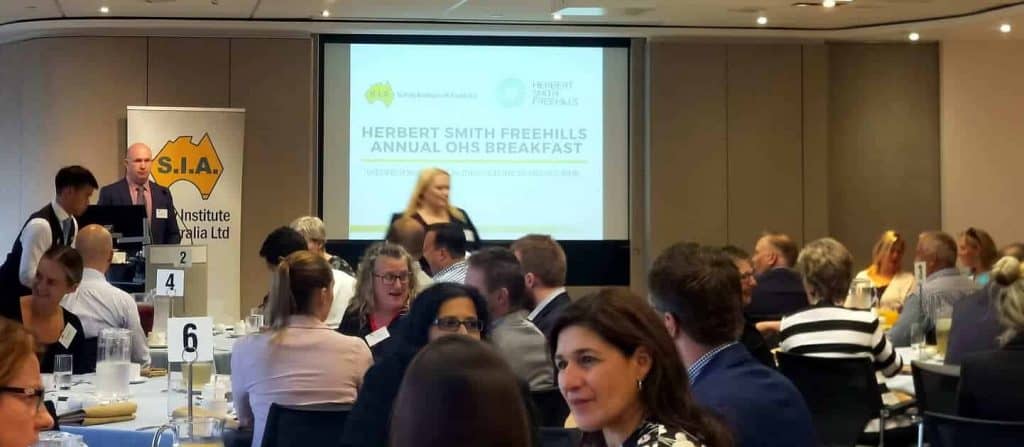
The annual Safety Institute of Australia (SIA) breakfast was held at the Melbourne offices of Herbert Smith Freehills (HSF). As has become a tradition, a spokesperson for WorkSafe Victoria was the feature presenter and this year that was the very recently appointed Executive Director of Health and Safety, Julie Nielsen. HSF’s Steve Bell also provided an update on OHS laws and national Work Health and Safety (WHS) changes.

Subscribe to SafetyAtWorkBlog to continue reading.
Subscribe Help
Already a member? Log in here

Exclusive interview with independent WHS reviewer, Marie Boland

SafetyAtWorkBlog had the opportunity to interview Marie Boland earlier this week after the release of her review into Australia’s Work Health and Safety (WHS) laws. Below is an edited version of that interview.

Marie, thanks for talking to me, it’s a terrific report you’ve produced. What was it like to undertake a national investigation of this type, given that it was pretty much you and just a couple of others?

…It was quite daunting at the beginning, but as I said in the introduction and nothing kind of clichéd about it, it was very much a privilege to be able to do it.  And the privilege was enhanced by having the opportunity to go travel all around Australia, and some places I’ve never been before like Tamworth and what it really brought home to me was the diversity of people, workplaces, geography and that these laws are covering and the diversity of people who are dealing with the laws on a daily basis.  So, it was certainly a once in a lifetime experience for me I suppose, and maybe a point in history for the laws as well.

I was very much aware throughout the process of my privilege and being able to do it and also the waves of expectation I suppose and this being the first review of the national laws and also very much aware of all the work that went into creating the laws in the first place.  And certainly, a lot of the people who put so much effort into that work were still obviously very keen on how they were being applied and as I said I was very conscious of respecting all of that as I went around the country.

Subscribe to SafetyAtWorkBlog to continue reading.
Subscribe Help
Already a member? Log in here

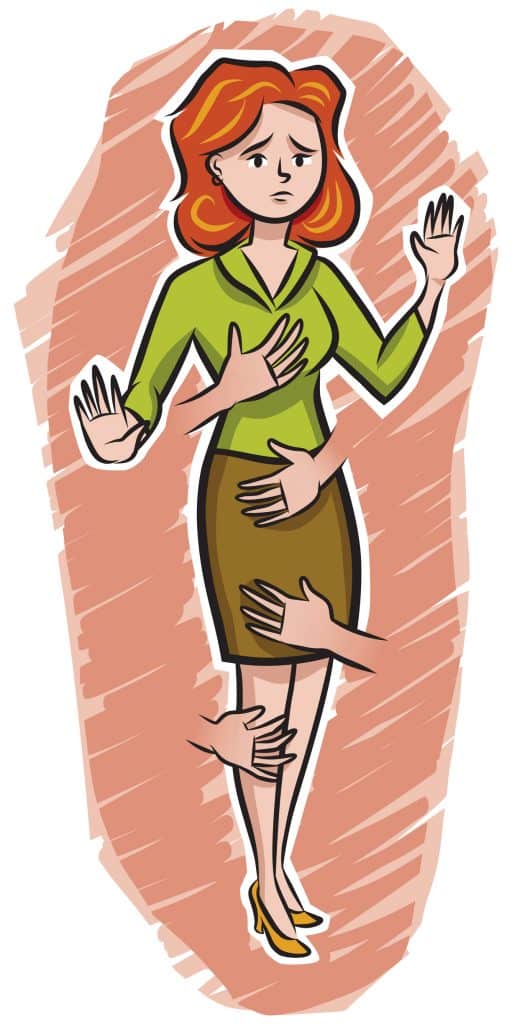
Workplace sexual harassment inquiry releases more submissions

The National Inquiry into Sexual Harassment in Australian Workplaces has released another block of public submissions. many of them involve examples of horrible harassment and psychological harm, but several offer research, suggestions for improvement and, a little bit of, prevention.

Those making the recently released submissions seem to be realising that the inquiry’s terms of reference focuses on Australian workplaces.

Non-disclosure agreements and communication barriers

One submission is from Professor Judith Bessant, AM, of RMIT University (Submission 188) in which she addresses the application of Non-Disclosure Agreements (NDAs). NDAs have been in the press lately as some of those who experienced sexual harassment were unable to make submissions to this Inquiry without contravening the NDA they had with their employer. Professor Bessant asserts that

Subscribe to SafetyAtWorkBlog to continue reading.
Subscribe Help
Already a member? Log in here

Paspaley clarifies statement on the payment of fines

In this morning’s SafetyAtWorkBlog article, a quote from Janice Murray was included and which originated from an ACTU video dated 25 February 2019. Murray said this of the fine imposed on Paspaley:

“We sat through a very strong legal team. I understand that this is something that they can get covered through insurance. The fine through WorkSafe was minimal for us – a $60,000 fine – and that too was covered by insurance.”

Paspaley has provided SafetyAtWorkBlog with this clarification:

“Paspaley does not propose to engage in further correspondence about this matter which concluded in October 2015 and which has, not infrequently, been the subject of misinformation.

Suffice to say that the fine in question was paid directly by Paspaley and was not covered by insurance.”

Kevin Jones

Responses to the Boland Report into Australia’s Work Health and Safety Laws

The mainstream Australian media has almost entirely ignored the release of Marie Boland’s Final Report of the independent Review of Australia’s Work Health and Safety laws. but some of the usual players in the workplace relations sector have responded. Below is a longer responsive from the Australian Chamber of Commerce and Industry (ACCI) but first some simpler responses.

The trade union movement has almost entirely focused on the Industrial Manslaughter recommendations in the Boland Report. As well as a couple of media statements, the Australian Council of Trade Unions released a video on February 25 2019 with Assistant Secretary Liam O’Brien accompanied by the parents of two deceased workers. The first to speak were Tony and Robyn Hampton whose son, Jarrod, died while working for Paspaley Pearls. The second couple were Janice and Mark Murray whose son, Luke, died when parts of a crane that was being unpacked fell on him.

Subscribe to SafetyAtWorkBlog to continue reading.
Subscribe Help
Already a member? Log in here

Boland’s WHS Report recommends a practical update of laws and practices

The Australian Government has released the final report of the Independent Review of its Work Health and Safety (WHS) laws, conducted by Marie Boland. Importantly, the Government has not issued its response yet and, given that there is a Federal Election in a couple of months’ time, is unlikely to. Why have another issue complicate the campaign particularly when that response may have to address Industrial Manslaughter laws which would focus on the accountability of business leaders? This Government has already been bruised on a similar issue through a Banking and Finance Royal Commission.

Regardless of this Government’s future treatment of the Boland Report, the report does progress occupational health and safety (OHS) and the operation of the WHS laws, reinforcing some aspects and challenging other. It is obligatory reading for those interested in OHS in Australia.

(SafetyAtWorkBlog is preparing an exclusive interview with Marie Boland for next week)

Subscribe to SafetyAtWorkBlog to continue reading.
Subscribe Help
Already a member? Log in here
Concatenate Web Development
© Designed and developed by Concatenate Aust Pty Ltd