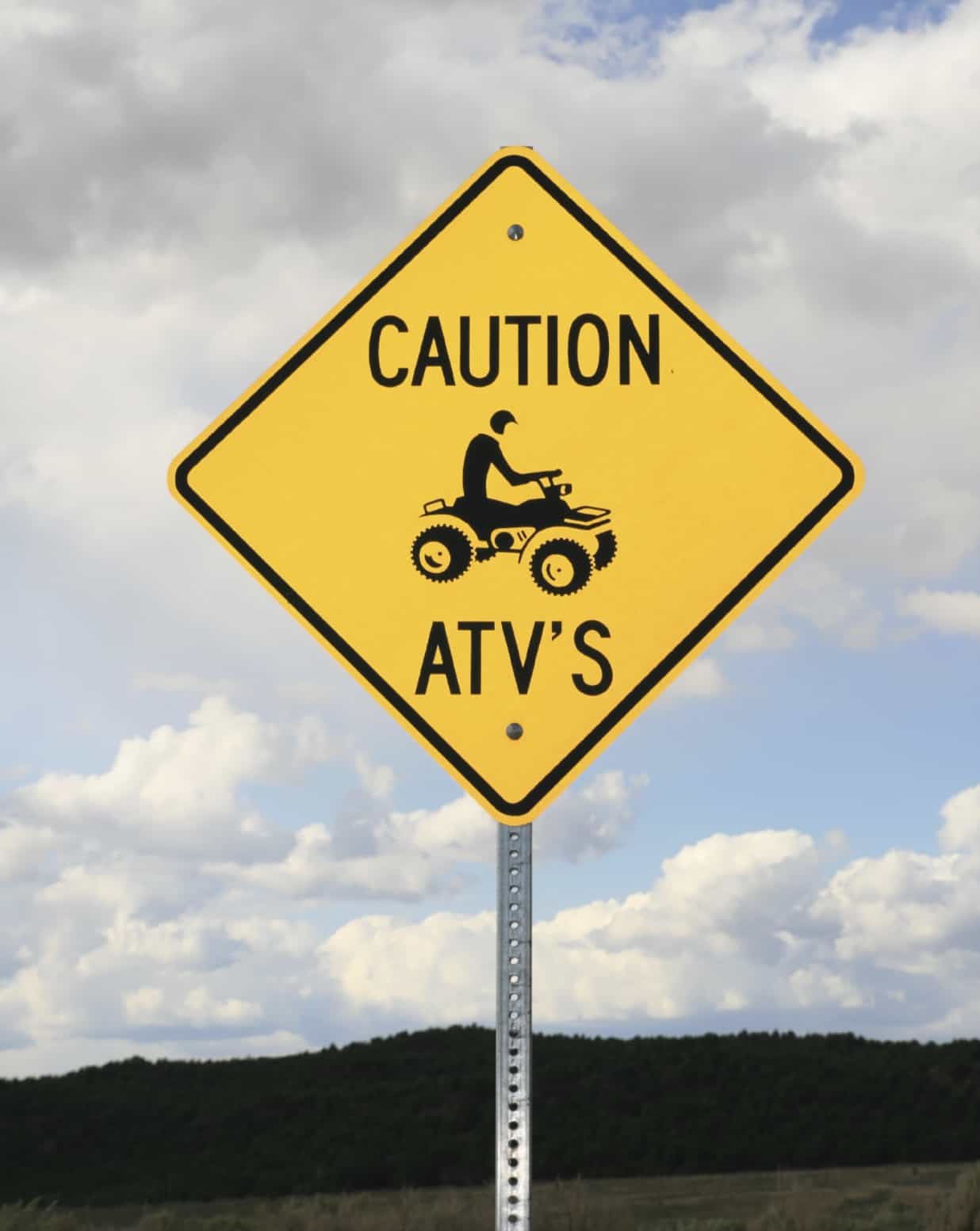
Nothing is ever easy in farming. Several Australian States have introduced a rebate scheme to help farmers improve the safety of the quad bikes so the vehicles, also inaccurately called All Terrain Vehicles (ATV), should be made safer. The argument over safety has persisted for many years and has resulted, most recently, in rebates for safety improvements provided by the government. However, two States – Victoria and New South Wales – have different processes to accessing these rebates and the NSW process seems to deter farmers from applying for the rebates.
 The Victorian Government’s rebate scheme is administered through WorkSafe who provides a Frequently Asked Questions which is simple and clear. The dates of activity are listed and, primarily, proof of purchase is the main document for eligibility. Victorian farmers can obtain a rebate for:
“$1200 for the purchase of an alternate vehicle such as a side-by-side vehicle (SSV) or a small utility vehicle (SUV). The alternate vehicle must be designed for use in agriculture and at point of sale have rollover protection and a fitted seatbelt. Sport vehicles and small commercial vehicles, such as utes, are excluded.
Up to $600 for the purchase of up to two operator protection devices (OPD). The OPD must have been designed and manufactured in accordance with approved engineering standards and independently tested to be eligible for the rebate. There are currently two OPD devices that meet this criteria and are eligible for the rebate. They are the Quadbar™ and the ATV Lifeguard.”
The NSW process is funded by SafeWork NSW with a complex set of terms and conditions. The purchase options seem narrower but the major difference in the two rebates schemes is New South Wales’ insistence that farmers must attend an “educative interaction”. According to a SafeWork NSW FAQ farmers are required to:
- “get along to a Farm Safety Day run by SafeWork NSW or one of its program partners
- visit the SafeWork NSW stand at an Agricultural Field Days
- request a free on-farm Workplace Advisory Visit and we will come to you
- attend one of the 100 training events being offered by Tocal College.”
SafetyAtWorkBlog has been told that farmers find this to be condescending and are suspicious of SafeWork NSW’s intentions, particularly in relation to the “free on-farm Workplace Advisory Visit”. Such visits are likely to be SafeWork NSW’s preferred option as there are only a limited number of Field Days available every year. WorkSafe Victoria does not insist on educative interactions as part of the rebate scheme which increases NSW framers’ suspicions.
The Federal Chamber of Automotive Industries (FCAI) recently released a new video to support its claims that Operator Protection Devices (OPD) or Crush Protection Devices (CPD) “are not the answer“. The FCAI has been out of step with the issue of quad bike safety for many years and it is difficult to sympathise with its position when governments are “endorsing” OPDs through rebate schemes.
The FCAI’s position seems to be shortsighted as the rebates are encouraging farmers to apply a Gordian Knot solution to the bickering over quad bike safety. Both the NSW and Victorian rebate schemes encourage farmers to purchase side-by-side vehicles (SSV) which, due to the framework over the driver, have no need for the OPDs on offer. SSVs are more expensive than quadbikes but can be seen as endorsed safer options by the regulators of safety in each of the States.
Having dug in to a contrary position of additional safety measures on quad bikes, the FCAI is getting more out of step with the regulators’ positions and the safe desires of farmers and farming families. But perhaps criticising the FCAI is unfair, after all, it is a body representing the interests of automotive manufacturers. Generations have grown up equating motor vehicle manufacturing with safety, ever since “Unsafe at Any Speed” was published in the 1960s, but the FCAI seems different. It has its own definition of workplace safety that is not in step with government or safety regulators.
Farmers, like all business operators, need to decide for themselves who they trust more for their own safety – regulators or salespeople.