Work-related elements for social change

It is almost impossible for occupational health and safety (OHS) people to stop looking at the world through the risk assessment parameters and hierarchies with which they work every day. The Hierarchy of Control could be applied to the COVID19 pandemic with the important lesson that the elimination of a hazard does not only come from the right purchase but could require months and months of a combination of Administrative Controls, Personal Protective Equipment, and perseverance. This impossibility should not be something that makes OHS professionals shy. It should be embraced and expanded, where possible, beyond the bounds of workplace organisations to societal design and change.

Michael Quinlan has recently written about a different investigative process that could be directly applied to the management of disasters, including COVID19. His research on Ten Pathways to Death and Disaster has been popping up in conferences, books and public speaking, including the OHS advocacy of Dr Gerry Ayers of the CFMEU, and has rarely been more timely.
Subscribe to SafetyAtWorkBlog to continue reading.
Subscribe Help
Already a member? Log in here

Exclusive Interview with Dr Tom Doig

SafetyAtWorkBlog had the chance to put some questions to Dr Tom Doig in early 2019 prior to the book’s release. Below is that exclusive interview.

SAWB: “Hazelwood” is predominantly a book that describes the social and environmental impacts of the Hazelwood. What, if any, overlap did workplace health and safety (WHS) and WorkSafe Victoria have in the fire’s aftermath?

TD: In the aftermath of the mine fire, a number of WHS issues have come to the fore. Firstly, in the 2014 Hazelwood Mine Fire Inquiry, a number of criticisms were made of Hazelwood’s regulatory framework, with a suggestion that there was a ‘regulatory gap’, as expressed by Mr Leonard Neist, Executive Director of the Health and Safety Unit at the Victorian Workcover Authority (VWA), at that time:

‘If I identify that gap as, who is responsible for regulating for the protection of public safety, regardless of what the source of the hazard or the risk is, who’s responsible for public safety, that’s where the gap probably is and I can’t—if you were to ask me right now, I can’t tell you who is responsible for regulating public safety. I’m responsible for regulating workplace safety and responsible for public safety as a result of the conduct of that undertaking, but I couldn’t tell you who is directly responsible.’

In this case, while VWA focuses on the health and safety of mine employees, they aren’t explicitly concerned with the health and safety of the general public, if a hazard – like a 45-day plume of toxic smoke – is dispersed beyond a specific workplace.

Continue reading “Exclusive Interview with Dr Tom Doig”

Important safety, environmental, political and personal stories in book on the Morwell Mine fire

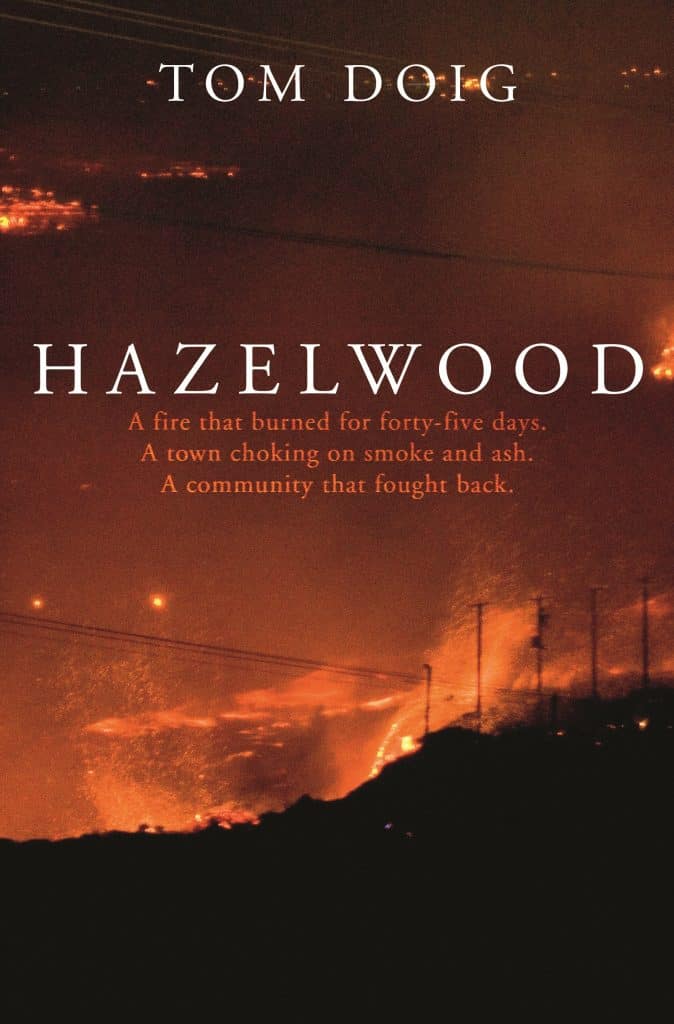
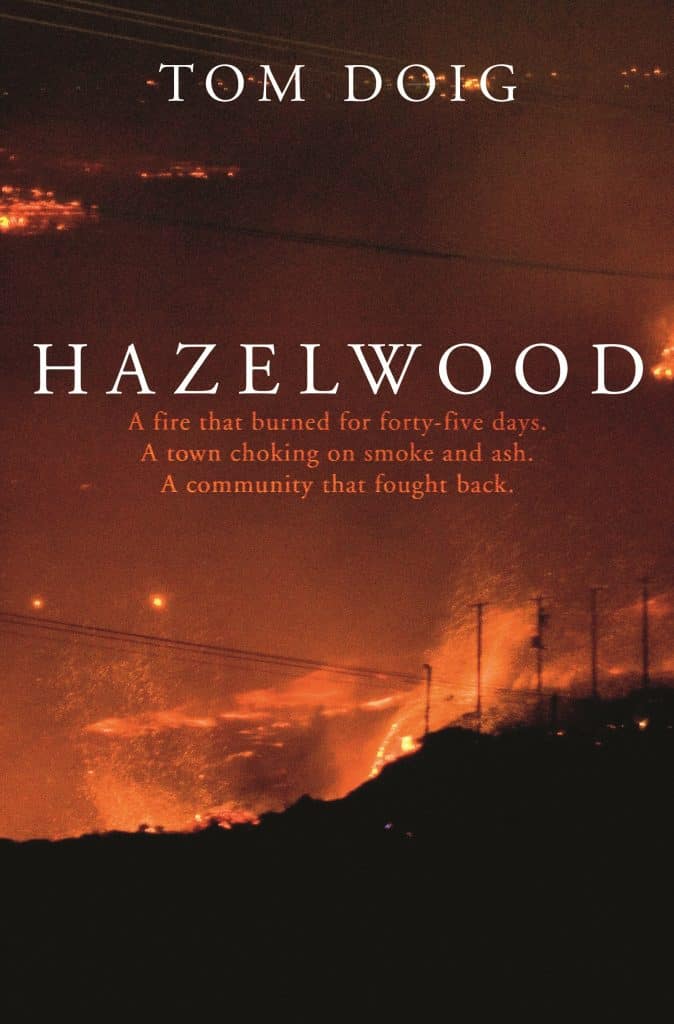
Dr Tom Doig has continued to build on his earlier work about the Morwell mine fire, expanding his “The Coal Face” from 2015 into his new book “Hazelwood” (after court-related injunctions, now available on 18 June 2020).

SPECIAL OFFER: The first four (4) new Annual subscribers in the month of June 2020 will receive a copy of Hazelwood.

The Morwell mine fire created great distress to residents in Victoria’s Latrobe Valley, ongoing health problems, and a parliamentary inquiry, but can also be seen as a major case study of occupational health and safety (OHS) laws, enforcement, role and the obligation on employers to provide a safe and healthy working environment that does not provide risks to workers and “protect other people from risks arising from employer’s business”.  The management of worker and public safety is present in almost every decision made in relation to the Morwell Mine fire. The overlay of an OHS perspective to Doig’s book is enlightening.

Subscribe to SafetyAtWorkBlog to continue reading.
Subscribe Help
Already a member? Log in here

The gig tightrope over a receding tide

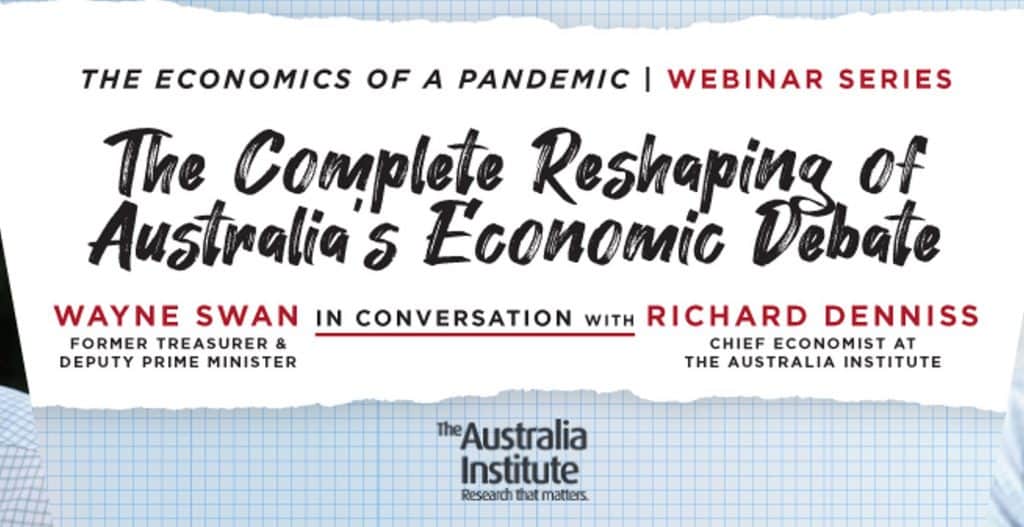
The Australia Institute conducted a webinar on Australia’s economic future during and after the COVID19 pandemic. Former Federal Treasurer Wayne Swan and economist Richard Denniss were the featured speakers. Two particular issues were of relevance to occupational health and safety (OHS) – the future of the gig economy and re-industrialisation.

Subscribe to SafetyAtWorkBlog to continue reading.
Subscribe Help
Already a member? Log in here

The Triumph of Doubt is essential reading

When a former head of a national occupational health and safety (OHS) regulator writes a book, it may be a curiosity (and it is rare). But when the writer is the former Assistant Secretary of Labor for the US Occupational Safety and Health Administration, the book becomes interesting. When the book is called “The Triumph of Doubt – Dark Money and the Science of Deception“, it becomes a must-read. SafetyAtWorkBlog dips into David Michaels‘ new book (as I only received it yesterday) and finds treasure.

This is not the first time that Michaels has written about Doubt and how whole industries have developed to create, market and exploit Doubt for the benefit of the Establishment. However, the new book is super-topical in this time of “Fake News” and blatant disregard of science and scientists.

Subscribe to SafetyAtWorkBlog to continue reading.
Subscribe Help
Already a member? Log in here

Hand washing and safety

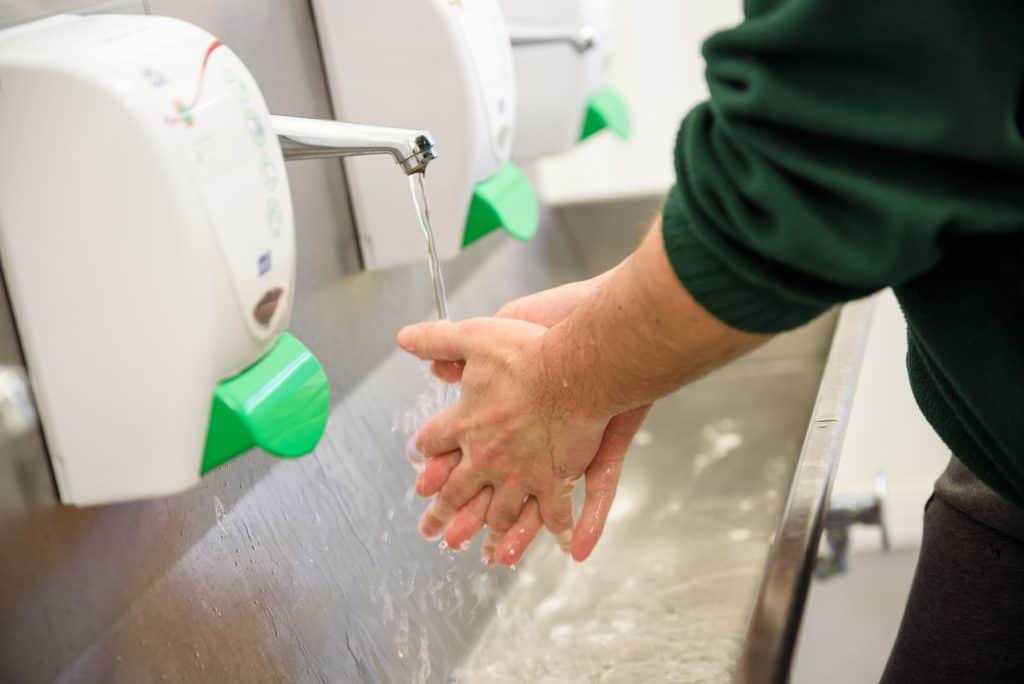
The appearance of a new coronavirus (Covid19) has again thrown a focus on hand hygiene. This is an occupational health and safety (OHS) issue as the risk could appear at work and, in Australia, suitable toilet amenities are required under OHS Acts and Regulations. But how do you wash your hands safely? Let’s look at one recommendation.

Subscribe to SafetyAtWorkBlog to continue reading.
Subscribe Help
Already a member? Log in here

New air quality standards for outdoor work

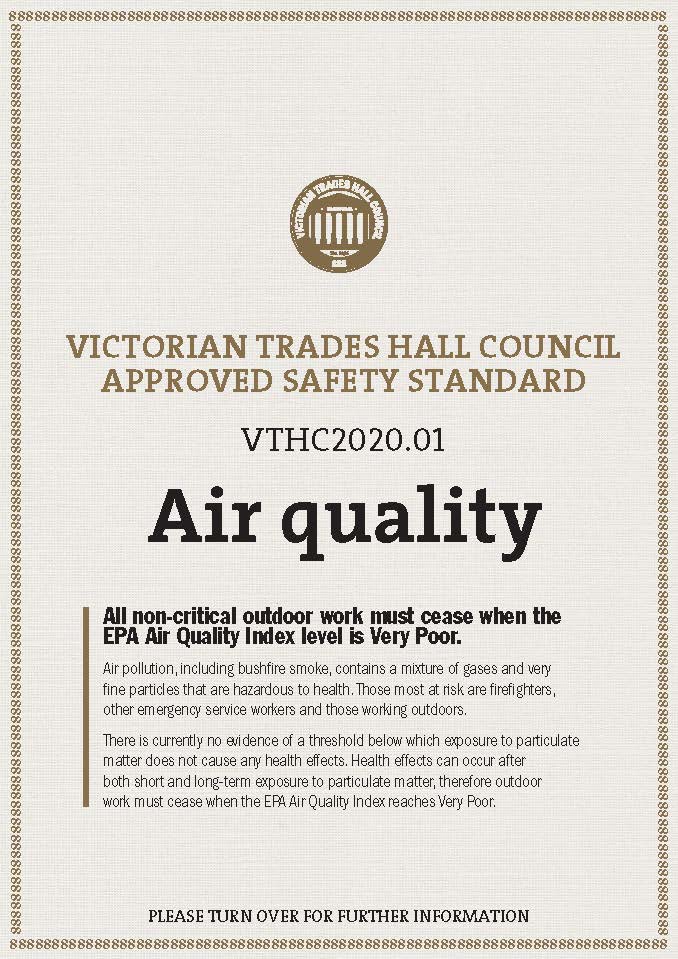
On January 30 2020, the Victorian Trades Hall released a new “approved safety standard” on air quality risks for outdoor workers. It is the latest of a series of alerts and guidelines generated by the persistence of bushfire smoke in urban areas of, especially, New South Wales and Victoria. Bushfire smoke is only going to become more frequent in Australia, and its persistence over weeks, requires a coordinated discussion on how Australian workplaces and practices need to change to adapt to the new climate.

Subscribe to SafetyAtWorkBlog to continue reading.
Subscribe Help
Already a member? Log in here
Concatenate Web Development
© Designed and developed by Concatenate Aust Pty Ltd