Drug and alcohol testing for Australian construction sites

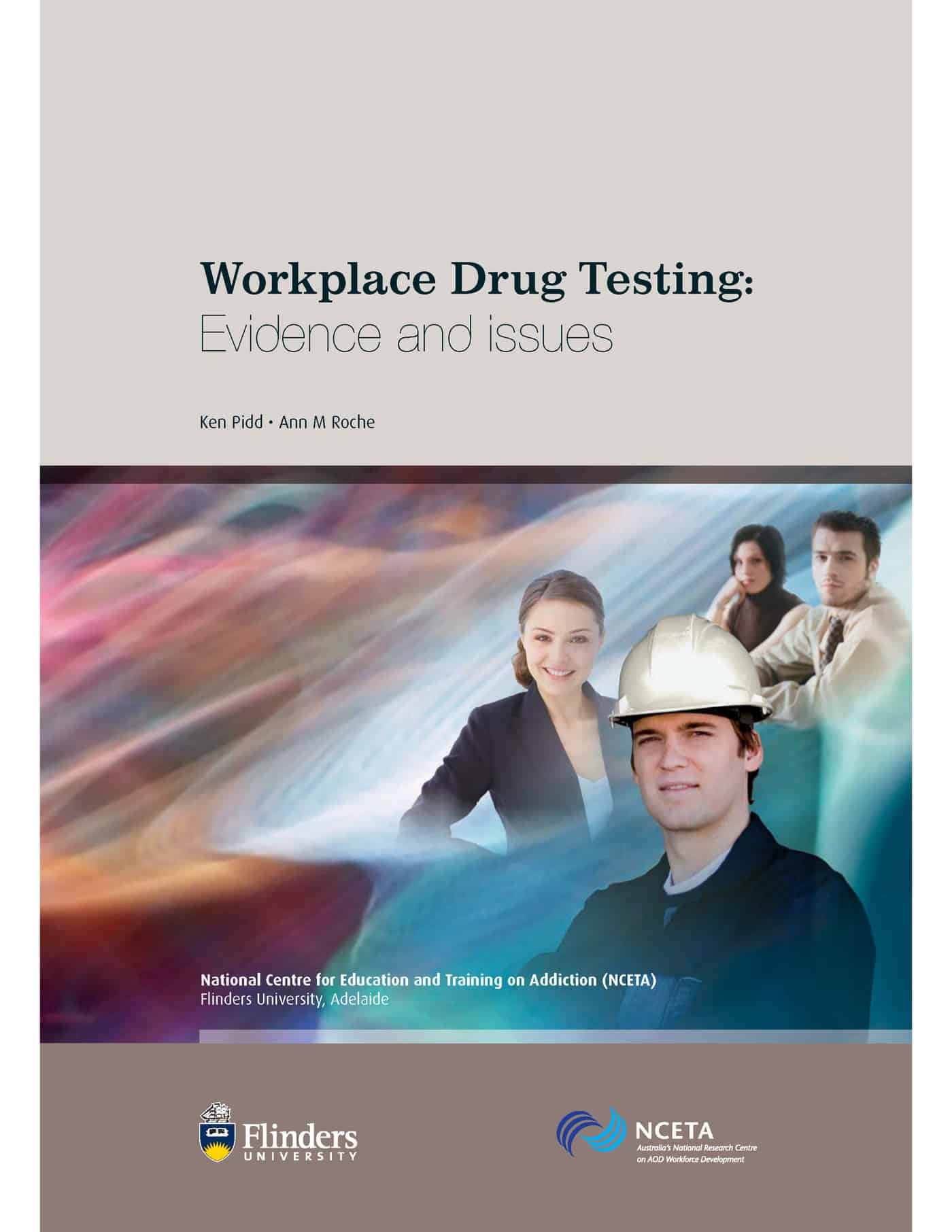
On 18 September 2015 Senator Eric Abetz introduced amendments to the Building Code so that drug and alcohol testing will be required on construction sites.  In his media release he states that:

“The construction industry is a high risk industry where the risks associated with the use of heavy machinery, mobile equipment, working in congested areas and working from heights, are accentuated by the effects of alcohol and drug use.”

Following this argument, would not greater safety benefit be gained by addressing the risks posed by machinery, working at heights and in congested areas?  Drug and alcohol testing will do little to reduce these risks, or more correctly, hazards.  Being impaired may make it more likely for a worker to fall while working at heights but creative and safe design could eliminate the risk of working at heights altogether. Continue reading “Drug and alcohol testing for Australian construction sites”

The rebuilding of OHS conferences

All conference delegates want to hear cutting-edge, radical or step-change solutions or strategies but what happens when the conference speakers are reinforcing what you already know? That is the situation facing the delegates of the Safety Institute of Australia’s (SIA) National Convention.

On the first day of the conference, local and international speakers have suggested the delegates, almost all occupational health and safety (OHS) professionals, do what they are already doing – talk about safety, build relationships, report on the positives and the lead indicators. Continue reading “The rebuilding of OHS conferences”

More care needed in discussing workplace mental health and mental illness

Writing about workplace mental health is a tricky task.  An article recently posted to Business News Western Australia shows how tricky it can be and how mental health can be misinterpreted as mental illness.

The headline, “Are you one of the 20% of workers that will experience a mental health issue?” clearly refers to workers but the first sentence of the article does not.  “Australian adults” are not all “workers”.

Out of the total population of around 24 million Australians, Wikipedia estimates the working-age population of Australia (15 – 64 years) at round 67% (16 million, approximately). If we apply these statistics to the headline, there are 3.2 million workers who “will experience a mental health issue”. But is this annually, over one’s working life or over a lifetime? The article does not say.

Not only are the statistics messy, so is the terminology.

Subscribe to SafetyAtWorkBlog to continue reading.
Subscribe Help
Already a member? Log in here

5 experts in 60 minutes

Host: ISCRR's Jason Thompson
Host: ISCRR’s Jason Thompson

The Institute for Safety, Compensation and Recovery Research (ISCRR) has tried a new format for its occupational health and safety (OHS) seminars.  It is not a lunch with a single presenter and it is not a Three-Minute Thesis.  It is five safety researchers in one hour, seven minutes per person and a single question from the floor – and it worked. Continue reading “5 experts in 60 minutes”

National OHS performance indicators needed

Since the release of the 2015 Citi report into the occupational health and safety (OHS) performance of the companies in the ASX200 stick exchange rankings, this blog has received many requests for a copy of the report to assist in the benchmarking of performance. Clearly performance indicators for OHS remain contentious and difficult but this does not need to be the case.

Citi’s recent report stated that key performance indicators (KPIs) should meet three needs:

  • “internal monitoring for continuous improvement to reduce incidents;
  • benchmarking and sharing lessons within the industry; and
  • transparent disclosure to stakeholders.”

Continue reading “National OHS performance indicators needed”

Sedentary work research features at ergonomics conference

The current International Ergonomics Congress in Melbourne seems to be successful in a number of ways:

  • The size and variety of its program
  • The quality of its keynote speakers
  • Out of 900 delegates, 600 are from outside Australia.

Where it seemed to be less successful was in its profile outside of the ergonomics profession. The information available, some identified on other blog articles, has relevance well beyond ergonomics and it is disappointing that the conference was not marketed more to the general occupational health and safety (OHS) profession. (It should have been possible to exceed 1000 delegates just from local promotion.) The OHS profession needs livening up and have its body of knowledge expanded to areas that both support and challenge its own principles and processes.

Sedentary Work

A major thread in the Congress was the issue of sedentary work, something discussed by the first day’s keynote speaker, Professor

Subscribe to SafetyAtWorkBlog to continue reading.
Subscribe Help
Already a member? Log in here

Ergonomics conference provides good, free knowledge

The 19thTriennial Congress of the International Ergonomics Association (IEA 2015) is currently running in Melbourne Australia with 900 delegates, of which 600 are from outside Australia.  It offers a fascinating (online) library of ergonomic and occupational health and safety (OHS) research. Below is a sample of the research on offer picked, largely, at random.

It seems unnecessary to state that ergonomics is an essential part of the knowledge base of safety and production but ergonomics still seems to be a “dark art” to many.  This is acknowledged by many in the sector and is summarised well by Ruurd N. Pikaar

Subscribe to SafetyAtWorkBlog to continue reading.
Subscribe Help
Already a member? Log in here
Concatenate Web Development
© Designed and developed by Concatenate Aust Pty Ltd