

On the iconic discount table in Readings Carlton bookshop is one of the most interesting occupational health and safety (OHS) books – The Careless State by a Professor of Political Science at Melbourne University, Mark Considine. This book was not written by an OHS specialist with all the associated ideological and philosophical baggage. And really, it is mainly one chapter that justifies the description “Worker’s Health and Safety.”
Category: evidence
New shining stream of safety research funds
Last week, RMIT University launched the Safety and Health Innovation Network (SHINe), a new safety, health, and wellbeing research fund that will work collaboratively with the University of Colorado’s Construction Safety Research Alliance (CSRA) and others. This is a promising source of funds for new occupational health and safety research in the construction industry. SafetyAtWorkBlog attended the launch and was able to talk exclusively about the program with Distinguished Professor Helen Lingard.
HWSA’s manual handling challenge
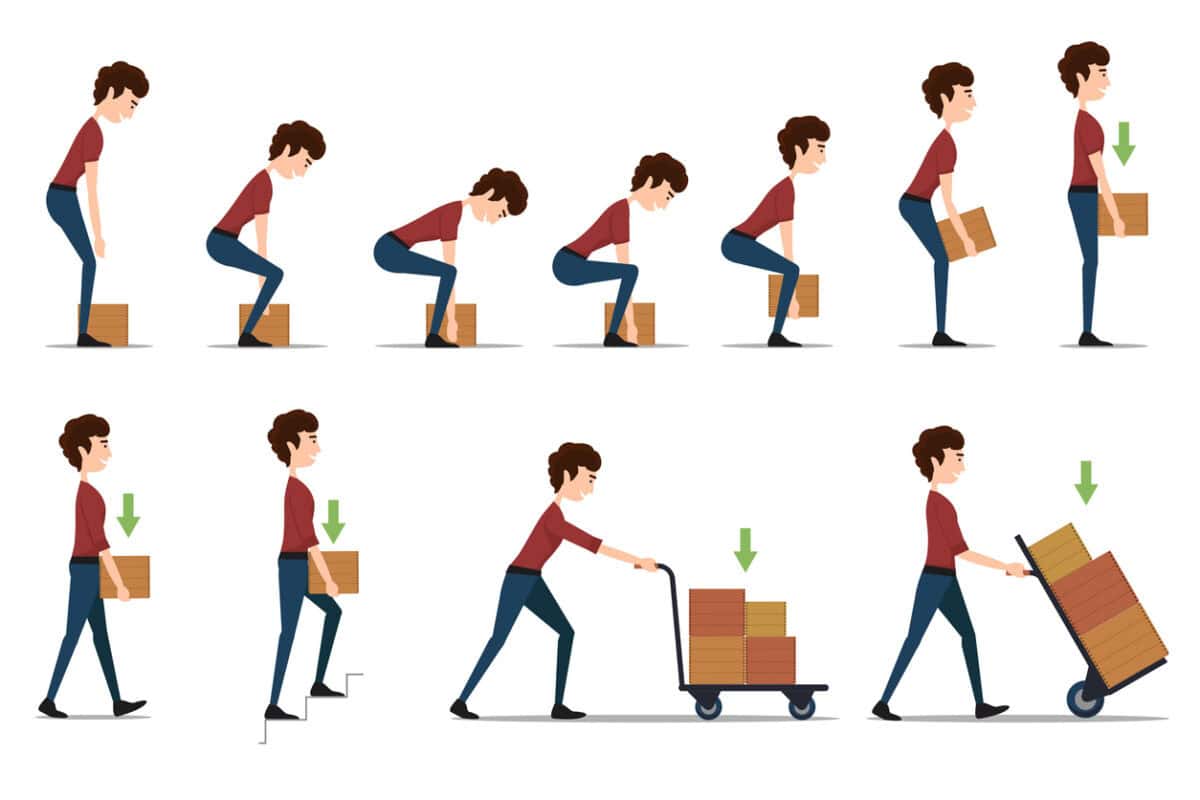
Recently, Australia’s Heads of Workplace Safety Authorities (HWSA) produced a position paper that said:
“‘How to lift’ training programs do not reduce the incidence of musculoskeletal disorders. Despite this, a recent survey found that almost 80 percent of employers had provided ‘how to lift’ training to their workers in the past two years…
Providing ‘how to lift’ training does not prevent work-related musculoskeletal disorders. ‘How to lift’ training does not change any of the hazardous manual task risk factors that workers are exposed to, nor does it address the source/s of the musculoskeletal disorder risk…”
This is a further example of employers being sucked into occupational health and safety (OHS) related programs that do not work. Wellness has been seriously questioned, gym ball seating, back belts… and more. However, it seems that research is less of a challenge than communication.
“Does my business comply with the OHS/WHS law?”
Employers struggle to know if their businesses comply with the local occupational health and safety (OHS) or work health and safety (WHS) laws. They always have and, likely, always will. Employers are hungry for certainty and are often annoyed with OHS advisers who refuse to give a definitive answer to the question in this article’s title.
In the 1990s, particularly in Victoria, there was almost a frenzy for a simple audit tool developed through WorkSafe Victoria called SafetyMAP. It disappeared well over a decade ago, but my Goddess, it was popular, and small business operators especially wanted it. Even when its effectiveness was questionable.

The Australian Institute of Health and Safety embraces AI
The Australian Institute of Health and Safety (formerly the Safety Institute of Australia) recently launched an Artificial Intelligence tool for the institute’s members to access its extensive data sources. I posed SPARK a couple of questions to evaluate its effectiveness.
According to the September 25 2024 media release:
“The “Safety Professional Assistant and Resource Knowledge-Base” tool, known as SPARK, … has been trained on State-based legislation and regulations, OHS Body of Knowledge content, OHS Professional Magazine content, and general organisational information stored on the AIHS website.”

Analyse the OHS system rather than the incident
Is it reasonable to apply the findings of a coronial inquiry into a theme park disaster to a “low-risk” administrative office environment? Well, one occupational health and safety management system (OHSMS) is much like another.
Administrative and office work environments are much less likely to experience work-related traumatic deaths as there are few unguarded conveyor belts or forklifts darting around, so coronial inquiries are few. However, the requirements imposed by OHS laws are the same in both types of workplaces, and audits do not assess workplaces, only the OHSMS operating in those workplaces. For instance, an analysis of the OHSMS in place at Dreamworld in 2016 is relevant to an office or warehouse for a construction site or childcare centre in another Australian State.

Another alleged work-related death at EY. This time – India
The workplace culture of EY and other major consulting companies came under scrutiny several years ago following an apparent work-related suicide at the offices of EY in Sydney. EY’s workplace culture is again being examined after the death of a young EY employee in India, allegedly due to work stress.