Australian OHS guidances for COVID19

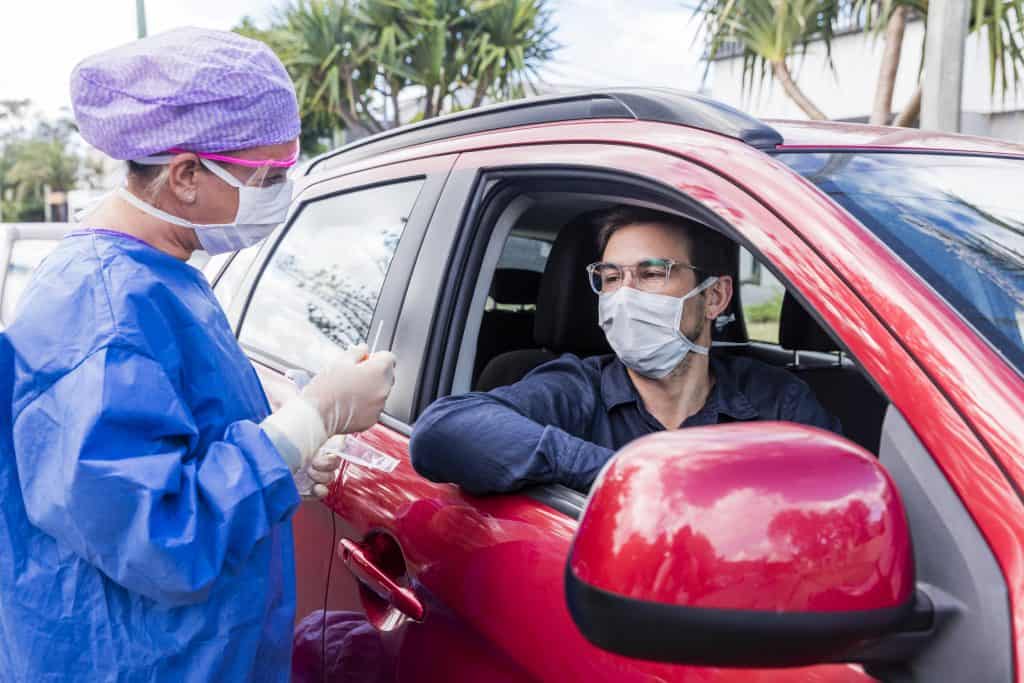
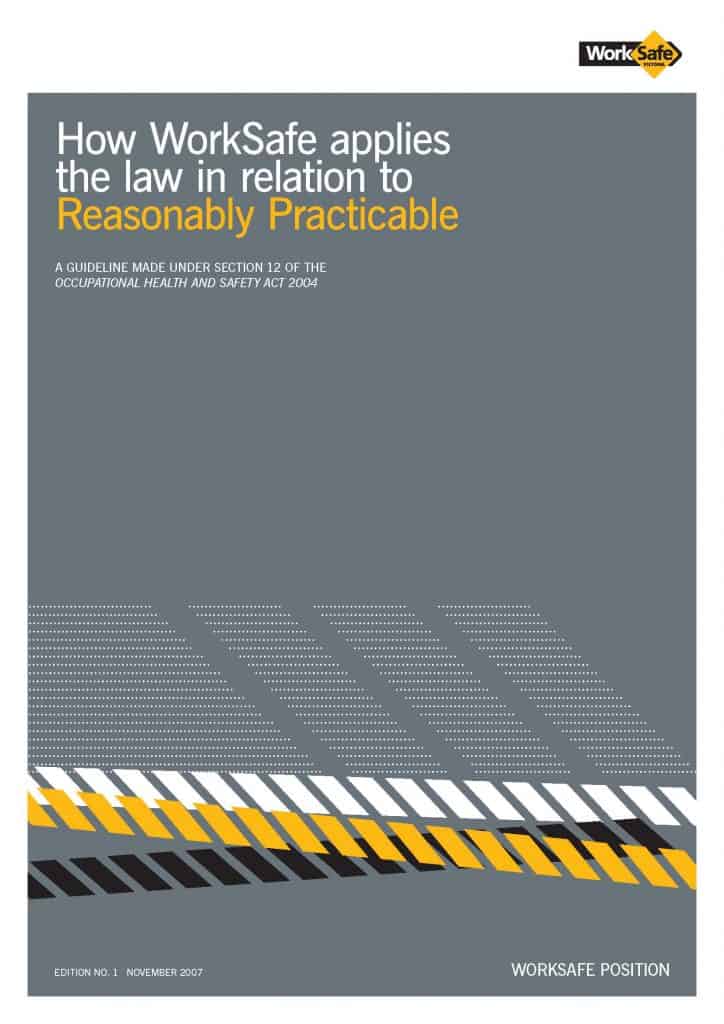
Every occupational health and safety (OHS) man and their dog is providing advice about how to manage the COVID19 pandemic.  The only advice this blog has offered is to target your sources of information about managing the risks to your local health department or OHS regulator.  This information is changing all the time in response to new information but there are a couple of OHS guidances that are worth paying close attention to.

Continue reading “Australian OHS guidances for COVID19”

OHS data still in short supply

The Peter Sandman quote concerning delivery people and infections that appeared in an earlier SafetyAtWorkBlog article highlighted an issue from 2005 that was taken up in Senator Tony Sheldon‘s questioning of the head of Safe Work Australia, Michelle Baxter, in Senate Estimates on March 4 2020. Sheldon has challenged SWA in earlier committee meetings but his confidence is increasing as he covered more issues than delivery workers and coronavirus.

Michelle Baxter was also questioned on the provision of OHS guidance in languages other than English, silicosis data and the banning of engineered stone.

Subscribe to SafetyAtWorkBlog to continue reading.
Subscribe Help
Already a member? Log in here

More on David Michaels’ book – “statistics are people with the tears wiped away”

I found time to read the rest of David Michaels’ latest book “The Triumph of Doubt“. It was loaded with information that is directly relevant to the Australian occupational health and safety (OHS) sector but more about the manipulation of facts and the stealth of lobbyists and influencers than on the hazards themselves. Here’s my take on some of his thoughts.

Two Australian case studies that would not have been out of place in a book like Michaels’, or even an Australian supplement to his book, were quad bikes and workplace mental health. Quad bike safety is the better fit with Michaels’ approach as many of the techniques of Zellner and Dynamic Research Incorporated, and the strategies of international all-terrain vehicle manufacturers, reflect the those strategies in the book.

David Michaels writes about chemicals, primarily, but many of his words hint that similar “doubt scientists” could be already in the psychological health and wellness sector, except these scientists are less about reacting to litigation and legislation than supporting and strengthening an industry in anticipation of increased regulatory scrutiny. “Pre-action”, perhaps?

Subscribe to SafetyAtWorkBlog to continue reading.
Subscribe Help
Already a member? Log in here

Final Sexual Harassment Inquiry report

“The Sex Discrimination Commissioner has come out with something that is clear, which is that sexual harassment is a workplace right, is a health and safety right, is a human right.” [??!!]

What would be more accurate and reflective of Michele O’Neil’s position is that workers have a human, health and safety, and workplace right to a workplace that is without the risk of sexual harassment.  The ACTU President gets the message right in the official media release.

O’Neill urges the Morrison Government to take the final report into sexual harassment in Australian workplaces and its recommendations seriously and it should, but the signs are not good.  The mainstream media coverage of the Workplace Sexual Harassment Inquiry’s report has been thin. 

Continue reading “Final Sexual Harassment Inquiry report”

Mental Health conference assessment

As you could guess from some recent blog posts, the Criterion Conference called “Improving Integrated Approaches to Workplace Mental Health” conducted with the support of the Australian Institute of Health and Safety, was well worth attending as many of the speakers were excellent. What was missing was a strong voice of advocacy on behalf of the Human Resources (HR) profession to counter or balance the strong occupational health and safety (OHS) focus.

Below is a summary of some of the important points made by the conference speakers (or at least those who did not impose restrictions).

Subscribe to SafetyAtWorkBlog to continue reading.
Subscribe Help
Already a member? Log in here

What does a psychological near miss look like?

This week a workplace mental conference has been running in Sydney with some excellent speakers. The theme is to improve integrated approaches to workplace mental health in the belief that progress can be most effective when workplace silos and professional disciplines share information and actively listen.

However, resistance to change continues and silos continue to exist even if the interconnecting bridges are half-formed. One half-formed bridge was illustrated when I put this question to a panel discussion:

“What does a psychological near-miss look like?”

Subscribe to SafetyAtWorkBlog to continue reading.
Subscribe Help
Already a member? Log in here

Government responds to the mental health risks of emergency service workers

In 2018/19 one of Australia’s Senate Committees looked at the mental health of emergency responders. The final report was handed down in February 2019 and the government’s response has been released today, twelve months later (?!). Lucky the government delayed as it allowed the Response to mention the 2019/20 bushfires even though this was outside the timeline of the Committee’s inquiry.

Emergency Responders, as do frontline soldiers, face unique psychological risks from their duties, so there are some recommendations that are difficult for those outside the sector to relate to but looking at the Response gives an insight into the thinking about occupational health and safety (OHS), and especially workplace mental health risks, of the Australian government. That thinking may be summarised by the Government supporting only one of the fourteen recommendations, noting five of them and supporting “in principle” the rest.

Subscribe to SafetyAtWorkBlog to continue reading.
Subscribe Help
Already a member? Log in here
Concatenate Web Development
© Designed and developed by Concatenate Aust Pty Ltd