Most-read OHS articles in 2019

This past week most media have been reflecting on the last twelve months or the decade. There are two ways of applying this practice to the SafetyAtWorkBlog – statistics and most-read. Let’s look at statistics first.

This year the SafetyAtWorkBlog posted 225 articles, not including this one, with an average word count of 1,030 words – the equivalent of a 230,000 word book on occupational health and safety (OHS). For those Annual subscribers that equates to just over $1.00 per article which I think is a pretty good return.

Continue reading “Most-read OHS articles in 2019”

The new must build on the old – Uber, violence and safety

Anything Uber does gets global attention. This month Uber released its Safety Report which included sexual assaults and misconduct by its drivers in the United States. It seems that the importance of a planned workplace health and safety system has caught up with Uber.

Subscribe to SafetyAtWorkBlog to continue reading.
Subscribe Help
Already a member? Log in here

Alright stop, collaborate and listen

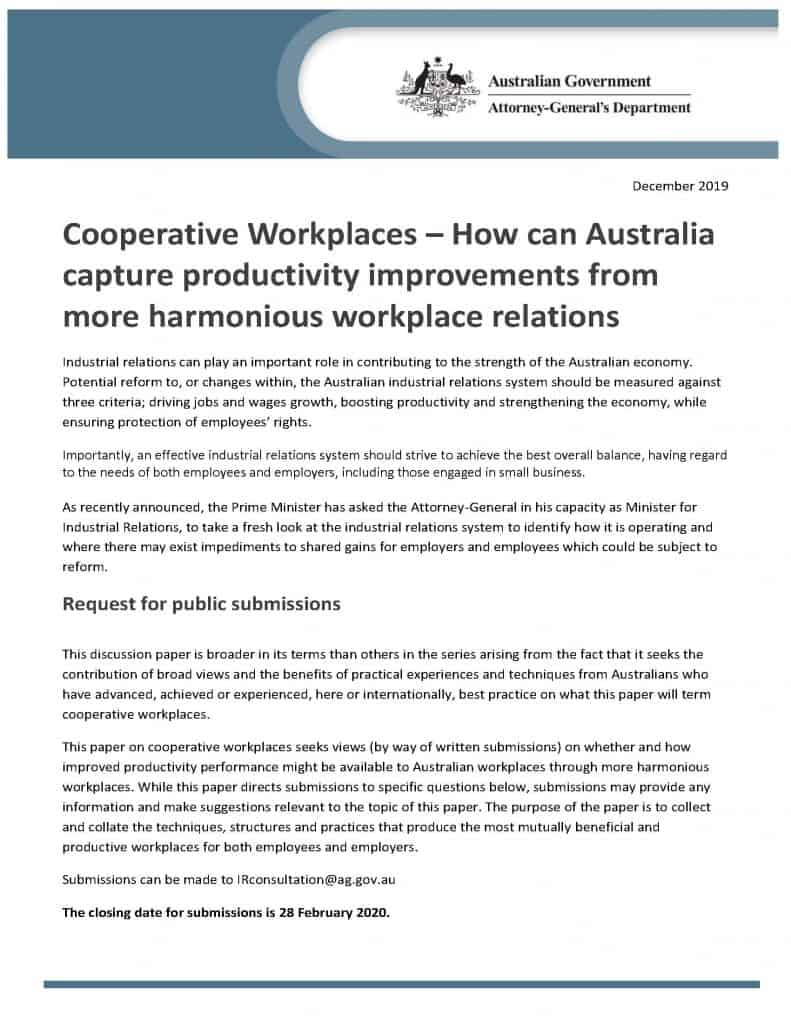
On 2 December 2019, Australia’s Attorney-General, Christian Porter released a discussion paper about workplace relations in the hope of sparking contributions on how cooperative workplaces can create productivity improvements. Any discussion paper on productivity and workplace from the current conservative government is loaded with neoliberal ideology but one of the questions posed is:

“What has been the experience with techniques and practices to foster cooperative workplaces including…. Collaborative development of Health and Safety policies.”

It is not unreasonable for this to be seen as an opening for a broad discussion about the concept of Consultation included in Australia’s workplace health and safety laws, as the improvement of health and safety requires collaboration, trust respect and other elements in the discussion paper. The parallels between Collaboration and Consultation were on show at the Australian Labor Party’s national conference twelve months ago.

Subscribe to SafetyAtWorkBlog to continue reading.
Subscribe Help
Already a member? Log in here

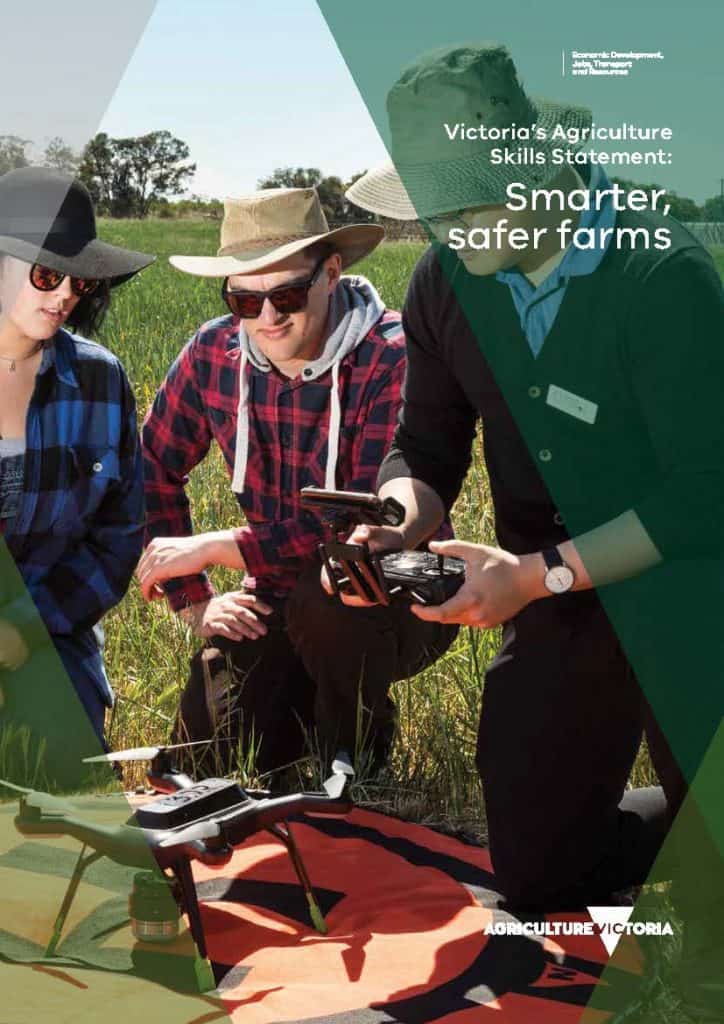
Reduce deaths and injuries to achieve a sustainable industry

Agriculture is one of the most dangerous workplaces in Australia and other countries. This reality is supported by many statistics and over a long time.

Agriculture is, perhaps, at the forefront of changing production methods to ensure sustainability in a world that is changing in ways that no farmers have had to face in the past. Agriculture therefore needs to be both a safe and a sustainable industry.

So why is workplace health and safety not being given a top priority in the Victorian Government’s Smart Farms program?

Subscribe to SafetyAtWorkBlog to continue reading.
Subscribe Help
Already a member? Log in here

Focus on the hoops and not the holes

There is a confluence of investigations into mental health and suicides in Australia at the moment, and most of them overlap with occupational health and safety (OHS).  Each of these increases the understanding of the relationship between work and mental health but no one seems to be connecting the threads into a cohesive case.  This article doesn’t either, by itself, but hopefully the threads of the issues are identified through the themes of various SafetyAtWorkBlog articles.

Recently Tim Quilty of the Liberal Democratic Party addressed the issue of suicide in relation to his contribution to the debate on Industrial Manslaughter (IM) laws in the Victorian Parliament.  His assertions seem a little naïve:

Subscribe to SafetyAtWorkBlog to continue reading.
Subscribe Help
Already a member? Log in here

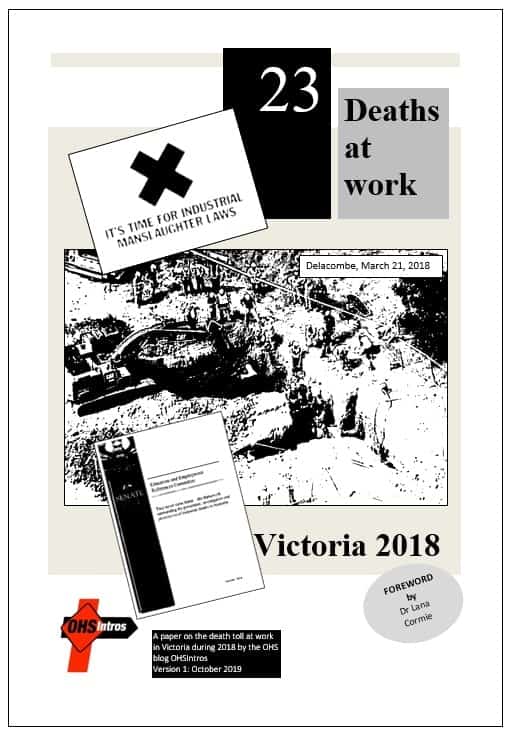
Paper provides historical context to OHS laws

Barry Naismith of OHSIntros has provided excellent independent analysis of Victoria’s occupational health and safety (OHS) data for many years. His latest “Deaths at Work” report (available publicly for a limited time) includes a detailed discussion on the social context of Victoria’s proposed Industrial Manslaughter (IM) laws.

But of more immediate interest is Naismith’s longitudinal analysis. One of his graphs showing death statistics back to the commencement of Victoria’s modern-era OHS laws in 1985 supports the statement popular with politicians that the rate of work-related deaths is declining over that time but Naismith points out that the five-year trend to 2018 is reversed and that this is part of the justification for the IM Laws.

Subscribe to SafetyAtWorkBlog to continue reading.
Subscribe Help
Already a member? Log in here

Industrial Manslaughter Laws are treading water

On November 13 2019 the Victorian Parliament heard detailed debate (page 93) about Industrial Manslaughter laws but without resolution. Many of the points raised were familiar and along political party lines but of particular interest was the insights provided into how that State’s political leaders perceive occupational health and safety (OHS).

Each of the speakers reiterated the importance of OHS and how all workers deserve to go home at the end of the shift – you know the cliches and the debate held plenty of them. There was also a fundamental misunderstanding by many speakers though.

Subscribe to SafetyAtWorkBlog to continue reading.
Subscribe Help
Already a member? Log in here
Concatenate Web Development
© Designed and developed by Concatenate Aust Pty Ltd