OHS of work vehicles starts to get national attention

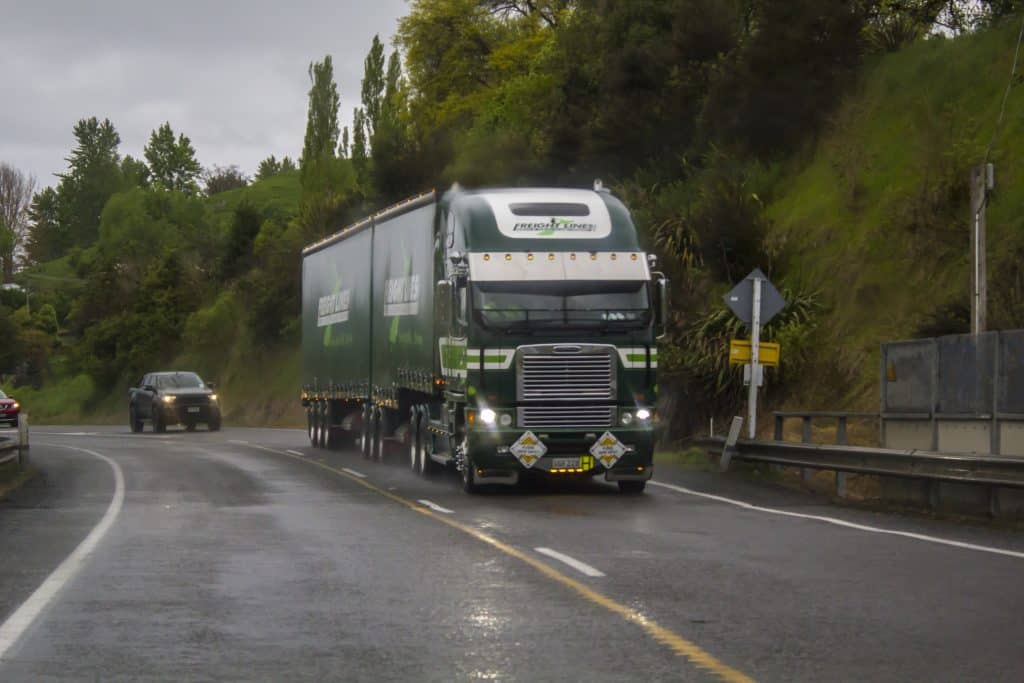
One of the the most ignored areas of occupational health and safety (OHS) is the light commercial and fleet/company vehicles. This is changing in Australia, partly, because the former head of the Transport Workers Union, Tony Sheldon is now a Senator.

In Senate Estimates on October 23, 2019 (page 117 onwards), Senator Sheldon challenged the heads of Safe Work Australia on workplace vehicle safety. He posed a scenario in relation to the collection of injury/incident data:

“If you’re a truck driver and you’re operating for, say, a major retailer and you’re contracted to a transport company and your contract is as an owner-driver—you own your own rig—and you get injured whilst you’re out on the road and you get seriously injured, under what circumstances would that be included and under what circumstances would it not be included in your statistics for serious injury?”

Continue reading “OHS of work vehicles starts to get national attention”

Silicosis – “we need to licence the industry and we need to regulate the product”

Last year the Scientific Meeting of the Australia and New Zealand Society of Occupational Medicine (ANZSOM) had a fiery discussion on the occupational health and safety (OHS) risks of cutting engineered stone.  The status has changed a lot over 12 months with various Codes of Practice, new exposure limits, a National Dust Disease Taskforce and lobbying from Erin Brockovich.  However the risk of worker exposure seems too have not changed this much because it is employers who are responsible for safe workplaces and there are many layers of OHS-related communication between research and practical application.

Dr Graeme Edwards (pictured above) spoke first in the ANZSOM panel on October 29 and he came out with all guns blazing.

“Prima facie evidence of system failure. That’s what accelerated silicosis means. It is an entirely preventable disease.”

Subscribe to SafetyAtWorkBlog to continue reading.
Subscribe Help
Already a member? Log in here

Scientific Meeting challenges

There is a difference between a conference and a scientific meeting. The latter, like the current meeting of the Australia and New Zealand Society of Occupational Medicine (ANZSOM), provides evidence.  The former tries to provide evidence but is often “infiltrated” by salespeople or the evidence is of a lesser quality.  Both are avenues for gaining information and sometimes the gaining of wisdom.

Day 1 of ANZSOM’s annual scientific meeting was heavy on overhead slides, graphs, Venn diagrams, flowcharts and at least two appearances of photos of Donald Rumsfeld!  There was a curious thread in several presentations – the role of non-occupational factors on workplace hazards and interventions.  This bordered on a discussion of political science and its relevance to occupational health and safety (OHS).  It was a discussion that is rarely heard outside of the basement of the Trades Halls and the challenging questions from die-hard communists and unionists, but it was an important one.  Some time soon we deserve a one-day seminar on the politics of workplace health and safety so that we can better understand what we mean by the lack of political will when we whinge about the slow pace of change. (There will be more on this theme in the exclusive interview with Professors Maureen Dollard and Sally Ferguson soon)

Subscribe to SafetyAtWorkBlog to continue reading.
Subscribe Help
Already a member? Log in here

Annual Reports are not as transparent on OHS performance as they could be

Around four or five years ago, occupational health and safety (OHS) reporting in Corporate Annual Reports was a hot topic as Australian research had indicated that Annual Reports were not revealing sufficient, or useful, OHS data. Also awards were being presented for the best OHS reporting in Annual Reports. SafetyAtWorkBlog has looked at a sample of the reports released by the Victorian Government over the last fortnight to see what OHS information is available.

Two major keywords were used to search the Annual Reports – “Safe” and “Well”. These words form the stemS of other search terms such as “safety” and “wellbeing” or “wellness”. Each of the word responses were looked at for a focus on workplace or work-related activity. Although public safety may have an increasing OHS context, public safety, and a range of other “safeties”, were not included.

Some Annual Reports were okay, others? Egh! But what is clear is that there is no excuse.

Subscribe to SafetyAtWorkBlog to continue reading.
Subscribe Help
Already a member? Log in here

Look closely at the camel rather than the straw

There are strong parallels between the National Inquiry into Sexual Harassment in Australian Workplaces and others addressing workplace issues, such as the Victorian Royal Commission into Mental and the Productivity Commission’s mental health inquiry, but there is also a connection to the Royal Commission into Banking and Financial Services which has focused the minds of some of Australia’s corporation s and leaders into examining their own workplace cultures and, for some, to reassess the role and application of capitalism.

This is going to become even more of a critical activity as the National Sexual Harassment Inquiry completes its report prior to its release in the first month or two of 2020.

Cultural analysis, and change, is often best undertaken first in a microcosm or specific social context. The experiences of sexual harassment of rural women in Australia is one such context, a context examined in detail by Dr Skye Saunders in her book “Whispers from the Bush“.

Subscribe to SafetyAtWorkBlog to continue reading.
Subscribe Help
Already a member? Log in here

One safety quandary solved by Consumer Law. What others are possible?

Caesarstone original quartz for kitchen, bathroom surfaces, benchtops, splash backs and kitchen Island

Last week the Australian Government accepted the recommendations of the Australian Competition and Consumer Commission (ACCC) about improving the safety of quad bikes. But the improvement in safety came not through occupational health and safety (OHS) laws but the Australian Consumer Law so how could the ACL help improve workplace health and safety further? After a quick look at how the quad bike recommendations have been received, the potential of the ACL is considered in relation to silicosis.

Subscribe to SafetyAtWorkBlog to continue reading.
Subscribe Help
Already a member? Log in here
Concatenate Web Development
© Designed and developed by Concatenate Aust Pty Ltd