The party politics of safety

The Safety Institute of Australia, commendably, approached the major political parties running in Australia’s current federal election campaign. Only the Australian Labor Party (ALP) responded to the SIA, but the policy documents of the Australian Greens and Liberal and National Parties are available online and their relevance to occupational health and safety (OHS) deserves attention.

The ALP information should be familiar to SafetyAtWorkBlog readers:

• “Show national leadership and meet with work, health and safety ministers from across Australia in the second half of this year to decide on the best course of action of the recommendations to come out of the Boland review.
• Work with state and territory governments to implement a harmonised industrial manslaughter offence.
• Establish a national advisory committee made up of representatives from each state and territory who have been personally impacted by a serious workplace injury or death to develop recommendations for federal, state and territory governments to act upon.”
Subscribe to SafetyAtWorkBlog to continue reading.
Subscribe Help
Already a member? Log in here

Dust clouds on kitchen benchtops

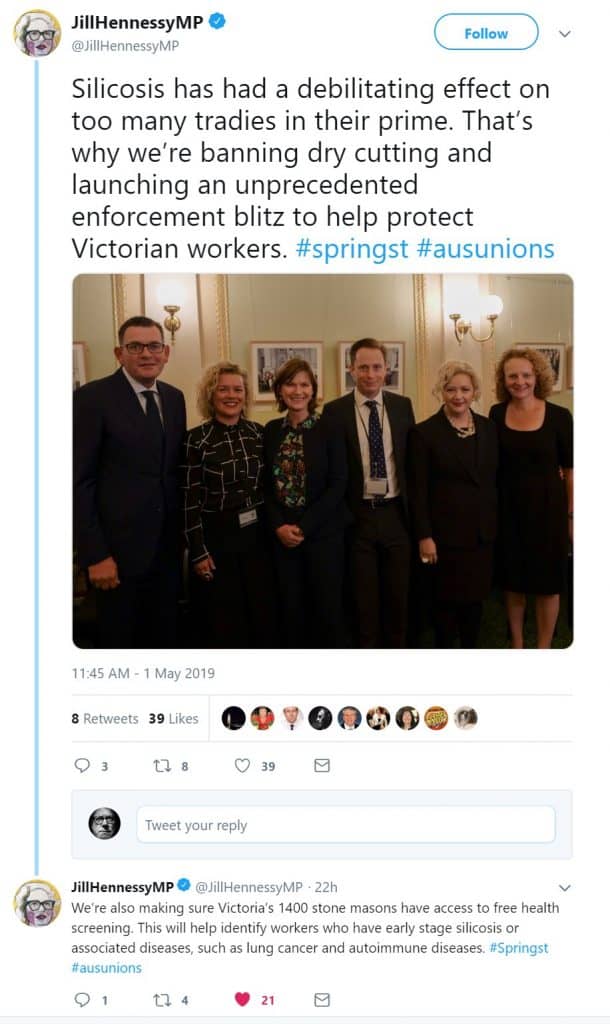
The Victorian Premier, the Minister for Workplace Safety, Dr Ryan Hoy and others at the silicosis announcement

The Victorian Government has announced that various safety initiatives are being taken on the silicosis risks associated with products described as synthetic stone. This initiative is an important first step in reducing the exposure of workers to silicosis but there are some curiosities in the announcement and WorkSafe Victoria’s accompanying Information Sheet.

The core elements of the government’s action are:

  • “A state-wide ban on uncontrolled dry cutting of materials that contain crystalline silica dust
  • Free health screening for Victoria’s 1400 stonemasons
  • A tough new compliance code for businesses working with silica
  • An awareness campaign to highlight the risks of working with engineered stone”.
Subscribe to SafetyAtWorkBlog to continue reading.
Subscribe Help
Already a member? Log in here

The biggest OHS challenge is greed

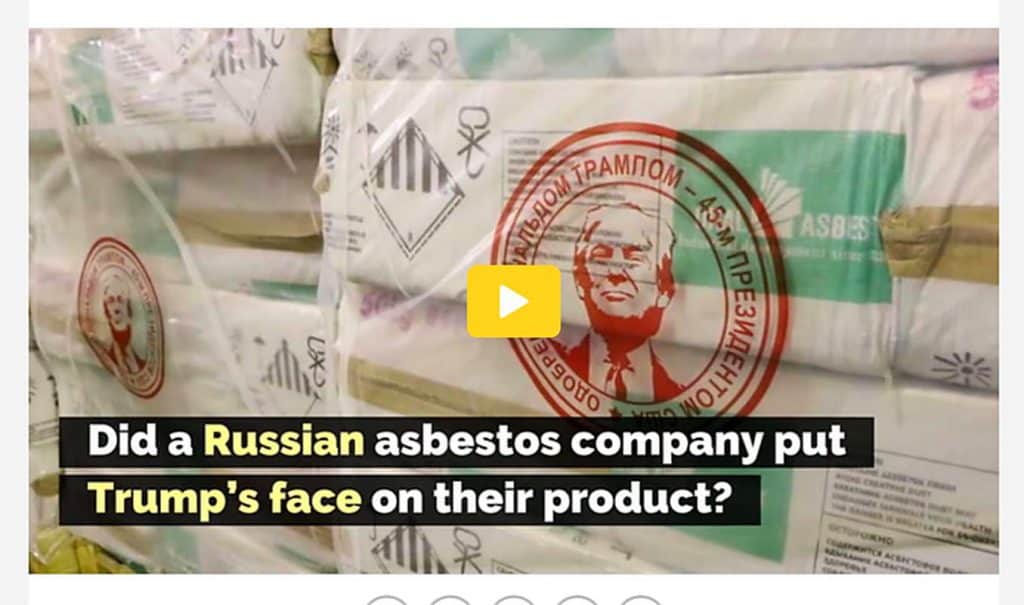
As the world approaches World Day for Safety and Health at Work and International Workers Memorial Day this coming Sunday it is worth reminding ourselves of some of the immorality that unregulated Capitalism allows. A company in one of the last remaining exporters of asbestos, Russia, has used President Donald Trump’s words and image to support its production and export of asbestos*, a product known for over a century to cause fatal illnesses.

Why is asbestos still mind if the evidence of its fatality is incontrovertible? Greed, or as it has been called in the past – “good business sense”. Many authors have written about the history of asbestos globally and locally. Many have written about the injustice in denying victims compensation from exposure to a known harmful chemical. But few have written about the core support for asbestos production, export and sale – Greed.

Subscribe to SafetyAtWorkBlog to continue reading.
Subscribe Help
Already a member? Log in here

Hopkins challenges safety culture advocates to look at structure

One of the major influencers on occupational health and safety (OHS) management in Australian has been Andrew Hopkins. His influence comes from a combination of being outside the formal OHS profession and establishing a platform that is inclusive of information from a range of sources. In short he is a sociologist.

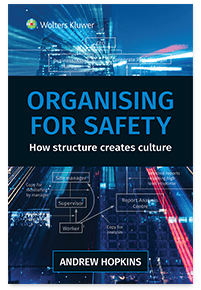
Hopkins’ latest book has just been released. “Organising for Safety – How structure creates culture” is a radical departure to his previous books about organisational culture. Here Hopkins questions whether cultural change is the gradual spreading of new ideas and instead proposes that

“… the culture of an organisation is determined to a large extent by its organisational structure.”

Page 1

He also mentions power, a concept rarely discussed in OHS and almost entirely left to exist in sociology (Oh, the need for more Humanities study!). Power pops up in Human Resources but not to the same extent.

Hopkins also refers to, and creates, organisational charts that were in place at the time of a disaster and then to the reorganised structures after the disasters. Hopkins discusses how those new structures are in direct response to the new understanding of risk from the CEOs and Boards.

Subscribe to SafetyAtWorkBlog to continue reading.
Subscribe Help
Already a member? Log in here

The dicks are swinging over OHS

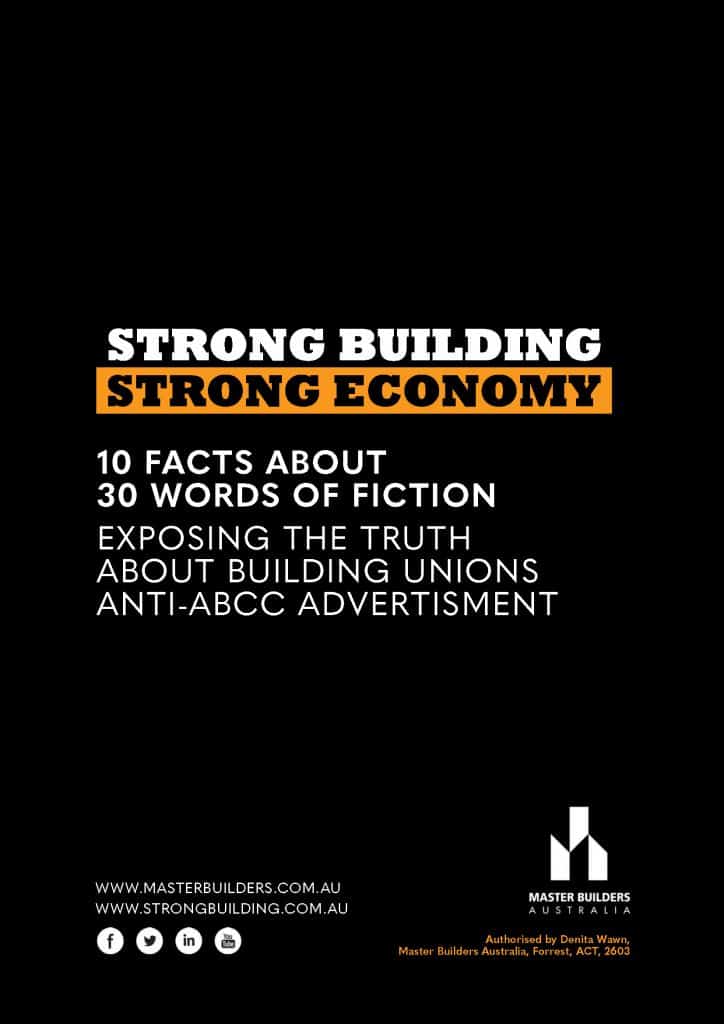
A couple more election campaign publications and statements have appeared in relation to occupational health and safety (OHS), one by the Institute of Public Affairs (IPA) and another in response to some advertising by the Construction Forestry Mining Maritime and Energy Union (CFMEU) released by the Master Builders Australia (MBA).

Institute of Public Affairs

There is nothing in the IPA report “20 policies to fix Australia” that directly relates to OHS, but there is a continuance of the desire for less “red tape”, a desire that has often mentioned OHS regulations and licencing as examples. The IPA says:

Subscribe to SafetyAtWorkBlog to continue reading.
Subscribe Help
Already a member? Log in here

Where’s the harm in bullying?

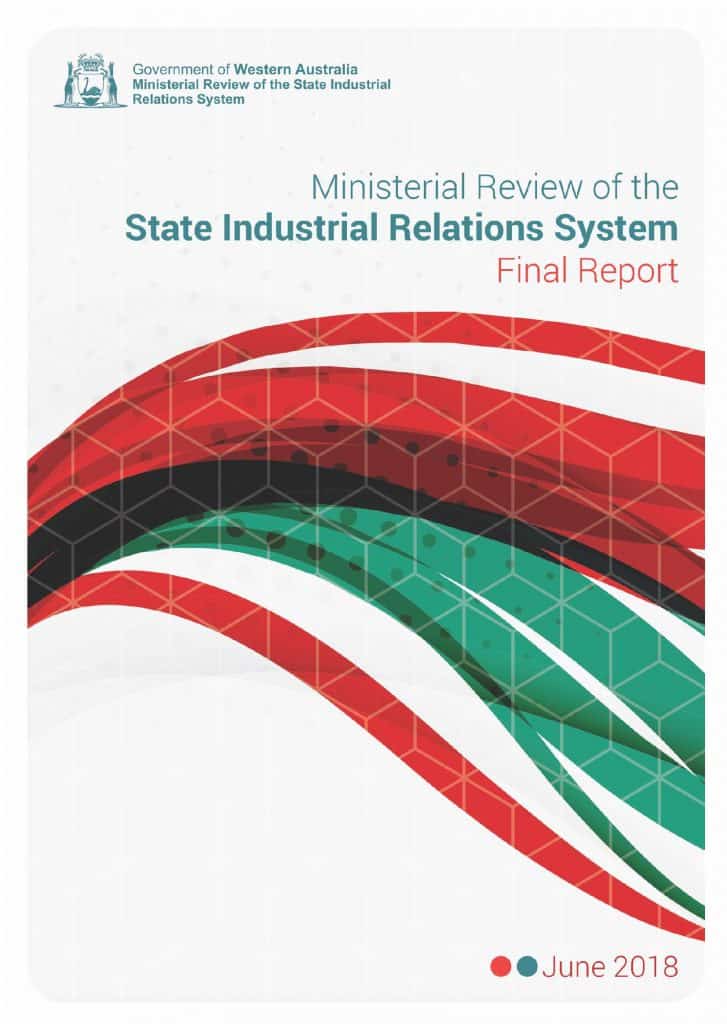
The West Australian Government has released its the report on its Ministerial Review of the State Industrial Relations System. There are a few interesting bits that relate to occupational health and safety (OHS) and bullying.

The Fair Work Commission has been able to accept applications to stop workplace bullying for a few years now. Western Australia’s State system will soon also allow this, if the Government accepts the recommendations, but workplace bullying is a little different from the OHS approach. The report says:

Subscribe to SafetyAtWorkBlog to continue reading.
Subscribe Help
Already a member? Log in here

Better jobs should also be safer jobs

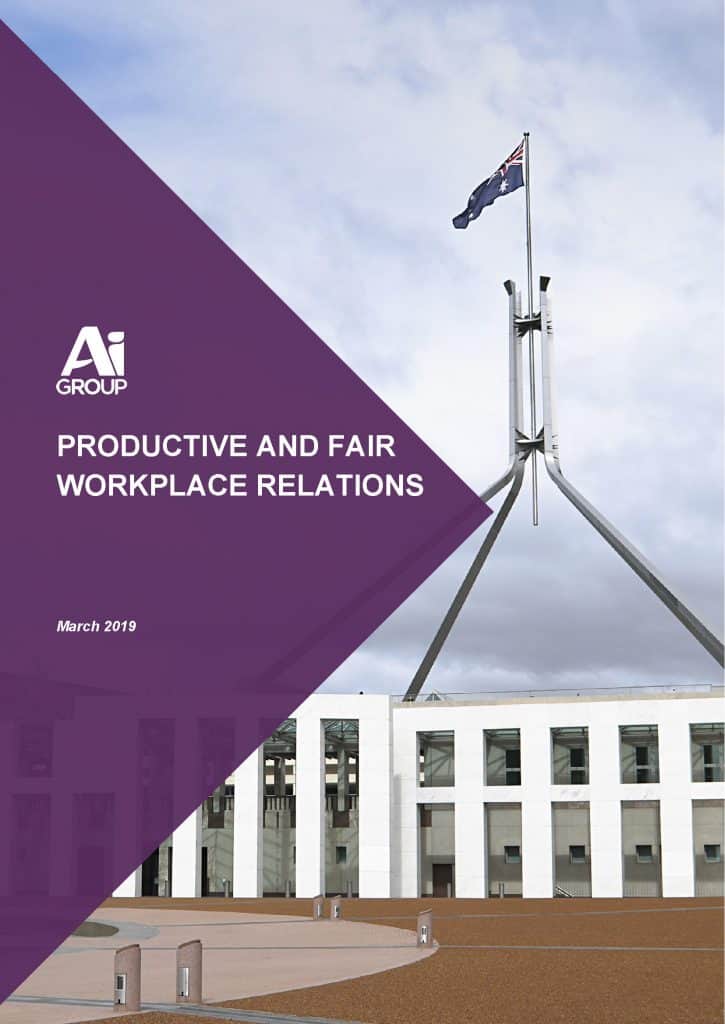
The impending election in Australia has started to generate various position statements and discussion papers from various lobbyists. The Australian Industry Group (AiGroup) and the Business Council of Australia (BCA) are the latest of these.

The AiGroup released its Productive and Fair Workplace Relations statement in late March 2019. Surprisingly there is no mention of occupational health and safety (OHS) even though its contribution to a productive workforce is well established. Its omission is doubly surprising given the political stink in some States about the introduction of Industrial Manslaughter laws.

Subscribe to SafetyAtWorkBlog to continue reading.
Subscribe Help
Already a member? Log in here
Concatenate Web Development
© Designed and developed by Concatenate Aust Pty Ltd