Look beyond employee perception surveys for clues about toxic workplaces

CNBC recently published an article called “These are the 5 biggest signs of a toxic workplace“. This American article by Jennifer Liu reflects a common approach in these types of articles of focussing on office-based work and not going beyond the Human Resources (HR) perspective, even when alternative data sources are available.

Those five signs are:
Subscribe to SafetyAtWorkBlog to continue reading.
Subscribe Help
Already a member? Log in here

New Hopkins book aimed at CEOs

Professor Andrew Hopkins‘ latest book “Sacrificing Safety – Lessons for Chief Executives” complements Queensland’s Board of Inquiry into the Grosvenor mine fire in which five workers were severely burnt, a significant workplace incident for which the company, Anglo American, will not be prosecuted. Hopkins explains that the Board of Inquiry chose not to investigate the organisational causes of the incident; a situation this book seeks to redress.

The book starts with a bang in the Introduction, with a paragraph that will stay with me for some time due to its blunt honesty:

Subscribe to SafetyAtWorkBlog to continue reading.
Subscribe Help
Already a member? Log in here

Questions beyond the “new view” of safety

Dr Tristan Casey has written an interesting discussion paper about clarifying the landscape of work health and safety innovation. According to Casey, innovation is the creation of new ideas, practices and more that add value for organisations over time. This integrates with one’s occupational health and safety (OHS) state of knowledge. Casey calls these WHS/OHS innovations as “new view” safety.

The SafetyAtWorkBlog has reported on many of these new concepts. Many concepts have great potential, but we must also examine the barriers to acceptance and implementation – the research to practice journey. Casey discusses some of those barriers.

Subscribe to SafetyAtWorkBlog to continue reading.
Subscribe Help
Already a member? Log in here

Applying a big stick ….. of foam

South Australian (SA) Greens MP Tammy Franks has again proposed a Bill on Industrial Manslaughter (IM) to the SA Parliament. For at least the sixth time! Franks may remain unsuccessful as the recently elected Australian Labor Party has promised its own IM Bill. Either way, South Australia will likely have Industrial Manslaughter laws very soon.

In Parliament on May 4 2022, Franks reiterated the importance of these laws but also illustrated their weaknesses.

Subscribe to SafetyAtWorkBlog to continue reading.
Subscribe Help
Already a member? Log in here

Burnout causes are organisational. Who knew?

This blog has written frequently about “burnout” in workplaces, especially since the condition was defined by the World Health Organisation in 2019. I have seen it used many times as a shortcut, or synonym, for workplace mental health but usually only at the corporate, executive level. Workers have breakdowns, but executives seem to suffer burnout.

Recently a book was published in the United States called “The Burnout Epidemic, or The Risk of Chronic Stress and How We Can Fix It”, by journalist Jennifer Moss. What is most outstanding about this book is that the recommended fix is organisational. Usually, burnout books from the States focus on the individual worker or executive. This fresh US perspective makes the book essential reading for if the US recognises how to fix burnout and chronic stress, any country can.

Subscribe to SafetyAtWorkBlog to continue reading.
Subscribe Help
Already a member? Log in here

“can’t afford” means “don’t want to”

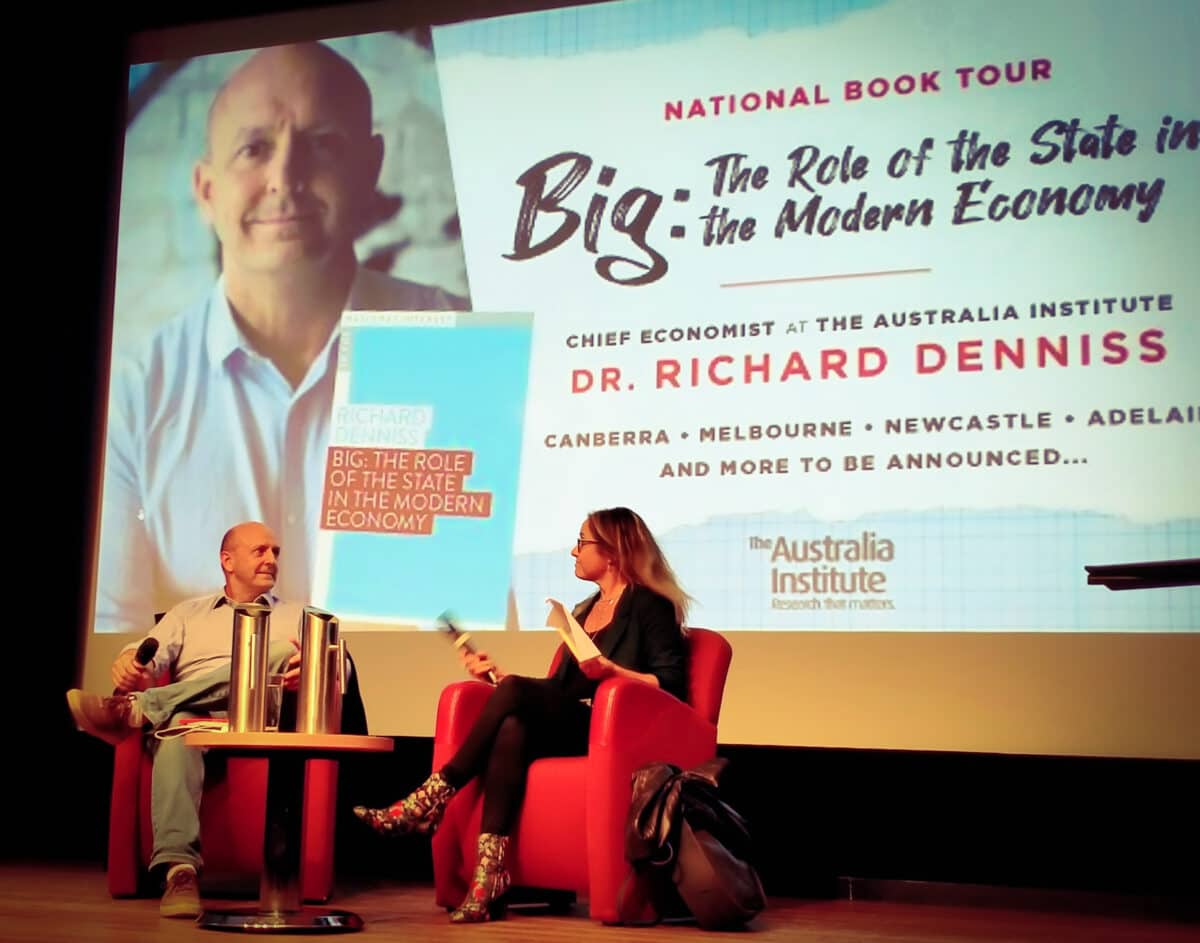
Richard Denniss, an economist with The Australia Institute, discusses economics differently from other economists. He will seldom discuss occupational health and safety (OHS). He rarely talks about industrial relations. Instead, he talks about the big picture by drawing on many sources and disciplines, which is why he is so interesting to listen to.

This week he was on a national book tour for his latest publication on the role of the State in the modern economy and some of his opinions connected with the management of workplace health and safety.

Subscribe to SafetyAtWorkBlog to continue reading.
Subscribe Help
Already a member? Log in here

Why don’t we act on the evidence?

Several years ago, I worked for an organisation that handed out awards for exceptional efforts and achievements. One time the award was given to a worker who had worked in the office for most of the weekend to meet a semi-important deadline. I was horrified as that worker had sacrificed important “downtime” with family friends and his own welfare with no time in lieu. But he was lauded by the boss.

Rewarding those who sacrifice their own health and safety for the apparent good of the company must change as there is increasing evidence that working long hours increases serious health risks. An extensive research project for the World Health Organisation has found:

Subscribe to SafetyAtWorkBlog to continue reading.
Subscribe Help
Already a member? Log in here
Concatenate Web Development
© Designed and developed by Concatenate Aust Pty Ltd