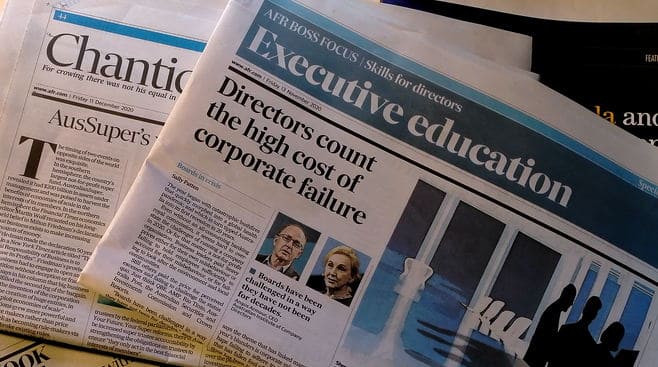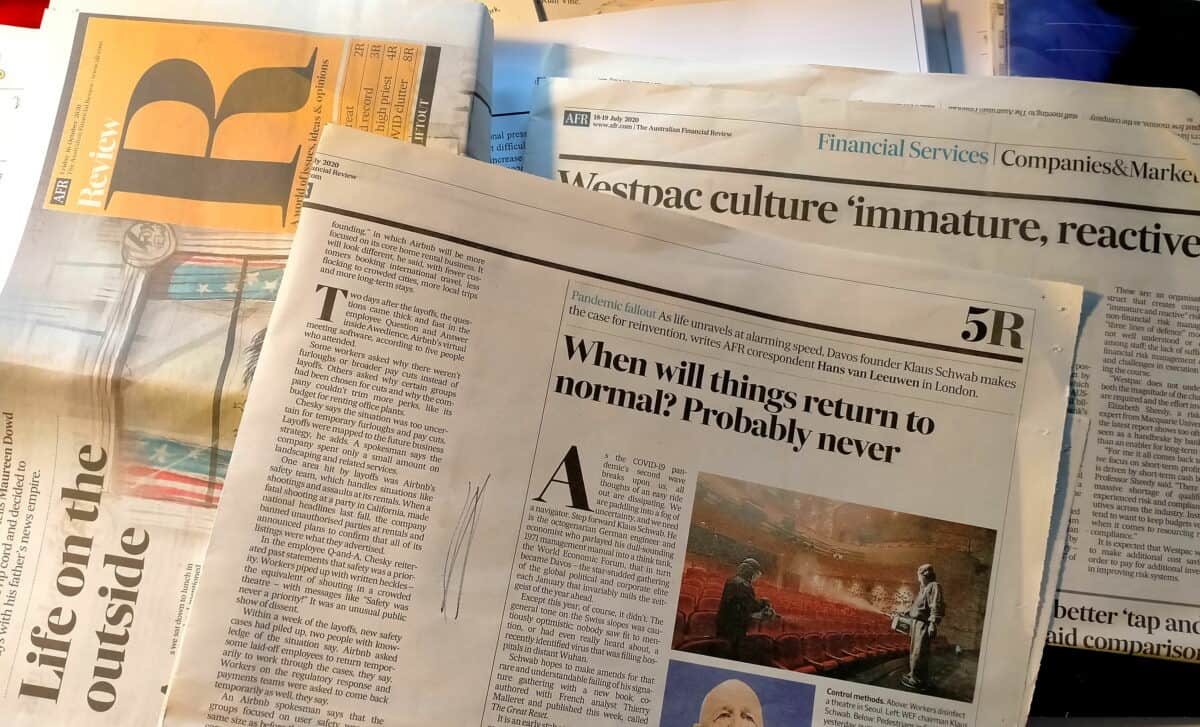
It is not possible to write as many occupational health and safety (OHS) articles as I would like to, and my newspaper clippings files are bulging by the time I get some time to tidy up. The Australian Financial Review (AFR) is an expensive business newspaper that often touches on OHS matters even though OHS may not be the core of the story. Below is a short discussion of many of those clippings from 2020. Most of the AFR articles are paywalled but can often be tracked down through other measures.
Category: executives
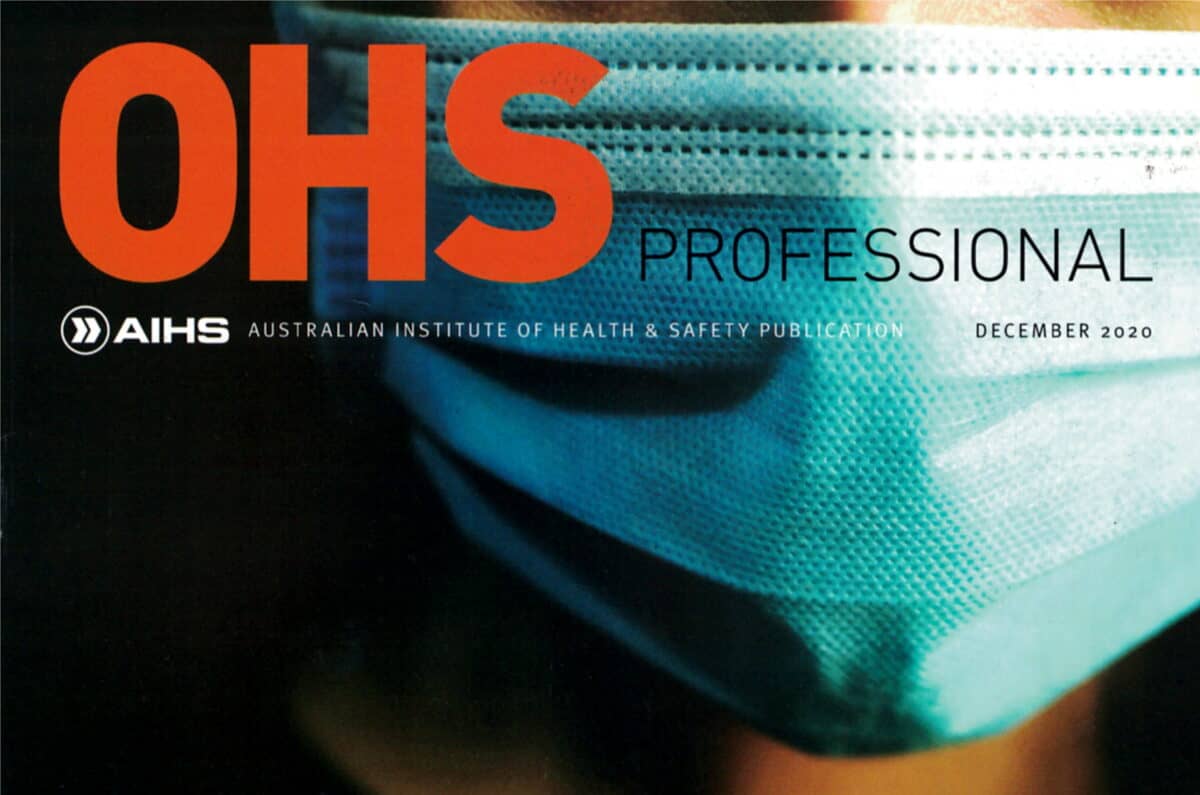
Australian Safety Magazine continues to improve
The member magazine of the Australian Institute of Health and Safety (AIHS), OHS Professional, continues to improve in the quality of its articles – less advertorial, more authoritative articles. The current edition, December 2020, includes two particularly good articles- one on the manufacturers’ withdrawal of quad bikes in protest and another on psychological health and safety at work. This article will discuss the quad bike article.
‘No Bystanders Rule’ Bullshit
Guest Post by Dr Rebecca Michalak
About couple of weeks ago, the Australian Financial Review (AFR) featured a piece on a law firm that had introduced a mandatory approach to reporting sexual harassment – referred to as a ‘no bystanders’ rule.
To be clear upfront, here is my disclaimer – I am not directly commenting on the law firm in question; there isn’t enough information in the articles to make any objective judgements on that front. The references used from the two media pieces are for illustrative purposes only. Call them ‘conversation starters.’
In the AFR piece, the contractual obligation was outlined to involve:
“…chang(ing) ‘should’ (report) to ‘must’ – so any staff member who experiences, witnesses, or becomes aware of sexual harassment must report it,”
with the affiliated claim being,
Continue reading “‘No Bystanders Rule’ Bullshit”“That shift really reinforces that there is zero tolerance – and there are no confidences to be kept; it needs to be outed – bystanders [staying silent] will no longer be tolerated.“
Behind the OHS words in Parliament
On December 11 2020, Senator Deborah O’Neill (ALP) (unsuccessfully) sponsored a motion that, amongst other things, called on the Government to act on the recommendations of the 2018 inquiry in to industrial deaths and the Boland Review, and to introduce Federal industrial manslaughter laws. That last request will probably never occur under a Conservative government, but does not need to for such laws to be introduced across Australia.
It is good that pressure on important occupational health and safety (OHS) matters is maintained, even if the motion was “negatived”. However, perhaps more interesting was a couple of statements that Senator O’Neill’s actions generated, one of which is deconstructed below.
Alan Jones vs Dan Andrews

The calls continue for the Victorian Premier, Dan Andrews, to be charged with Industrial Manslaughter over COVID19-related deaths that resulted from a poorly-managed hotel quarantine program. This time the topic was picked up be one of Australia’s conservative big guns, Alan Jones.
Jones hyperbolic rhetoric was on full display in his interview with Ken Phillips, who started the Andrews Industrial Manslaughter campaign.
Justice delayed is justice denied
The Ballarat Courier is reporting that the prosecution of Pipecon over the deaths of two workers from a trench collapse in March 2018 has been delayed again. It seems the reasons for the delay include renovation works on the courthouse and the workload of the Court. Judge Gerard Mulally‘s decision came the same week as a delegation of bereaved relatives attended Federal parliament in Canberra.
What did we learn in Senate Estimates last week?
Australia has a process of accountability where Ministers and Heads of Government Departments and Authorities are required to answer attend Senate Estimates. Few people outside of the Canberra bureaucracy pay much attention to the occupational health and safety (OHS) information provided. Most media pay attention to disputes and statements that have a more general political appeal, but there is important information about workplace health and safety, such as an update of the progress on Marie Boland’s recommendations or the role and activity of Safe Work Australia (SWA).