Interview with Dr Gerry Ayers

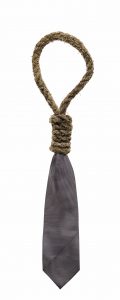
This weekend is the International Workers Memorial Day.  In Victoria, in particular and in Australia more generally, it is highly likely that the issue of Industrial Manslaughter laws will be raised as part of a trade union campaign.

Dr Gerry Ayers, the OHS&E Manager of one of the branches of the CFMEU, features in an online petition about these laws and it seemed the right time to interview Dr Ayers about these laws but also about workplace health and safety enforcement and practices more generally.

Subscribe to SafetyAtWorkBlog to continue reading.
Subscribe Help
Already a member? Log in here

Flogging the banks could help safety

Australia’s Royal Commission into banking and financial services is a few months in and the evidence provided of wrongdoing is so substantial that those who were critical of the need for such an investigation are admitting they were wrong.

SafetyAtWorkBlog is applying the logic that occupational health and safety (OHS) succeeds best when it is part of the organisational culture.  Australia has often held its banking and financial services as “world-class” and many of that industry sector’s leaders have been prominent in speaking about the importance of leadership and corporate morality.

The financial and banking industry’s credibility and authority in Australia is gone and the OHS profession can learn much from this failure, even when the failure is in its early stages of exposure.

Subscribe to SafetyAtWorkBlog to continue reading.
Subscribe Help
Already a member? Log in here

Early WHS submissions are a mixed bag

The first lot of anonymous submissions to Australia’s Independent Review of Work Health and Safety Laws is an interesting mix.

One seems written by a regional paramedic calling for increased prescription of workplace first aid requirements. There are complaints about the contents of first aid kits which should have been addressed by the occupational health and safety (OHS) option of providing equipment to meet the results of a first aid needs analysis about which the submitter says:

“The recommendation to add additional items based on an appropriate risk assessment is almost, to my knowledge, never completed.”

Subscribe to SafetyAtWorkBlog to continue reading.
Subscribe Help
Already a member? Log in here

Danger Money has been internalised

Late last century I worked in the Victorian Department of Labour as an administrative officer, at a time when award restructuring and “structural efficiency principles” were in full swing.  The existing awards often included a swathe of special allowances for activities like working at heights or picking up roadkill.  These allowances were commonly called “dirt money” or “danger money” and were largely eliminated or incorporated in the base rates of pay through the restructuring of awards.

The concept of “danger money” has disappeared from the formal industrial relations (IR) processes in Australia but is an important one to remember in the context of occupational health and safety (OHS), particularly as there are renewed calls for IR reforms in Australia.

Workers continue to accept high risk activities in response to higher rates of remuneration, as was recently discussed in another SafetyAtWorkBlog article.  Below is one take on “danger money”and the OHS attitudes of trade unions

Subscribe to SafetyAtWorkBlog to continue reading.
Subscribe Help
Already a member? Log in here

First WHS Review submission released is hard work but useful

The Minerals Council of Australia (MCA) has released its submission to the Independent Review of Work Health and Safety Laws.  It is a good example of the business-speak that can erode the effectiveness of clear communication, but the submission is still revealing.  Here is an example from its Executive Summary:

“A nationally-consistent, risk-based preventative Work Health and Safety (WHS) regulatory system, supported by industry-specific regulation, would deliver benefits based on greater certainty, consistency and efficiency. It would also help to ensure that compliance challenges do not detract from the practical tasks of identifying, managing and minimising risk and the continuous improvement of safety and health outcomes by companies.” (Page 3)

So, the MCA wants national occupational health and safety (OHS) laws?

Subscribe to SafetyAtWorkBlog to continue reading.
Subscribe Help
Already a member? Log in here

You have to be in it to influence it

Kevin Jones with Marie Boland in March 2018

The public submission process for Australia’s Independent Review of Work Health and Safety Laws closes today.  So finish up your draft and tell the Government what is working and what is not. BUT if you cannot finish the draft, do what I did, and contribute directly to the Review using its online (Engage) portal which will remain open until the end of May 2018.

Safe Work Australia has told SafetyAtWorkBlog that the Review continues to seek: 

Subscribe to SafetyAtWorkBlog to continue reading.
Subscribe Help
Already a member? Log in here

OHS needs a Benchbook too

Australia’s Fair Work Commission (FWC)  has released the latest (March 2018) edition of its Anti-Bullying Benchbook.  This is a regularly published document that offers background to its decisions and definitions used by the FWC through case studies and plain-English explanations.  The Benchbook clearly states that any occupational health and safety (OHS) issues are to be directed to the relevant OHS regulator but the book provides useful insight to a more (and limited) industrial relations approach to workplace bullying.

A major attraction of the

Subscribe to SafetyAtWorkBlog to continue reading.
Subscribe Help
Already a member? Log in here
Concatenate Web Development
© Designed and developed by Concatenate Aust Pty Ltd