
Mixed messages on OHS and productivity

There is a clear link between the modern take on occupational health and safety (which includes psychosocial health) and productivity. However, there are seriously mixed messages coming from the Productivity Commission (PC) in its current inquiry into Australia’s Workplace Relations Framework.

In Senate Estimates on 3 June 2014 (draft Hansard), the Chair of the Productivity Commission, Peter Harris, and Assistant Commissioner, Ralph Lattimore, briefly discussed OHS.  Harris acknowledged that some of the submissions to the current inquiry discussed OHS matters (page 65) but Lattimore stated:

“….we did say that we would quarantine the inquiry away from workforce health and safety issues unless they were directly related to, say, enterprise bargaining or some feature of the relationship between employers and employees. We were aware of the large amount of regulation in that area, and we were not planning to revisit that.”
Subscribe to SafetyAtWorkBlog to continue reading.
Subscribe Help
Already a member? Log in here

ACTU Congress’ draft OHS policies deserve serious analysis

Pages from draft-2015-actu-congress-policies-2015-consolidatedThe Australian Council of Trade Unions (ACTU) commences its 2015 Congress this week.  Each year around 800 trade union delegates meet to discuss changes to policies and to develop or refine strategies. This year the ACTU released its draft policies publicly prior to the Congress.  These policies have a long and strong historical and industrial relations context.  Occupational health and safety (OHS) is an important part of these policies and should spark discussions in the union movement and the OHS profession.
Early in the document, the ACTU states its “bargaining agenda” in which is included

“better work, life and family balance.” (page 7)

Curiously, the ACTU has chosen “better” rather than “safe”.  Better is a more inclusive term but harder to define.  Better for whom?  Better could be better paid or more secure or safer.

Trade unionists often see OHS as being monitored and enforced through the mechanism of the Health and Safety Representatives (HSRs) and would argue that OHS is throughout all the draft policies due to the HSR role but there are more workplaces in Australia without HSRs than with and it is worth considering the policies as independent from the HSR structure, if that is possible..

Subscribe to SafetyAtWorkBlog to continue reading.
Subscribe Help
Already a member? Log in here

Don’t mention workplace bullying

Victoria’s Premier Daniel Andrews is involved in a, currently minor, political drama after he decided to stand down his Small Business Minister, Adem Somyurek, after allegations of workplace bullying. The drama is in its early days but some of the decisions and media comments are worthy of analysis, particularly as Premier Andrews seems to be avoiding using the term, workplace bullying.

The facts seem to be that the  Minister’s Chief of Staff, Dimity Paul, complained to the Premier about Somyurek’s “intimidating, aggressive and threatening” behaviour. The Premier stood the Minister down after a formal complaint was made to the Department of Premier and Cabinet which has generated an investigation.

This allegation has a lot of political connections as described in an article in The Age newspaper written by Farrah Tomazin, but there is little doubt that the allegation comes under the definition of workplace bullying as there have been mentions of a “pattern of behaviour” by the Minister. Tomazin wrote

“The alleged misconduct …. is said to have taken place over the past few months, and relates to a number of employees in his ministerial office…”

Subscribe to SafetyAtWorkBlog to continue reading.
Subscribe Help
Already a member? Log in here

Safe Work Australia drops the national OHS awards

Each Australian State conducts its own occupational health and safety (OHS) awards.  It has been a long-held tradition that the winners of these awards are entered into the national OHS awards conducted by Safe Work Australia.  No more.  The national awards have been quietly dropped.

Safe Work Australia has decided to end the national awards just over a year since the Minister for Employment, Senator Eric Abetz, stated:

“I am delighted to see individuals, small businesses and large organisations finding solutions to make their workplaces safer….

“Their commitment and passion has made a difference in the community and ensured safer workplaces leading to more people getting home safely to their families.

“The leadership and innovation of people and organisations like those celebrated at the Awards that not only helps to reduce the number of workplace deaths and injuries but also helps to create a positive workplace culture.”

The 2014 media release went on to state:

“The Safe Work Australia Awards showcase the best workplace safety solutions, innovations and systems across our nation and are a celebration of what can be achieved to reduce workplace incidents and deaths.”

Subscribe to SafetyAtWorkBlog to continue reading.
Subscribe Help
Already a member? Log in here

Important OHS statements in Australia’s Parliament

On the eve of its 2015 Budget, the Australian Parliament was debating an increase in enforcement powers of the Fair Work Building and Construction inspectorate and the resurrection of the Australian Building and Construction Commission (ABCC).  Occupational health and safety (OHS) is rarely mentioned in these debates but not so on 11 May 2015.  Excerpts from yesterday’s safety-related comments are worth noting, particularly as no mainstream media has done so or is likely to..

Senator Cory Bernardi (Liberal Party) attacked a recent video from the Construction, Forestry, Mining and Energy Union (CFMEU) saying that

“For too long the unions have falsely cried safety as a lazy defence for their unlawful and unethical industrial conduct. They have cried wolf so often that they can no longer be believed.”

Subscribe to SafetyAtWorkBlog to continue reading.
Subscribe Help
Already a member? Log in here

Cry of frustration in Industrial Manslaughter Bill

Over the last few months some in Australia’s trade union movement have renewed calls for the introduction of industrial manslaughter laws in various jurisdictions. The issue has appeared both on television and online.

Curiously the Australian Council of Trade Unions (ACTU) seems to have dropped the “industrial manslaughter” terminology it has used in the past. In a 28 April 2015 media release, the ACTU stated:

““Strengthening OHS laws to make negligent companies and individual directors liable sends a clear message to employers that they must ensure people are safe at work.”

and

“Current laws need to be strengthened so that companies and company directors are liable for our safety at work.”

It seems that the charge has been left to the South Australian Greens Parliamentarian,

Subscribe to SafetyAtWorkBlog to continue reading.
Subscribe Help
Already a member? Log in here

Sen. Doug Cameron launches “Hard Work Never Killed Anybody”

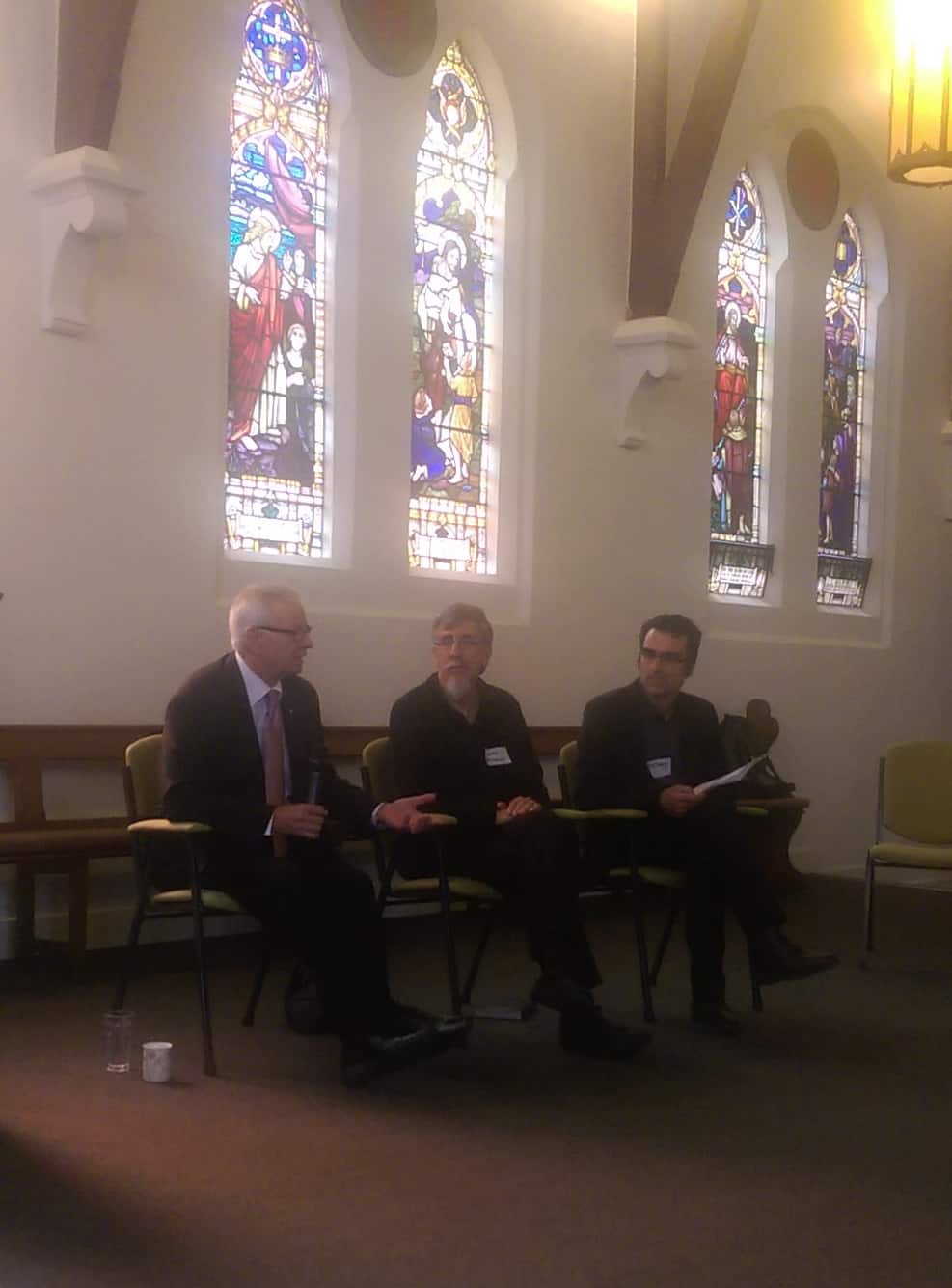
Cameron 20150507 01On 7 May 2015, Senator Doug Cameron (Australian Labor Party, pictured) launched a new book written by John Bottomley (pictured, centre) called “Hard Work Never Killed Anybody – How the idolisation of work sustains this deadly lie“. Cameron acknowledged the uniqueness of the book as ranging

“…across, theology, Marxism, the Protestant work ethic, and the Enlightenment.”

This combination is rare in the field of occupational health and safety but Cameron said that Bottomley provides evidence that

“…the promise of industrialised society that hard work brings its own rewards is a lie”

and that this is a necessary and important challenge to the current political consensus. Continue reading “Sen. Doug Cameron launches “Hard Work Never Killed Anybody””

Concatenate Web Development
© Designed and developed by Concatenate Aust Pty Ltd