
Analysis needed on new workplace bullying data

In December 2013 I wrote:

“The Age is correct in saying that claims of workplace bullying are “set to soar”. This has been predicted for some time, even privately by members of the Fair Work Commission, but the number of claims does not always indicate the level of a problem.” (link added)

Recently the Fair Work Commission (FWC) released its
Subscribe to SafetyAtWorkBlog to continue reading.
Subscribe Help
Already a member? Log in here

Red tape (again) and Obama’s support – Melbourne’s Workers’ Memorial Day 2014

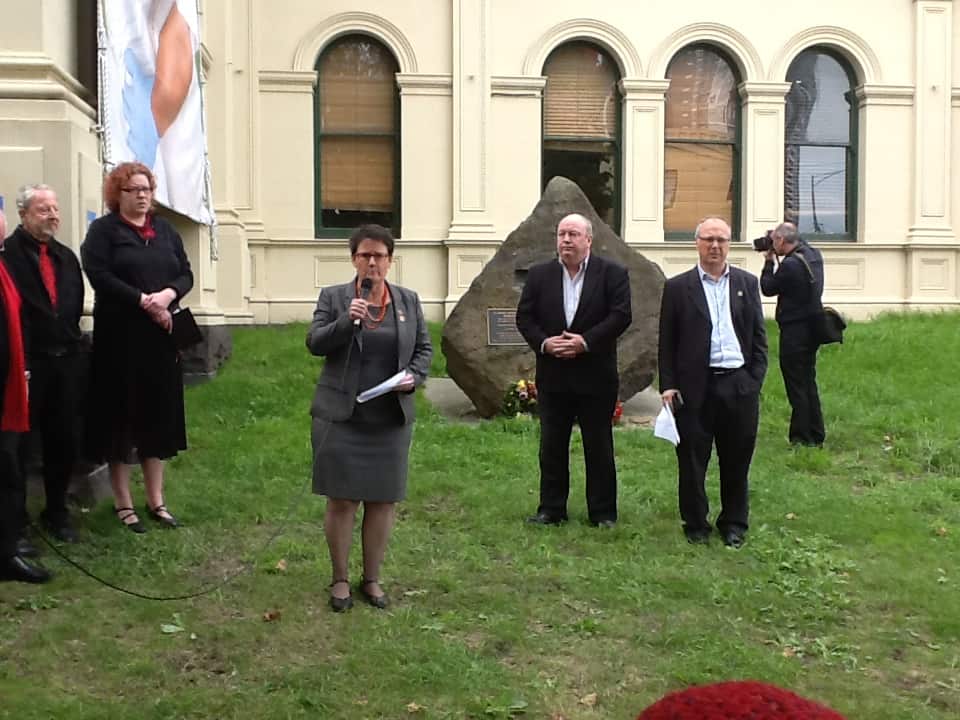
IWMD 2014 01A short time ago the International Workers Memorial Day commemoration in Melbourne, Victoria, concluded. The ceremony was less sombre than in previous years with, it seemed, fewer families and relatives of deceased workers.  Certainly there was no speech from a family member, nothing from workplace safety advocates other than the three trade union speakers, Meredith PeaceBrian Boyd and Michael Borowick (all pictured right), however there were tears for some in the crowd and wreaths were laid prior to a minute silence.
The politics was reduced this year as there were no noisy protests from the back of a tray truck and no march on Parliament afterward, however politics is never far from the surface of this type of event. Michael Borowick, Assistant Secretary of the Australian Council of Trade Unions  was the more effective of today’s three speakers.  Continue reading “Red tape (again) and Obama’s support – Melbourne’s Workers’ Memorial Day 2014”

Australia’s Construction Code and the Home Insulation Royal Commission

On 17 April 2014, Senator Eric Abetz, Australia’s Workplace Relations Minister, released the Building and Construction Industry (Fair and Lawful Building Sites) Code 2014 and supporting guidelines.  This Code is, fundamentally, an industrial relations Code however there is an occupational health and safety (OHS) element that needs to be noted, particularly when considered against the background of the Royal Commission into the Home Insulation Program.

Section 6.2.1 of the Code’s Guidelines says:

“Improving the industry’s WHS&R [Work Health Safety and Rehabilitation] performance requires positive measures that aim for prevention rather than correcting things when they go wrong. This initiative is directed at making WHS&R management an integral part of the organisational culture of companies and enterprises.”

The aims of this section are laudable – “positive” actions, “integrated, pre-emptive instead of reactive – but there are also hints that role of safety in this Code has not been fully thought out.

Subscribe to SafetyAtWorkBlog to continue reading.
Subscribe Help
Already a member? Log in here

Disseminating OHS information should not be optional

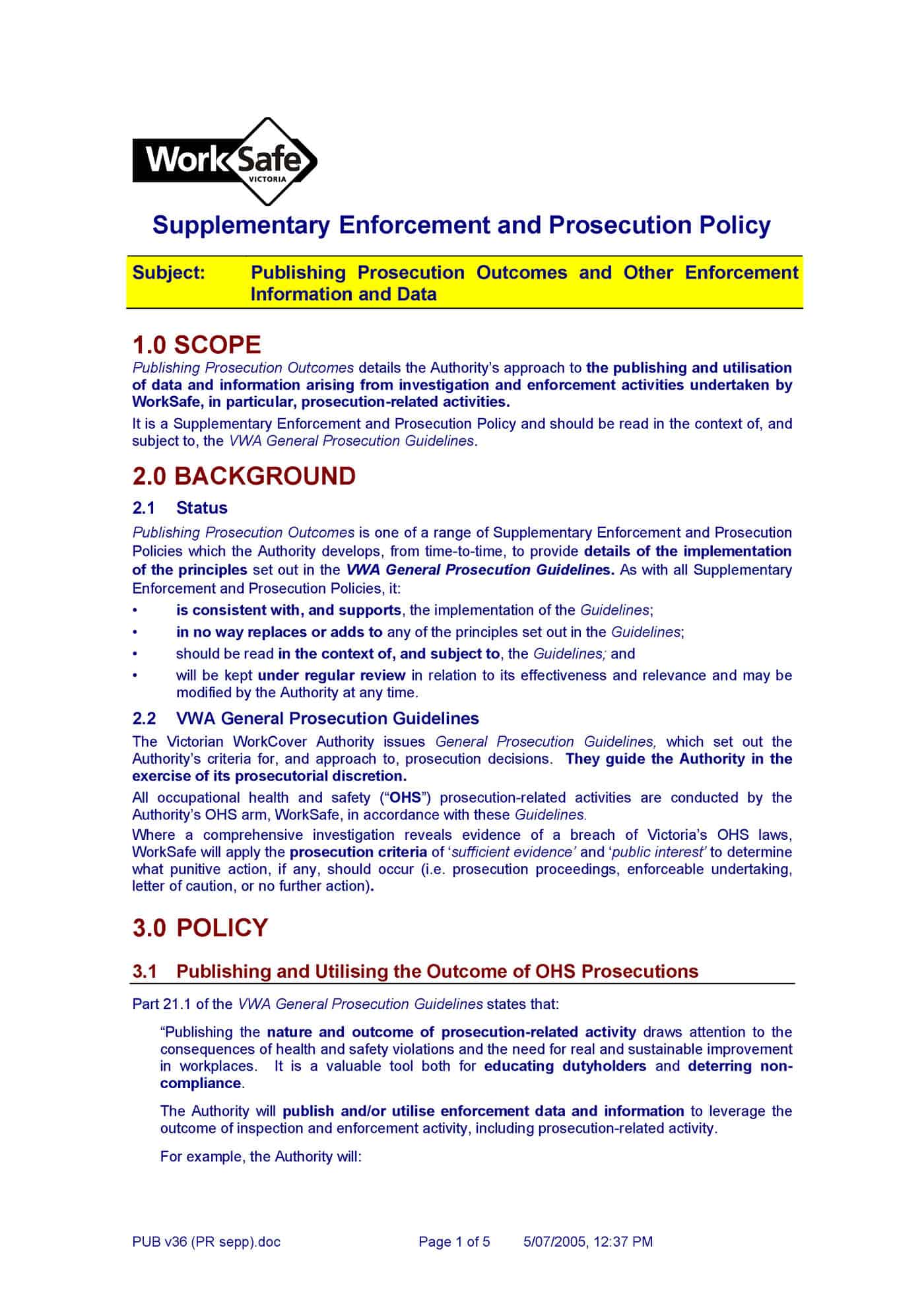
Cover of VWA publishing_prosecution_outcomes 2005WorkSafe Victoria has been reviewing a series of enforcement and prosecution policies for some time.  One of these policies set for re-issue relates specifically to the publication of prosecutorial information through its website and media releases and, although the “new” policy is not yet available, it may be worth remembering the previous policy, last revised in 2005.

Media Releases

WorkSafe Victoria’s “Supplementary Enforcement and Prosecution Policy on Publishing Prosecution Outcomes and Other Enforcement Information and Data” (no longer available on-line) says  that

“WorkSafe will release media statements and authorised representatives will grant media interviews, as appropriate, to the print, electronic, and/or broadcast media.” (original emphasis)

The reason behind this mode of dissemination, and others, is outlined elsewhere in the policy:

Subscribe to SafetyAtWorkBlog to continue reading.
Subscribe Help
Already a member? Log in here

The CFMEU should make a case for union OHS representatives

In late March 2014, the Construction Forestry Mining and Energy Union (CFMEU) was fined $A1.25 million over a violent dispute at the Emporium construction site that occurred in 2012.  In its media release about the fine, the CFMEU’s state secretary, John Setka, says:

“The protest at the Myer site in 2012 was about safety.”

Yes and no.  The dispute was about the representation of workers on safety matters, which is a different thing.  Setka goes on: Continue reading “The CFMEU should make a case for union OHS representatives”

Lessons from Royal Commission into Home Insulation Program

Australia’s Royal Commission into the Home Insulation Program (HIP) demands the attention of all occupational health and safety (OHS) professionals, primarily, because a job creation and economic stimulus program was so poorly planned at the highest level of government, that it seems to have established a culture that led to workplace deaths. However the Royal Commission is already revealing information that shows how OHS is misunderstood by decision-makers, a situation that still persists in many jurisdictions and will only change by watching the Royal Commission carefully and analysing this information through the perspective of workplace safety.

State of Knowledge

The Royal Commission has been investigating when the workplace deaths in New Zealand from using metal staples with foil insulation were known by the Australian Government.  In OHS-speak, it is trying to determine the state of knowledge on this workplace hazard in the decision-making process.  The deaths of four young Australian workers prove that the state of knowledge was inadequate however it is well established that Australia and New Zealand operate independently and that, although there are legislative similarities, it is rare for a death in one country to generate regulatory change in another.  (One could look to the quad bike safety issues for an additional example.)  The recent legislative changes in New Zealand may indicate that they listen to Australia more than vice versa.

Subscribe to SafetyAtWorkBlog to continue reading.
Subscribe Help
Already a member? Log in here
Concatenate Web Development
© Designed and developed by Concatenate Aust Pty Ltd