
Parliamentary inquiry discusses OHS but no one noticed

Australia’s politicians, trade unionists, businesses and media are gearing up for a tumultuous year in industrial relations with the controversial establishment of a Royal Commission into trade union corruption.  This royal commission is broad-ranging but targets the construction unions, particularly the Construction Forestry Mining and Energy Union (CFMEU) and thus the construction unions’ conduct with regard to allegedly using occupational health and safe as a cover or excuse for industrial action. This royal commission has a strong element of party politics and ideologies and has overshadowed other action in the Australian Parliament where OHS is being discussed.

On 6 February 2014 the Education and Employment References Committee of the Australian Senate continued its inquiry into the Government’s approach to re-establishing the Australian Building and Construction Commission (ABCC) through the Building and Construction Industry (Improving Productivity) Bill 2013.  One of the terms of reference for this inquiry is

“whether the provisions of the bills relating to occupational health and safety in the building and construction industry are adequate to protect the health and safety of employees and contractors in the industry”.

On February 6 the inquiry had some heated discussion on OHS and the construction industry that deserves a closer look.
Subscribe to SafetyAtWorkBlog to continue reading.
Subscribe Help
Already a member? Log in here

Missed opportunity for making the business case on safety culture

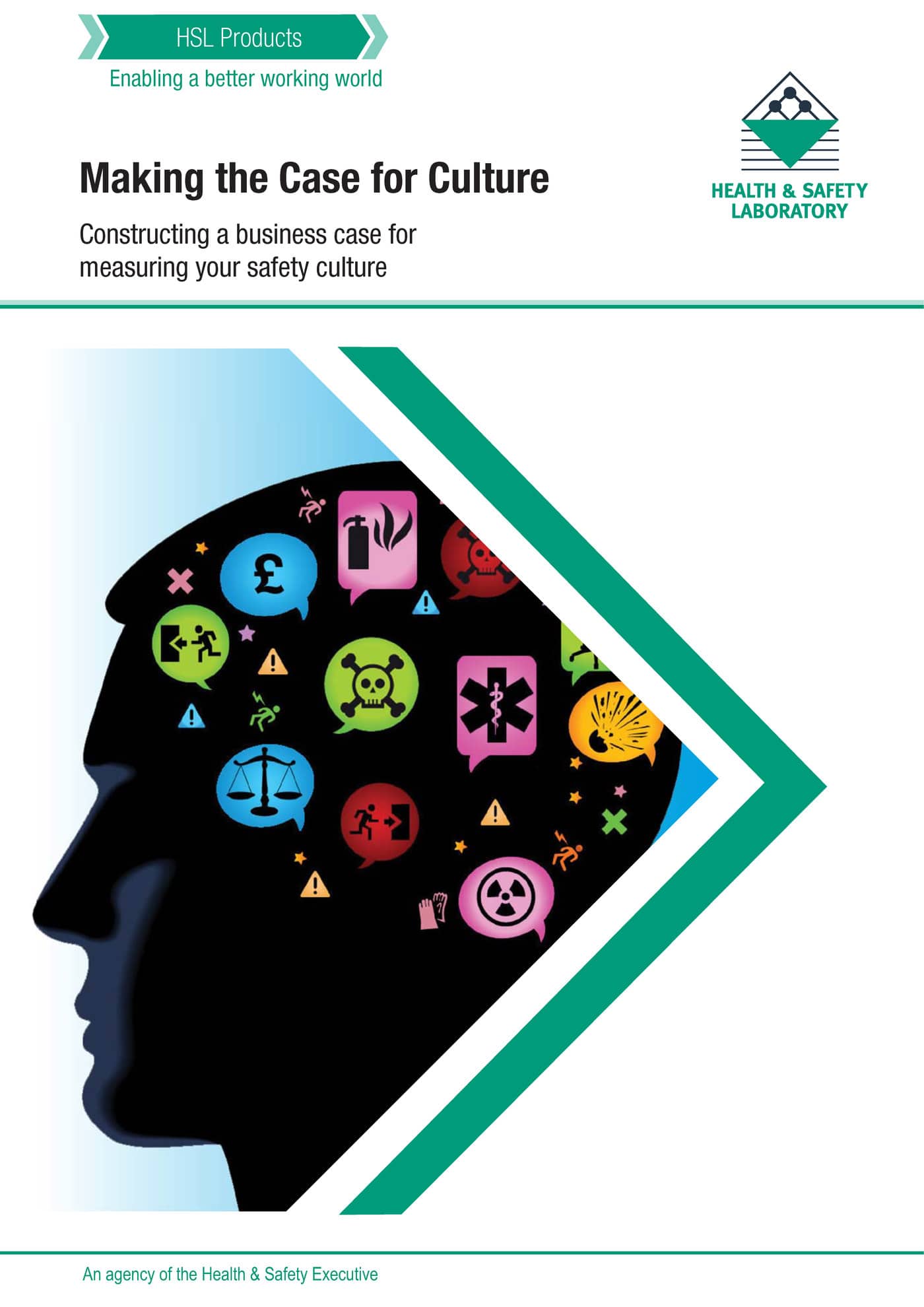
Cover of HSL culture documentRecently the UK’s Health and Safety Laboratory (HSL) released its second white paper on safety culture.  This paper is called “Making the Case for Culture” and outlines the three arguments for a workplace safety culture – legal, moral and financial – from which a safety business case can be built.  Financial seems to get the most attention but this is perhaps because it is the element that is argued the least and the one that can get the greatest attention from company executives.

The document seems a little thin but it could be put that the simplicity of the presentation in a booklet designed to provide safety culture guidance is an advantage.  It could also be argued that it is primarily a promotional pamphlet for the HSL’s very useful safety climate tool .

Continue reading “Missed opportunity for making the business case on safety culture”

Construction association sees red tape instead of safety

Further to yesterday’s article about the Model Health and Safety Management Plan (MHSMP) being required by the Construction Compliance Code Unit (CCCU) in the Victorian Government, SafetyAtWorkBlog was provided with a copy of the submission of the Victorian Construction Safety Alliance* (VCSA).  Tony Marino, the Chair of the VCSA, has granted permission for the covering letter to be quoted.

The covering letter to the submission made four major points:

  • “Overall the requirements of the Model Health and Safety Management Plan (MHSMP) and Implementation Guidelines are excessive and require significant amount of reporting duplication, i.e. red­ tape. VCSA was of the opinion government agencies wanted to reduce red-tape.
  • VCSA Suggest the CCCU has a MOU with other relevant agencies to receive safety data produced and sought by the Implementation Guidelines.
Subscribe to SafetyAtWorkBlog to continue reading.
Subscribe Help
Already a member? Log in here

Opaque response on construction industry safety code

Model-Health-and-Safety-Management-Plan (2)Victoria’s Construction Compliance Code Unit in the Department of Treasury and Finance has just completed its public comments stage for its model Health and Safety Management Plan (HSMP).  The comments period was extended by a month after initially ending after only one month‘s public consultation on 6 January 2014.  New South Wales and Queensland have mirrored the Victorian construction compliance code so the significance of this OHS submission stage should not be underestimated however the submission process and unusual secrecy is not building the faith and trust in the HSMP that the process needs for it to succeed.

The regular process for submissions to government inquires is for those submissions to be made publicly available, with the permission of the writer.  The CCCU seems to have no plans to follow this protocol which is an enormous shame as the submissions would have provided a window into both the understanding of OHS in the Victorian construction sector, an understanding of the OHS role of the CCCU and an insight into how the CCCU is generally perceived by the Victorian community.

SafetyAtWorkBlog put the following (we think reasonable) questions to the CCCU last week in preparation for the end of the commentary phase:

  • Could you please estimate the number of submissions the CCU has received on the model Health and Safety Management Plan (HSMP) to date?
Subscribe to SafetyAtWorkBlog to continue reading.
Subscribe Help
Already a member? Log in here

Proposed drug testing – a political tool

On 6 February 2014 the Victorian Premier. Denis Napthine, announced the intention to

“…require construction companies to implement comprehensive drug and alcohol screening measures to ensure the safety of workers to be eligible to tender for Victorian Government construction contracts.”

This is to be part of the occupational health and safety (OHS) obligations of companies under the Implementation Guidelines to the Victorian Code of Practice for the Building and Construction Industry.  Understandably the construction union, particularly, is angry and feels as if it is being singled out.  Both organisations have chosen their words very carefully. Premier Napthine is quoted as saying:

“Reports of illicit drug use and distribution on Victorian construction sites are widespread.”

The CFMEU‘s Victorian Secretary John Setka has stated that

“There is no epidemic of drug taking on construction sites…. Our Health and Safety representatives who look out for workers’ health and safety are not reporting a problem.”

It is unlikely there is an epidemic of drug use but the Premier is talking of drugs AND alcohol.  

Subscribe to SafetyAtWorkBlog to continue reading.
Subscribe Help
Already a member? Log in here

Interesting new appointment at South Australia’s Master Builders

Modern workers rarely stay in jobs longer than six or seven years because they choose to move on or are working on projects that have a short lifespan. Sometimes opportunities arise that can steer people in unpredictable directions, sometimes to positions of influence.  One example of this type of journey could be Ian Markos.

One newspaper recently wrote:

“The recently appointed director of policy for the SA branch of the MBA, Ian Markos, said a “nanny state” approach was stifling job creation. “There’s a raft of laws and regulations. You’ve got employment laws, you’ve got taxation laws, you’ve got environmental laws, you’ve got work health and safety laws, local council regulations. We’re saying enough is enough,” he said.”

Criticism of occupational health and safety (OHS) laws is not surprising from the Master Builders Association but Ian Markos was with South Australia’s OHS regulator, SafeWorkSA, for many years (with a once-only appearance on Gardening Australia) as the Chief Officer, Compliance, Advisory, Legal and Investigations. Continue reading “Interesting new appointment at South Australia’s Master Builders”

Serious questions raised about the effectiveness of OHS enforcement strategies

Richard Johnstone is always worth reading as he writes perceptively about occupational health and safety (OHS) and its enforcement.  The new book from Baywood PublishingSafety or Profit” provides a chapter by Johnstone that argues:

“…that despite the rhetoric of stronger enforcement and more robust prosecution, the dominant ideology of work health and safety enforcement – ambivalence about whether work health and safety offenses are “really criminal” and viewing prosecution as a “last resort” in the enforcement armory – still dominates the approach of Australian work health and safety regulators.” (page 113)

The importance of Johnstone’s chapter is that he reminds us that much of the current OHS debate is circular and limited and fails to question the soft enforcement strategy that has existed since the

Subscribe to SafetyAtWorkBlog to continue reading.
Subscribe Help
Already a member? Log in here
Concatenate Web Development
© Designed and developed by Concatenate Aust Pty Ltd