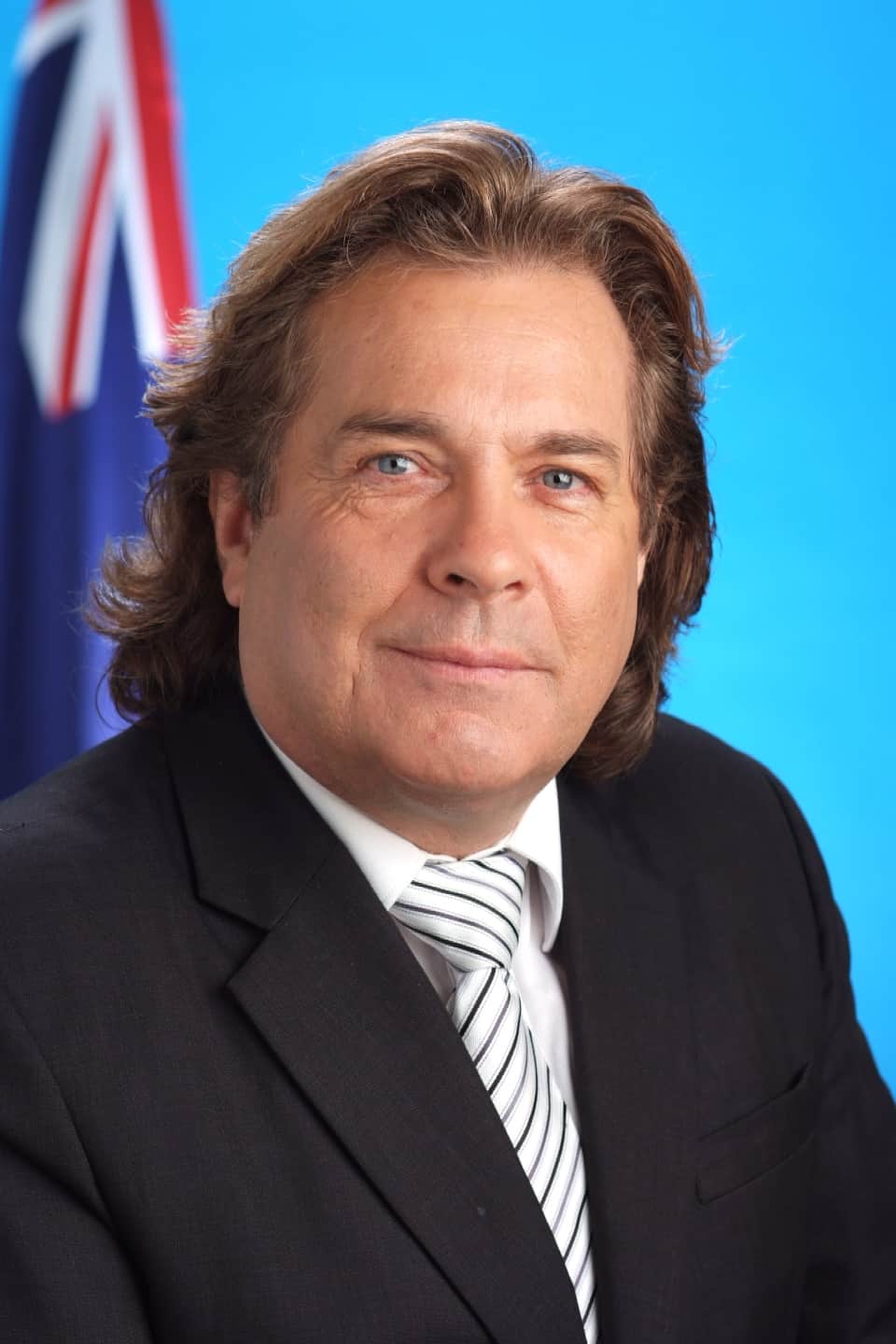
Victoria’s analysis of OHS law costs is unhelpful politics

The Victorian Government has released the PricewaterhouseCooper (PwC) assessment of the potential economic impacts of the introduction of the national Work Health and safety laws.

The government media statement accompanying the report states that

“The proposed laws do not deliver on the intent of the COAG reform agreed to in 2008 which aimed to reduce the cost of regulation and enhance productivity and workforce mobility,” Mr Baillieu said.

“Victoria already has the safest system, the most effective system, the lowest rate of workplace injuries, illnesses and deaths of all states, and the lowest workers’ compensation premiums in the country.  It is estimated that it will cost Victoria $812 million to transition to the new model and $587 million a year in the first five years in ongoing costs to businesses.  Most of those costs will be borne by small enterprises which make up 90 per cent of Victorian businesses…,”

This media statement needs to be seen as, largely, political posturing. PwC has produced a report that confirms many of the suspicions that the conservative politicians in Victoria have held for some time. Continue reading “Victoria’s analysis of OHS law costs is unhelpful politics”

Substantial change in OHS needs clever politics

According to the UK Department of Work and Pensions (DWP), from 6 April 2012 businesses will no longer be obliged to notify the Health & Safety Executive of those injuries that result in a worker’s absence of up to seven days.  The DWP’s media statement about these changes estimates:

“The change to the Reporting of Injuries, Diseases and Dangerous Occurrences Regulations (RIDDOR) 1995 will see a fall of around 30 per cent in the number of incidents that must be reported by law – an average of around 30,000 fewer reports a year. The move is estimated to save businesses 10,000 hours a year.”

The business saving claim is very dubious (see below) as companies will still need to process any workers’ compensation claim or medical costs generated by the incident.  OHS professionals and safety managers will still need to investigate the incident and identify measures to prevent a recurrence.  These costs will continue. Continue reading “Substantial change in OHS needs clever politics”

Is OHS harmonisation a dead parrot or is it just pining?

In The Australian newspaper on 3 April 2012, Judith Sloan presents a useful summary of the status of the OHS harmonisation process.  Many of her criticisms are valid but she has not realised that the new Work Health and Safety laws stopped being occupational health and safety laws some time ago.  It is easier to understand the proposed changes if one accepts that these laws have broadened beyond the workplace to operate more as public health and safety laws.

It is possible to accept Sloan’s assertion of the “demise”of OHS harmonisation but if seen in the light of an integrated public/workplace health and safety law, the harmonisation process may be a welcome beginning to a broader application of safety in public and occupational lives.

The acceptance of this interpretation provides very different comparisons and linkages.  For instance, the shopper tripping on a mat in the vegetable section of a supermarket was likely, in the past, to receive recompense through public liability insurance. Now it could equally be under OHS laws.  The regulation of potential legionella sources was through the Health Department, even though many of these are in workplaces and often affect workers first.  Should cooling towers have been assessed by hygienists or occupational hygienists?  Should these be managed under an employer’s OHS management system or through the facilities manager or landlord?
Continue reading “Is OHS harmonisation a dead parrot or is it just pining?”

Union protest is a dry run for Workcover Review and Workers’ Memorial Day

The next stage of a union campaign over the management of workers’ compensation premiums in Victoria occurred in late March 2012.  Trade unions are angry that the Liberal Government of Premier Ted Baillieu has chosen to remove almost $A500 million from the Victorian Workcover Authority (VWA) fund to be allocated to general revenue.  On the steps of Parliament several hundred union members and interested parties were told to “keep their hands off workers’ money”.  Some of this hyperbole needs a little analysis.

Several unionists stated that the workers’ compensation fund is “workers’ money”.  Yes and no.  Yes in that almost revenue created by business comes from labour but when workers’ compensation is required, by law, to be paid to the Workcover Authority by employers, the ownership is a couple of steps away from workers.  Also Workcover takes the premiums as an economic base to invest in the hope of increasing the total fund through dividends and other returns.  The total fund includes premiums and returns on investment, over which workers have no influence. Continue reading “Union protest is a dry run for Workcover Review and Workers’ Memorial Day”

The fact that quad bike use is dangerous needs a fresh communication strategy

Dr Tony Lower of the Australian Centre for Agricultural Health & Safety has released new information about deaths and injuries associated with quad bike use in Australia for 2011. His report lists media reports that

“There were at least 23 quad bike related fatalities and 56 major injuries, many of which are likely to be life‐changing…”

He also continues to keep pressure on the quad bike manufacturers:

“It is an absolute insult to quad bike users and particularly to those families that have lost loved ones in rollovers that the manufacturers and the Federal Chamber of Automotive Industries (FCAI) simply continue to defend the indefensible. There is an urgent need to address this issue through better design of the quad bikes themselves and also ensuring crush protection devices are fitted”

But the severity of the risk and potential consequences of using quad bikes is well established.  This article is going to look at a couple of other issues raised by Dr Lower’s media release (not yet available online) and the Media Monitors report. Continue reading “The fact that quad bike use is dangerous needs a fresh communication strategy”

Safety profession needs to counter the influence of the red tape ideologues

Australia’s safety profession has a considerable challenge over the next few years, one for which it seems to be poorly prepared.  The challenge comes not from new occupational health and safety (OHS) laws or new hazards but from entrenched ideologies.  As the country moves to an increasing political conservatism, safety needs to prove it is as important as other issues, such as productivity and job creation,  by vying for political and corporate attention.

The challenge  is that the Australian conservative political parties are ideologically opposed to almost ANY laws that could possibly impede economic growth and they believe that occupational health and safety laws impede growth by disrupting work and adding unnecessary operational costs.  This is not the reality but the ideology is so ingrained into conservative politics that the safety profession will gain very little traction in the next few years without a strategy to contest this ideological fantasy.

The conservative Liberal Government in Victoria forestalled introduction of the model Work Health and Safety laws to undertake an assessment of the economic impacts of the laws on the State’s businesses, despite an assessment having already occurred through the regulatory impact process.  The review had a tenuous justification but served the political purpose of distancing the conservative politicians in Victoria from the Labor Party that is in power federally.  The review also plays to its traditional business sector supporters indicating that the Liberal Party takes potential regulatory impositions seriously.  It is believed the report of the review undertaken by PriceWaterhouseCoopers is now with the Victorian Government for its consideration.
Continue reading “Safety profession needs to counter the influence of the red tape ideologues”

New Workers’ Memorial announced for Australia

In May 2011, the Australian Government announced the development of a National Worker’s Memorial.  The winning design, selected by an independent jury from a competitive pool of 26 entries, was announced in Canberra this evening.

Workplace Relations Minister Bill Shorten announced that Architects Johnson Pilton Walker have been awarded the task.  In a media statement Shorten said that

 “The memorial will honour and pay tribute to all working Australians who have died as a result of work-related accidents, incidents and disease… It will also provide an important focal point for the national commemoration of Workers’ Memorial Day, recognised internationally on 28 April each year.” Continue reading “New Workers’ Memorial announced for Australia”

Concatenate Web Development
© Designed and developed by Concatenate Aust Pty Ltd