Brodie’s Law, national inquiries and the confusion over prevention

Brodie Panlock’s death did not lead to just one law change, or one policy response or one neat public conclusion. It led to several overlapping reactions such as OHS prosecution, political campaigning, criminal law reform, a parliamentary inquiry, media campaigns, union submissions, employer resistance, and a long-running argument about whether workplace bullying should be treated as a discrete hazard or as part of the broader family of psychosocial risks. That complexity has often been mistaken for progress.

Please note that this article discusses suicide and mental trauma.

Subscribe to SafetyAtWorkBlog to continue reading.
Subscribe Help
Already a member? Log in here

Political Reform Keeps Ignoring OHS Even When It Could Strengthen It

OHS remains invisible in political debate unless people die. Politicians will talk about productivity, investment, innovation and community renewal, but they rarely talk about preventing workers from being killed, injured or psychologically harmed. When OHS does appear, it is usually framed as a cost burden rather than a social benefit. Yet every political promise about fairness, renewal, or community well-being carries an implied OHS benefit if anyone bothers to look.

Subscribe to SafetyAtWorkBlog to continue reading.
Subscribe Help
Already a member? Log in here

Maximum Workplace Temperatures: A Political Fix Searching for an OHS Problem

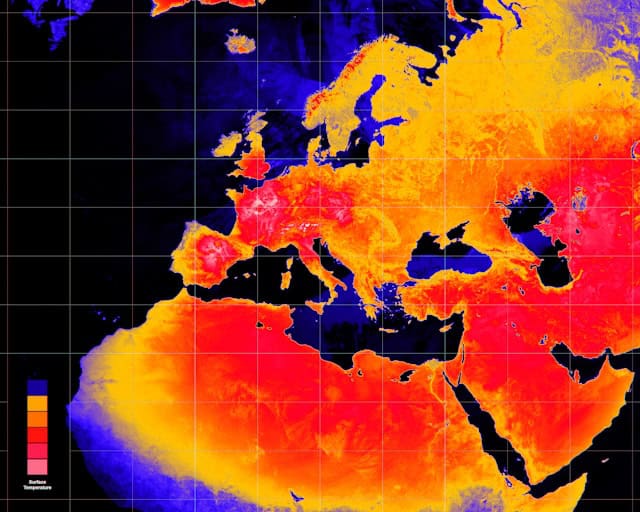
The United Kingdom and Europe are again struggling through dangerous summer heat. In Australia, it’s tempting to feel a little smug. We’ve spent decades adapting our houses, cities and work practices to heat: wide‑brimmed hats in schools, backyard pools, ventilation, shade, job rotation, and a long list of practical controls that employers and regulators understand well. None of this makes heat safe, but it does make working in excessive heat manageable.

Into this UK heatwave steps Greens MP Hannah Spencer, proposing a Private Member’s Bill to establish a maximum workplace temperature.

Subscribe to SafetyAtWorkBlog to continue reading.
Subscribe Help
Already a member? Log in here

Redesigning Risk — Quinlan and Mazzucato Unite to Make Work Safer

Whenever Mariana Mazzucato publishes a new book, she appears in the press everywhere as part of book tours and promotions. Her latest book, The Common Good Economy, is likely to be as influential on government and international policymakers as her other books have been. Australia’s Treasurer, Jim Chalmers, pays close attention to her perspectives. These perspectives relate to the management of occupational health and safety (OHS) because they present a different or tweaked sense of corporate morality, under which workers should be safe and healthy.

This article is not a review of the Common Good Economy book, although it is very good. Instead, I compare Mazzucato’s approach on work to Professor Michael Quinlan‘s take on precarity.

Subscribe to SafetyAtWorkBlog to continue reading.
Subscribe Help
Already a member? Log in here

The HR and OHS divide persists

One of my ongoing frustrations — and this blog is a good example — is that occupational health and safety (OHS) is rarely read or heard outside its own bubble. Yet OHS cannot fix OHS problems on its own. We depend on HR, engineers, accountants, risk managers, IT specialists and others, but we almost never get these disciplines in the same room, hearing the same information, facing the same hazards, and designing solutions together.

A recent HR interview with Dr Kat Page offers a useful example.

Subscribe to SafetyAtWorkBlog to continue reading.
Subscribe Help
Already a member? Log in here

Another corporate scandal — and why this matters for OHS

Another major company, KPMG, has been caught out in unethical behaviour, lies and mismanagement, only a few years after PwC’s scandal and not long after the damning Banking and Finance Royal Commission. These are the very institutions we are told to treat as exemplars of leadership and governance. Their repeated failures should force employers to question the advice they receive from these firms, including on occupational health and safety (OHS), psychosocial risk and organisational culture.

Subscribe to SafetyAtWorkBlog to continue reading.
Subscribe Help
Already a member? Log in here

Breaking the cycle of inquiry and inaction in emergency services reform

This week saw the release of an inquiry into the workplace culture of the New South Wales police force. The findings were damning, but even though all Australian jurisdictions have police forces, the report received little attention beyond NSW, perhaps because we have heard it before. Coincidentally, this report was published one week after Carlo Caponnechia told an international workplace bullying and harassment conference that similar inquiries around the world have found similar cultural faults.

To address contemporary occupational health and safety (OHS) and community expectations, many businesses need to redesign their operations and organisational structures. The emergency services organisations should be given top priority.

Subscribe to SafetyAtWorkBlog to continue reading.
Subscribe Help
Already a member? Log in here
Concatenate Web Development
© Designed and developed by Concatenate Aust Pty Ltd