Farmers want quad bikes…….

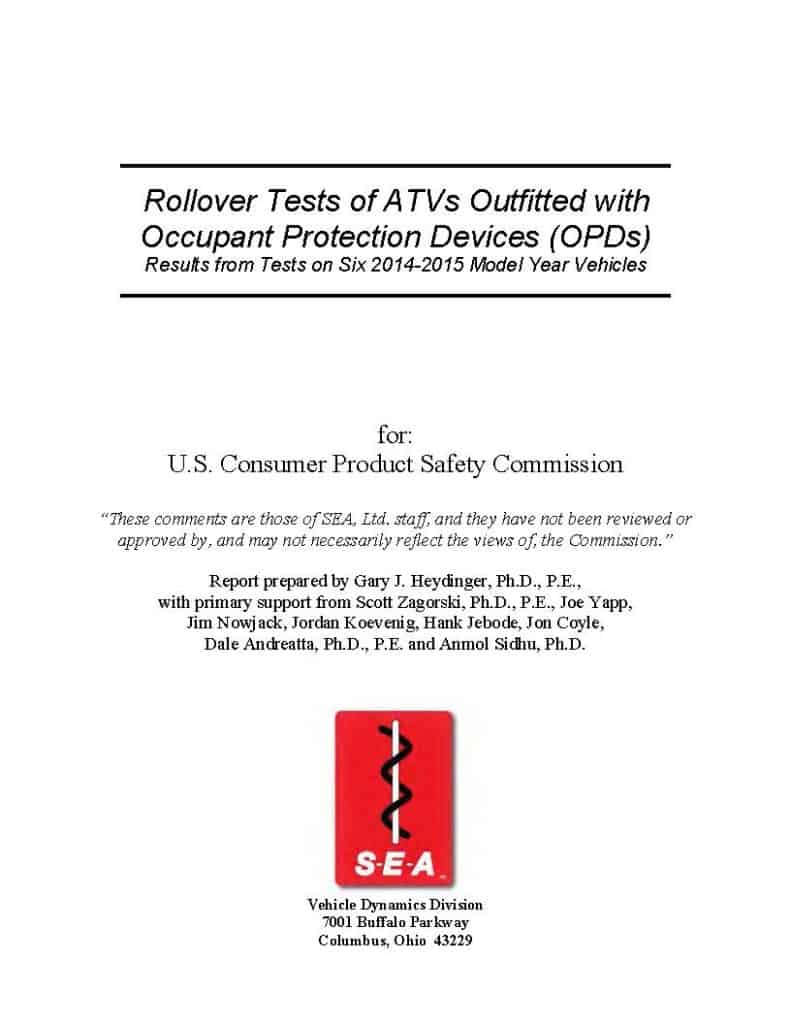
The debate over the safety of quad bikes on farms continues but it is increasingly one-sided. The Australian Competition and Consumer Commission (ACCC) and workplace safety advocates continue to hold the line on the need to install operator protection devices (OPDs) to all quad bikes being sold in Australia. Farmers, often supported by commercial interests, want to keep their quad bikes and as they are, because there are no alternative vehicles that are as versatile as the quad bike.

On July 4 2020, the Western Magazine quoted the CEO of the Federated Chamber of Automotive Industries‘ (FCAI) Tony Weber:

“Evidence suggests in some circumstances CPDs do prevent injuries, other times they create more injuries and that’s not a satisfactory outcome we should address the fundamental problem and that is the way in which humans behave around this machine…”

This quote neatly summarises the points of argument in the safety debate which have been reported on extensively in this blog previously – evidence, most benefit, design, use….
Subscribe to SafetyAtWorkBlog to continue reading.
Subscribe Help
Already a member? Log in here

Interview with James Curtin

James Curtin and I have been trying to find time to sit down and talk about occupational health and safety (OHS) and Industrial Manslaughter (IM) laws ever since I interviewed trade unionist Dr Gerry Ayres in 2018. The most recent IM laws have recently passed in Victoria and James and I finally found some time to talk.

Below are the personal and professional points that James made in the interview. The rest of the article contains the full interview.

  • Workplace manslaughter has not been found to improve safety and pushing ahead with a model that excludes some duty holders from the offence was/ is wrong
  • There was no gap in the law that this new offence sought to fill. It was an ideologically fuelled position.
  • The model should have been one in all in (like reckless endangerment) or one out all out (and replicate the UK’s Corporate Manslaughter Laws)
  • Working for an employer or employee organisation is a great privilege. You need to represent your constituents effectively but in doing so be mindful of any bias. Some Associations represented their members very well throughout this debate. Some did not. That was very disappointing.
  • Employers have to take their OHS obligations seriously. WorkSafe play a vital role in regulating Victoria’s OHS laws.
  • If you are in business you have to take your obligations seriously. Everyone should have the opportunity to start a business, if they wish, but they must have high regard to their obligations. An effective way of ensuring this is through regulator involvement – proactively and reactively.
  • Compliance and enforcement needs to be looked at differently. Larger fines and custodial sentences is not the answer. Each case needs to be dealt with on its merits and enforceable undertakings can play an integral role

Subscribe to SafetyAtWorkBlog to continue reading.
Subscribe Help
Already a member? Log in here

A return to the Forgotten Royal Commission

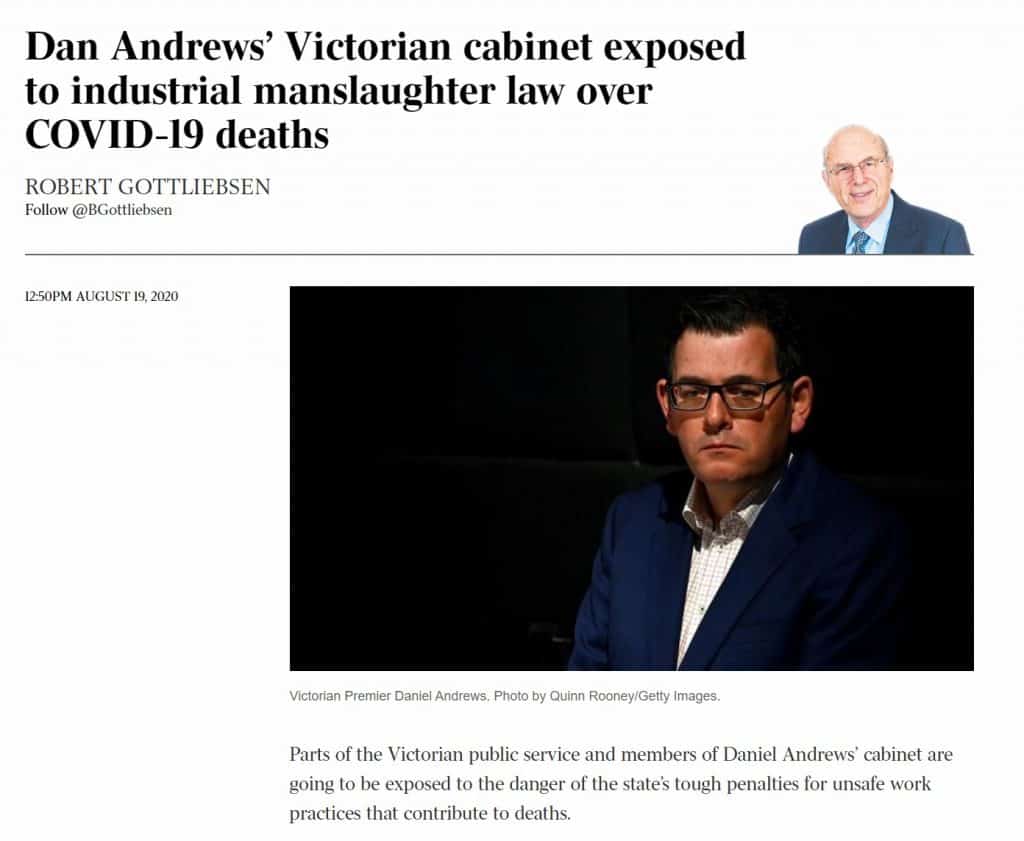
Ministerial accountability. Occupational health and safety (OHS). Leadership. Industrial Manslaughter. These issues have existed in various combinations in various jurisdictions and discussed by many people. At the moment in Australia, this combination has in relation to COVID19 but some of the discussion contains tenuous links and some is masking long held political agendas. Much of it harks back to arguments put to the Royal Commission into the Home Insulation Program.

The latest combination came to my attention from an August 19 article in The Australian newspaper (paywalled) written by business journalist Robert Gottliebsen.

Subscribe to SafetyAtWorkBlog to continue reading.
Subscribe Help
Already a member? Log in here

“This is how silly OH&S has become” Not really

Truck driving is one of the most contentious areas of occupational health and safety (OHS) in Australia. The transport industry has refined a reasonably practicable level of OHS to a high degree where levels of fatigue that would not be tolerated in other occupations are the norm. There also seems to be a negative attitude to OHS as an impediment to getting the job done rather than an investment in the health of drivers and the longevity of their careers.

These attitudes were on display recently in an inquiry into the “Importance of a viable, safe, sustainable and efficient road transport industry” undertaken by the Rural and Regional Affairs and Transport References Committee of the Australian Senate.

Subscribe to SafetyAtWorkBlog to continue reading.
Subscribe Help
Already a member? Log in here

“the point is not science, but safety”

Early last year Professor Andrew Hopkins wrote the following about making important safety decisions:

“If you are a CEO in charge of a large company operating hazardous technologies, you cannot afford to wait for conclusive evidence. You must act on the basis of whatever imperfect knowledge you currently have.”

page 110

This seems relevant to those who have had to make decisions about COVID19 this year. In response to the Hopkins quote, I wrote:

“This applies equally to directors and managers of companies of all sizes. It is hard, it is uncomfortable, but it is part of running a business. It is the application of the “precautionary principle” which, if the precaution proves valid, you are a hero, a visionary and a leader; if it does not happen, you are seen as a doomsayer – a reputational potential that few are willing to risk. However, in terms of OHS and the safety of people, the precautionary principle should be given prominence over reputation for many reasons, for if there is a disaster and fatalities the precautionary principle will be analysed through hindsight and may be influential in arguing reasonable practicability.”

The continuing COVID19 pandemic is a disaster with an horrendous fatality rate and the Precautionary Principle has started to be discussed in academic research about COVID19 and face masks.

Continue reading ““the point is not science, but safety””

Is it time for a Department of Safety?

The COVID19 pandemic is a public health challenge but what happens when workplaces are integral to the control and spread of the virus? This overlap between public health and occupational health is complicated and unlikely to be resolved in the short term, however, it can fixed in the longer term. The crisis in the Australian State of Victoria (where this author lives) offers an example of this complexity, but also an opportunity for positive change, perhaps even, a Department of Safety.

Subscribe to SafetyAtWorkBlog to continue reading.
Subscribe Help
Already a member? Log in here

“Soldier On” should be “F### Off”

Many workers continue to work when sick. This is called presenteeism and in a time of infection pandemic, is a major problem. Many countries have addressed the COVID19 risks of presenteeism by requiring people to work from home if they can. In Australia, the message is not totally working with people ignoring the rules for various reasons.

However, presenteeism also has a deeper cultural and institutional origin that has been exploited by some and downplayed or ignored by others.

Continue reading ““Soldier On” should be “F### Off””
Concatenate Web Development
© Designed and developed by Concatenate Aust Pty Ltd