WorkSafeNZ’s investigation into cut throats identifies important safety lessons

Following a recent article about Enforceable Undertakings, several readers have asked for more information about the occupational health and safety (OHS) breaches that cause WorkSafe New Zealand to commence prosecution actions.

The investigation report provides some useful discussion on safety management failures and Board of Trustee obligations.

Subscribe to SafetyAtWorkBlog to continue reading.
Subscribe Help
Already a member? Log in here

The challenges of Todd Conklin

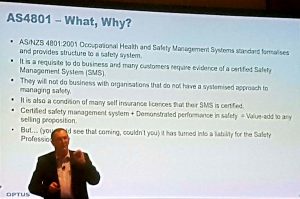
Earlier this month SafetyAtWorkBlog published an article based on an anecdote by Todd Conklin about a glove.  There was much more that Conklin shared at the SafeGuard conference in New Zealand.  Below are several of his slides/aphorisms/questions that may challenge the way you think about managing occupational health and safety (OHS) in your workplace.

Subscribe to SafetyAtWorkBlog to continue reading.
Subscribe Help
Already a member? Log in here

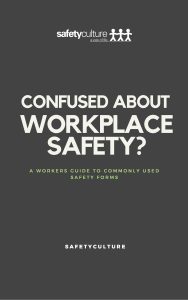
safetyculture clarifies its approach to SWMS

On May 1 2017 safetyculture released an e-book called “Confused about Workplace Safety?” intended to address questions commonly asked of them.  The topic of most interest is their advocacy of Safe Work Method Statements (SWMS), an activity discussed earlier by SafetyAtWorkBlog.

safetyculture states up front that SWMS are for “high risk construction work” as defined by occupational health and safety (OHS) legislation and lists the activities that make up high risk construction work. But then poses a confusing question:

“So why did my principal contractor request that I supply a SWMS for the plastering or turf laying job I just did?”

Subscribe to SafetyAtWorkBlog to continue reading.
Subscribe Help
Already a member? Log in here

New program launched that forecasts safety and risk levels

Almost every occupational health and safety (OHS) inquiry by the Australian Government has acknowledged the inadequacies of data on workplace injuries, illnesses and deaths.  The 1995 Inquiry into Occupational Health and Safety (Volume 2) (pages 377-378) by the (then) Industry Commission  acknowledged the lack of empirical evidence and made up its own.  The situation has barely improved.

However a new project by West Australian academic,

Subscribe to SafetyAtWorkBlog to continue reading.
Subscribe Help
Already a member? Log in here

Free online safety conference – RTW Summit

Recently I recorded my contribution  to an online conference called the RTW Summit.  This conference is first to Australia although other organisations have proposed such a format previously but never eventuated.

The conference has been devised and organised by Mark Stipic, a young Return To Work professional who started a podcast recently.  He is intelligent and one of those people who is not afraid to take risks in the emerging world of social media.

Continue reading “Free online safety conference – RTW Summit”

More activity needed on safe driving at work

In Australia a driver can achieve a “full”, unrestricted licence for driving a car from one’s early 20s following a test conducted by a State regulatory authority.  This driver’s licence is renewed each ten years but without any retesting or assessment of competency, even though the road rules, environment, traffic volumes, car design and personal technology would have changed in that time.

Should an employer allow an employee to drive a company or work-related vehicle without determining a driver’s suitability and level of driving competence?

Subscribe to SafetyAtWorkBlog to continue reading.
Subscribe Help
Already a member? Log in here

Practicable or practical – let’s call the whole thing off

Jargon can help create a subculture.  This can be positive for those on the inside but relies on excluding others.  Occupational health and safety (OHS) is no different and one of the best illustrations of OHS jargon is “practicable”.  This was emphasised recently in a document released by WorkSafe WA where “practicable” had lost out to “practical”.

The guidance also omitted the duties of builders for the health and safety of those affected by their work.

Subscribe to SafetyAtWorkBlog to continue reading.
Subscribe Help
Already a member? Log in here
Concatenate Web Development
© Designed and developed by Concatenate Aust Pty Ltd