
Workplace resilience gets a kicking

The Age newspaper has published a feature article entitled “Workplace resilience: It’s all a great big con“. Although it does not mention occupational health and safety (OHS) specifically, it is applying the OHS principle of addressing the causes of workplace injury and ill-health.  It says that workplace resilience and similar training courses and strategies:

“… can’t overcome the structural realities and power imbalances that characterise the employment relationship. “Workplace resilience” might help us bear up to stress, but it won’t solve its underlying causes. And the causes of workplace unhappiness don’t necessarily reside in the individual and their own ability to “be resilient” or “relax” – they are part of the economic structures within which we work.”
Subscribe to SafetyAtWorkBlog to continue reading.
Subscribe Help
Already a member? Log in here

Muddled talk is not helping OHS

A short discussion* in Tasmania’s Parliament on 16 September 2015 is illustrative of the use of language to answer a question, just not necessarily the question asked.  This type of political language has existed for centuries and will continue to do so but it contributes to people’s confusion about occupational health and safety (OHS) and the regulators’ role in enforcing OHS laws and should be called to account.

The question was asked by Independent Kerry Finch to Attorney-General Dr Vanessa Goodwin.

“Is the Government concerned about the rundown in staff for the WorkSafe program? Is the Government aware that there are only a reported 19 field inspectors, when it requires between 27 and 30 for the program to work efficiently? Does the Government plan to recruit more field inspectors for WorkSafe?”

Subscribe to SafetyAtWorkBlog to continue reading.
Subscribe Help
Already a member? Log in here

Front page drug testing article is marketing

An article last week touched briefly on the issue of the effect of synthetic drugs in the workplace in the context of drug and alcohol testing.  The Australian newspaper on 28 September 2015 contained a front page article (paywalled) about mining company concerns over synthetic drugs at work, however it is an article that deserves greater analysis before anyone considers this as part of an evidence base as it is creatively constructed and relies on statements from a toxicologist working for drug testing laboratory. Continue reading “Front page drug testing article is marketing”

OHS is in sports but by another name

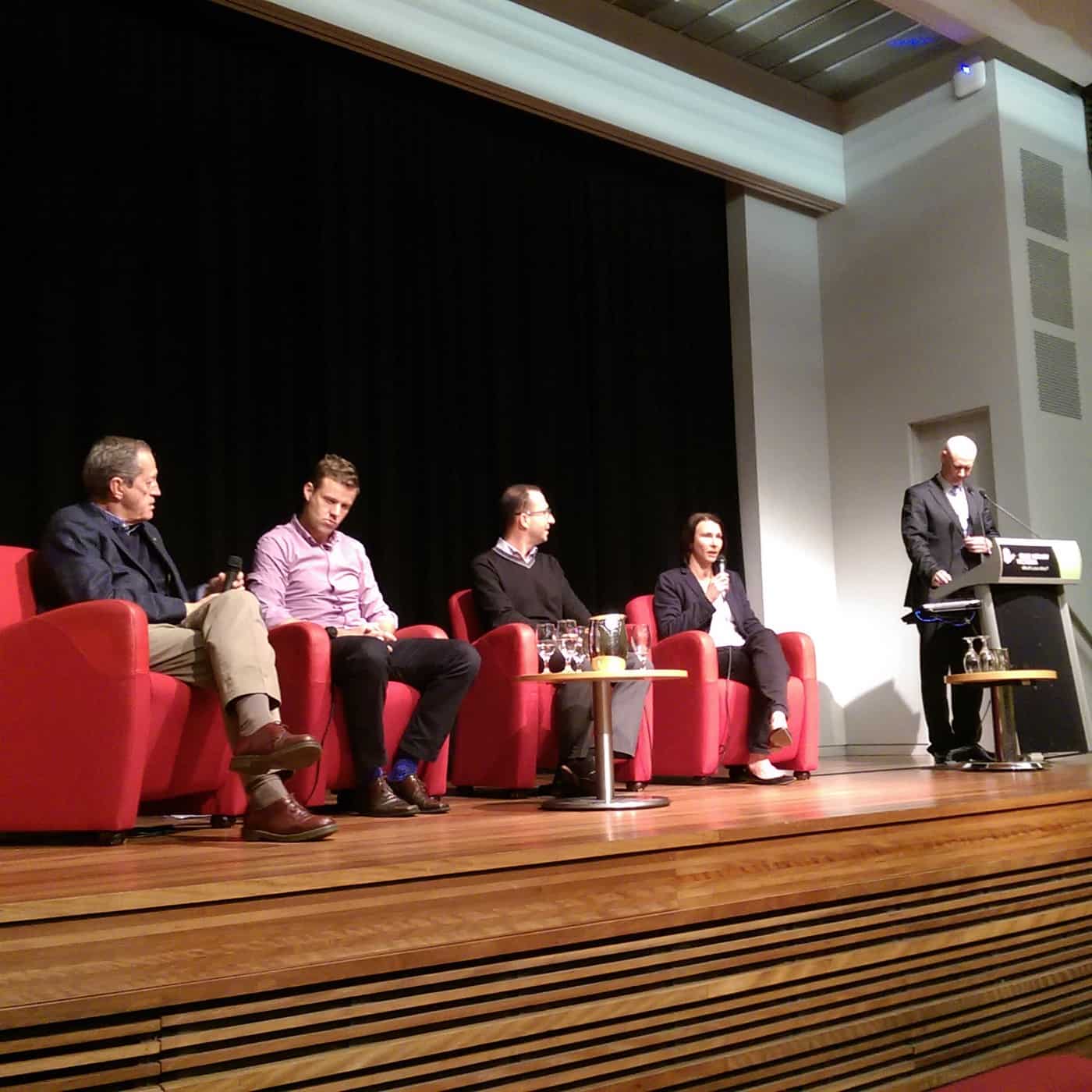
After writing a recent article about the relevance of occupational health and safety (OHS) laws to sporting clubs, I attended a sports medicine seminar to access a different perspective on workplace safety.

2015-09-21 18.43.15Having never played sports outside the obligatory high school activities, which in my high school also included snooker?!, the world of locker rooms and team sports is foreign.  But earlier this week I learnt that where OHS professionals talk about productivity, sportspeople speak of performance, and where factories address line speed, sports physicians talk of load management.  I also learnt that professional sportspeople are exempt from workers’ compensation.

Subscribe to SafetyAtWorkBlog to continue reading.
Subscribe Help
Already a member? Log in here

Yoga and yoghurt – corporate wellbeing

Professional organisations need to maintain personal contact between members and stakeholders even when social media allows for almost constant contact. Such events benefit from having thoughts challenged and recently one such event in Melbourne, Australia challenged its audience about psychological health and wellbeing.

A recent NSCA Foundation event heard from Andrew Douglas, one of the few workplace relations lawyers who can bridge the law and the real world.  He began by describing wellness or wellbeing in a fresh context.

“Wellbeing is that equilibrium that is achieved between challenge and resources.”

This perspective addresses business operations and personnel management as challenges – situations that arise that need controlling or managing.  This is a useful perspective as long as people feel up to the challenge and are not defeatist.

Subscribe to SafetyAtWorkBlog to continue reading.
Subscribe Help
Already a member? Log in here

More care needed in discussing workplace mental health and mental illness

Writing about workplace mental health is a tricky task.  An article recently posted to Business News Western Australia shows how tricky it can be and how mental health can be misinterpreted as mental illness.

The headline, “Are you one of the 20% of workers that will experience a mental health issue?” clearly refers to workers but the first sentence of the article does not.  “Australian adults” are not all “workers”.

Out of the total population of around 24 million Australians, Wikipedia estimates the working-age population of Australia (15 – 64 years) at round 67% (16 million, approximately). If we apply these statistics to the headline, there are 3.2 million workers who “will experience a mental health issue”. But is this annually, over one’s working life or over a lifetime? The article does not say.

Not only are the statistics messy, so is the terminology.

Subscribe to SafetyAtWorkBlog to continue reading.
Subscribe Help
Already a member? Log in here
Concatenate Web Development
© Designed and developed by Concatenate Aust Pty Ltd