
“aggressive verbal, foul-mouthed abuse” – the Ian Smith saga continues to be discussed

How language can change in only a little time! Earlier this month, SafetyAtWorkBlog wrote on the OHS context of the departure of Orica’s CEO, Ian Smith. In a liftout (not available online) in the Australian Financial Review, many of the same questions were asked by its Chanticleer columnist, Tony Boyd.  The issues raised by the poor decisions of the board are a useful reminder of one of the potential contributory factors for the occupational and mental health of employees.

At last, one writer in the business press is describing Smith’s behaviour as it was – “…aggressive verbal, foul-mouthed abuse” when Smith “blew his top” and “humiliated” an employee.

This is much more direct language than that used in earlier media reporting where the carefully selected language of corporate media releases was reiterated. To understand the seriousness of the issue, it is necessary to describe actions accurately.

Boyd asked

“…why a 21st-century board of directors would deliberately seek a CEO with an “aggressive management style”.
Continue reading ““aggressive verbal, foul-mouthed abuse” – the Ian Smith saga continues to be discussed”

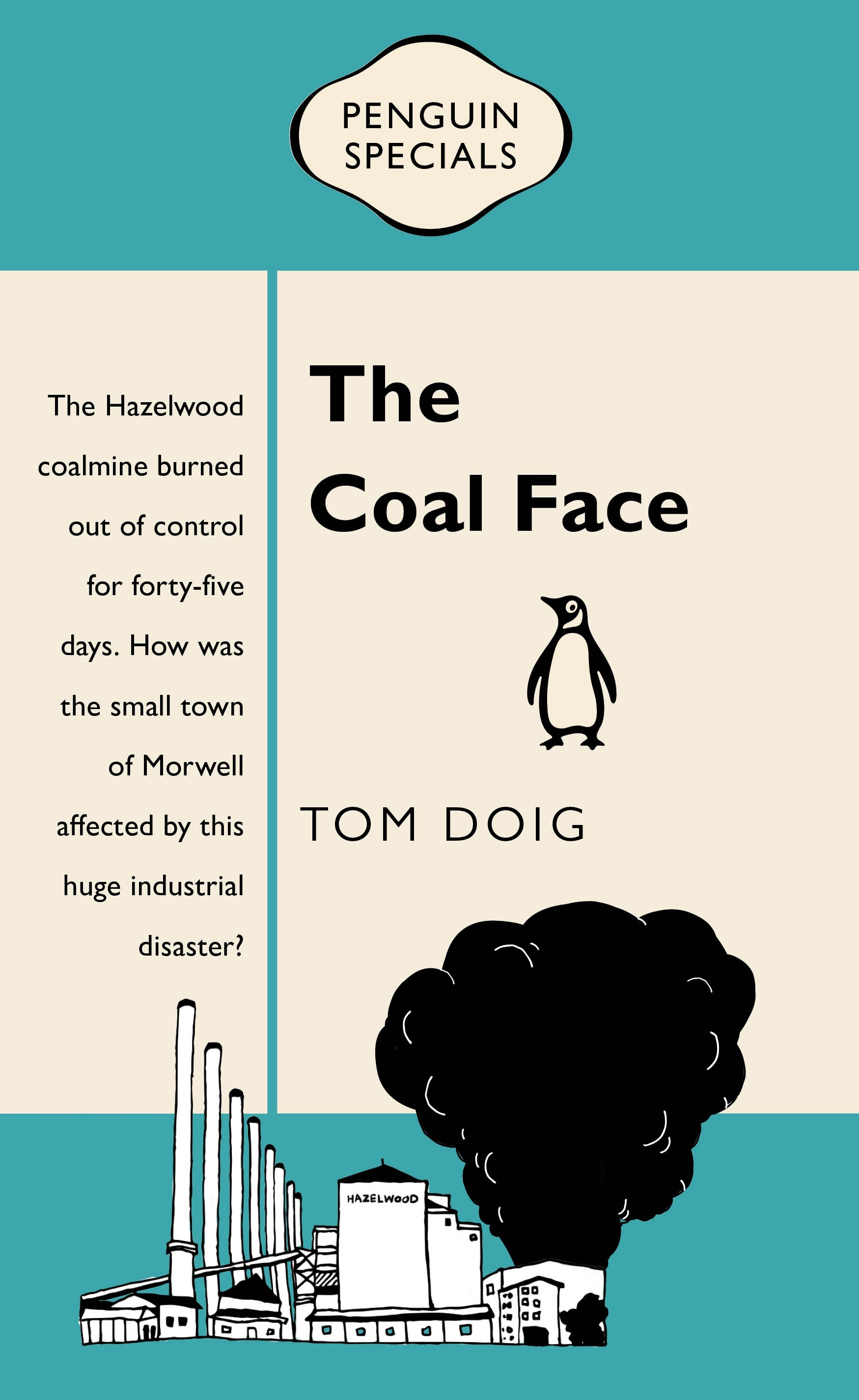
OHS and public health at The Coal Face

The Hazelwood mine fire has faded from the memory of most Victorians following the Parliamentary inquiry but not so for those who continue to live in the Latrobe Valley and with the health consequences of the fire.  Tom Doig has written a short book on the incident and its consequences that will put pressure on the Andrews (Labor) Government to honour its election promise and reopen the inquiry.

Doig’s book, The Coal Face, summarises many of the issues raised by the inquiry by looking at a selection of personal stories from residents, neighbours and firefighters.  It is a short book of just over 100 pages but it is an important reminder that the consequences of the mine fire are still being felt. Continue reading “OHS and public health at The Coal Face”

OHS professionals should be more politically active

Occupational health and safety (OHS) is inextricably linked to everyday life and everyday politics but it is treated as somehow separate, even by those who are experts in OHS.  This is not the case with industrial relations which is much more grounded in the political realities.

Industrial relations has been pushed by the trade union movement that has always seen workers’ rights as a social issue.  The OHS profession and its associations have been content, largely, to live within the factory fence.  Until recently OHS laws related solely to the workplace and OHS professionals had the luxury of a clear demarcation for its operations.

But new OHS laws acknowledge the responsibility for the effects of work on those other than workers, and those who are neighbours to workplaces.  Australian OHS professionals have been slow to embrace the social role that has been foisted on them.  There seems no excuse for this.

Recently, a

Subscribe to SafetyAtWorkBlog to continue reading.
Subscribe Help
Already a member? Log in here

Network Rail’s wellbeing program

At the recent Safety Asia Summit in Kuala Lumpur, there were several presentation illustrating the importance and the application of wellbeing programs as part of a broad health and safety strategy.  One speaker was Chris Jones, the Health and Wellness Strategy Head for Network Rail.

Chris started a wellness strategy in Network Rail from scratch less than three years ago.  Significantly an integral part of the strategy was to measure the effect of the strategy, a practice that should be an automatic inclusion with any contracts and the introduction of a new strategy.

SafetyAtWorkBlog was invited to attend and speak at the summit and had the chance to ask Chris Jones about some of the issues raised in his presentation.

Subscribe to SafetyAtWorkBlog to continue reading.
Subscribe Help
Already a member? Log in here

New analysis of deaths at work

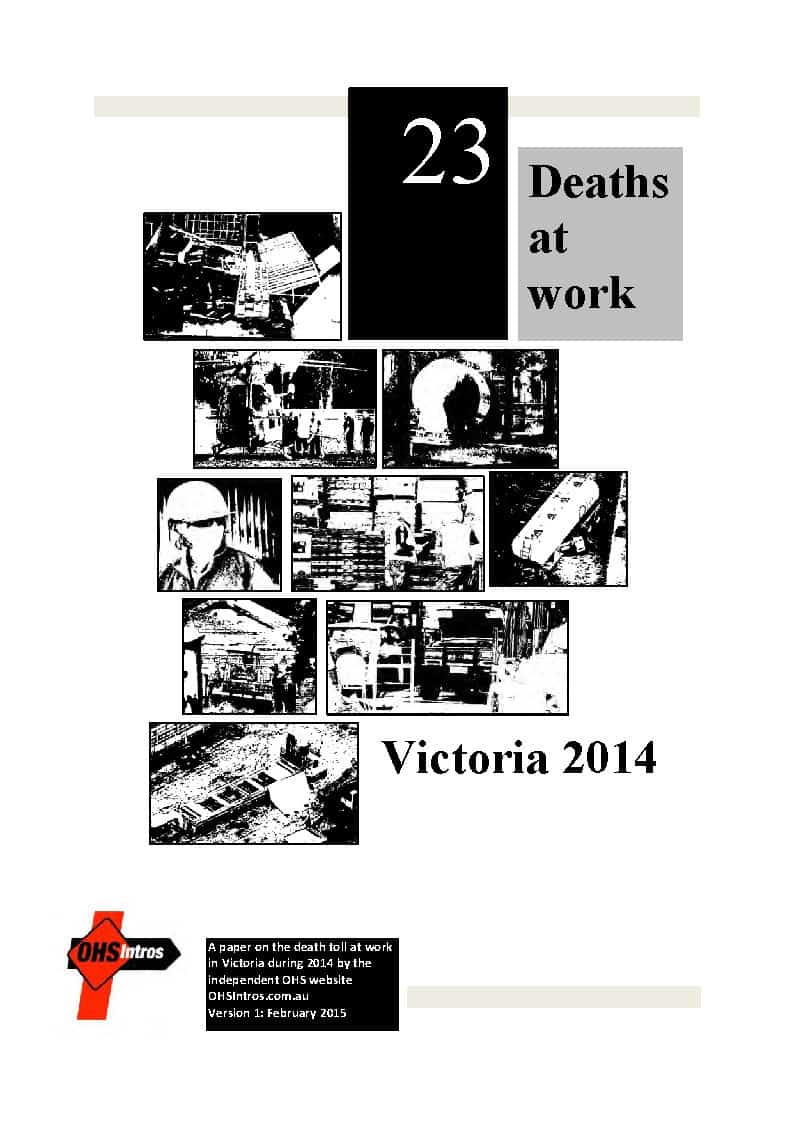
Cover of Deaths at Work 2014Barry Naismith has followed up his first report into WorkSafe with a second that analyses the workplace deaths in Victoria since 1985.

One of the attractions of Naismith’s analyses is that he considers the broader context to the data.  His first report looked at WorkSafe Victoria’s actions and policies in relation to the executive and board complexion.  In this report he looks at the frequency of deaths with WorkSafe campaigns and enforcement response.

The analysis may not have the authority of a fully-funded research program from an academic institution but the level of detail he has collected from official sources is impressive, and in the absence of any other analysis, Naismith’s work deserves serious attention.

Kevin Jones

Concatenate Web Development
© Designed and developed by Concatenate Aust Pty Ltd