“Illegal” asbestos use in the Australian Navy

The defence forces operate with a different understanding of risk and safety.  In the past there are many instances where soldiers lives have purposely been sacrificed for the greater good.  This has been an integral part of many “heroic” battles. 

The Australian federal OHS authority, Comcare, is at the forefront of a clash between occupational safety and armed services culture.  The Age newspaper has revealed the Australian navy’s continued use of chrysotile asbestos in its ship and navy bases years after the substance was banned for use.  The newspaper says that a risk assessment report has found

..”the risk to personnel was significant, exposure to asbestos was almost certain and the consequences were “potentially catastrophic”.”

OHS standard practice is to identify the control of hazards in line with the Hierarchy of Controls which seems to have been done as the newspaper reports

“A ban on the use of and import of asbestos-containing materials in Australia came into force on January 1, 2004. But the ADF [Australian Defence Force] requested and won an exemption [page 5 of the SRCC 2005-06 Annual Report] to continue using chrysotile asbestos parts until 2007 on two strict provisos: that the parts were “mission-critical” – meaning their absence would ground equipment and jeopardise a mission – and that no non-asbestos replacement parts could be found.”

So the hazard can’t be eliminated or substitutes found.  That’s the first two levels of the hierarchy down.  The report goes on to assert that the (in)action of the Navy could be illegal and says the exemptions were renewed for another three years (page 81 of the SRCC Annual Report 2007-08)

The remaining levels of the control hierarchy are not addressed in recent media reports or documents available through Comcare’s website but the continuing cases of asbestos-related diseases reported by the lobby groups would indicate that personal protective equipment may not have been used or used appropriately. 

Most organisations are aware of the hazard of asbestos if not how the hazard relates to the specific circumstances.  The Navy cannot claim this as it has specifically claimed exemptions for the hazard. 

The current Defence Minister, Joel Fitzgibbon, took action on the defence force’s use of asbestos products almost 12 month’s ago and even though it was reported that he gave the Defence chiefs a “dressing down” over the issue, circumstances seem not to have improved. 

“But Defence Minister Joel Fitzgibbon, who first accused the Defence Force of lethargy in its efforts to remove asbestos in 2007, when he was in opposition, said despite the massive cost of ridding the ADF of asbestos, its continued use was unacceptable.”

For those who habitually argue that worker safety is not affordable, the Minister’s quote above shows commitment.  Sadly it is these types of comments that can come back and haunt politicians.

It is suspected that the Minister or the Navy is receiving letters about non-asbestos gaskets from keen equipment suppliers as you read this blog.  But that raises the problem of the labyrinthine issues of defence equipment procurement.  Perhaps the fact that anti-asbestos campaigner and former trade union leader, Greg Combet, is now the Parliamentary Secretary for Defence Procurement may fast-track the issue.  It is hoped that on the issue of asbestos in the defence forces, Greg speaks up soon.

Kevin Jones

Defibrillators in public places

official20portrait_oct07_sm-brumbyThe Victorian Premier, John Brumby, “unveiled” publicly accessible defibrillators at the Southern Cross station in Melbourne on 6 January 2008.  Australia has been relatively slow in the take-up of defibrillators as part of the non-professional first aid role.  Partly this was due to the initial expense of each unit but also because workplace first aid legislation took some time to accommodate technology.

In most States of Australia, this was exacerbated by the emphasis on allocating first aid resources on the basis of need rather than a prescriptive basis and, anyway, how can you gauge where people will have heart attacks?

SafetyAtWorkBlog is wary about relying on technology to solve problems simply because it seems simpler.  In the long-term, technology can be become cumbersome, unnecessarily expensive to maintain and often increasingly unreliable.  It is suggested that a cost/benefit exercise of the new defibrillators in Southern Cross Station would show them to be an unnecessary expense.  Direct cause and effect in terms of first aid is difficult to quantify.  But then again, according to the Premier’s media statement:

“In the 2007/08 financial year, Ambulance Victoria responded to 133 emergency cases at Southern Cross Station, including five cardiac arrest incidents.”

Defibrillators were obviously not applied as quickly in those incidents as can be in the future but for those first aiders in this blog’s readership the following statistic can be quite useful.

“Victoria has the best cardiac arrest survival rate in Australia, with 52 per cent of patients arriving alive at hospital.”

Let’s hope that these defibrillators will stop the Southern Cross Station from being a “terminal”.

Kevin Jones

Drug abuse at work – podcast interview with Professor Steve Allsop

The editors of SafetyAtWorkBlog produced SafetyAtWork podcasts several years ago.  These interviews deserve some longevity even though some of the references have dated.  In this context, SafetyAtWorkBlog is re-releasing a podcast from September 2006 on the management of drugs in the workplace. (The podcast is available at SafetyAtWork Podcast – September 2006 )

Professor Steven Allsop is a leading researching on the use of drugs at work and socially.  Steven is also the Director of the National Drug Research Institute.  In this interview he discusses amphetamine use, how to broach the issue of drug use with a worker and drug policies in industrial sectors.

Please let SafetyAtWorkBlog know of your thoughts on this podcast.

Kevin Jones

Indonesian Mines & Depleted Uranium

As in most professions during time in occupational health and safety, one meets amazing people.  One that SafetyAtWorkBlog  cherishes is Melody Kemp.  

Melody is an ex-pat Australia who currently resides in Laos. As well as working on OHS matters throughout the Asian region she is also the author of the excellent OHS publication Working for Life: Sourcebook on Occupational Health for Women, a free download.

In 19 December 2008 Melody had an article printed in Asia Times Online concerning the social impacts of a proposed mine on the small Indonesian island of Lembata.  In this era of corporate social responsibility, safety professionals have a broad brief which covers many industrial, corporate and environmental responsibilities and it is often company behaviour in far-flung outposts of the corporate structure or the world that indicates a clearer picture of corporate and safety culture.  

Melody’s article is highly recommended for those with a social conscience, for those in the mining sectors and for those whose companies have Asian operations.

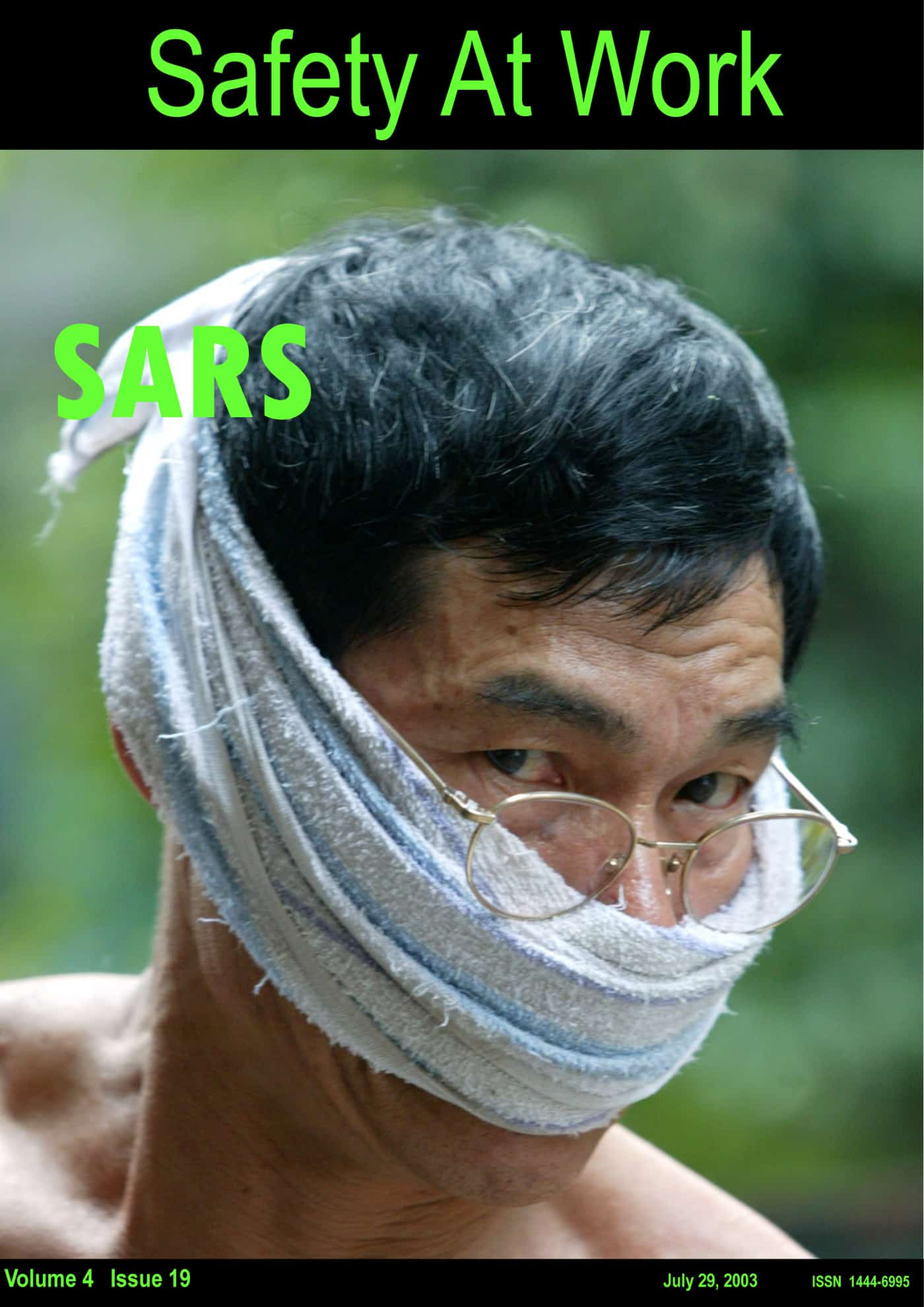
In 2003, Melody wrote an article on the health risks of the use of depleted uranium for Safety At Work magazine (pictured below).  That article can be accessed HERE.

Kevin Jones

4i14-cover

Workplace Choirs

As workplaces approach the winter break or Christmas, there will be in increase in communal singing.  One Australian has started to establish workplace choirs

Tania de Jong makes some good arguments about the benefits of greater worker contact and understanding through communal singing.  It sounds logical and I am sure there is evidence to show positive benefits,  just as there is to show the stress management benefits of laughing.

There are parallels everywhere with this not-wholly-original concept and one I am reminded of is the Fortune Battle of the Corporate Bands.  (Maybe the economic downturn will cause an increase in trios and duets)

I foresee lots of niggly problems such as the singing of religious songs during Christmas, and singing ironic songs that obliquely criticise corporate strategies and performances.  I can think of many and ask that SafetyAtWorkBlog readers suggest others through comments below.

Suggestions already include

Money, Money, Money – ABBA

I Wanna Be a Boss – Stan Ridgway

Nine to Five – Dolly Parton


Kevin Jones

George W Bush and workplace safety

In 2001, one of the first legislative actions of George W Bush was to repeal the United States ergonomics standard.  At the end of his presidency there are indications that he is thinking about the regulatory impost of OHS on businesses again.

Crikey.com and others have reminded us of the Bush Administration’s plans concerning the exposure of workers to chemicals

“David Michaels, an epidemiologist and workplace safety professor at George Washington University‘s School of Public Health, said the rule would add another barrier to creating safety standards, in the name of improving them.

“This is a guarantee to keep any more worker safety regulation from ever coming out of OSHA,” Michaels said. “This is being done in secrecy, to be sprung before President Bush leaves office, to cripple the next administration.””

Propublica has reported that new rules that seem to run counter to current fatigue management guidelines elsewhere have been finalised.

“The Department of Transportation has finalized an interim rule for the number of hours a truck driver may spend on the road per day and per week. The rule, which has essentially been in effect since 2004, allows truckers to drive for 11 hours and work no more than 14 consecutive hours each day. They must rest 10 hours between shifts, and may not work more than 60 hours a week.”

An audio report from 2007 on the issue of working hours is available at NPR

It is hard to see the justification for these safety rule changes but these are just two of many changes in place or being finalised in a rush.  Perhaps there is a grander strategy that the bigger perspective will show.  

The actions are disappointing but not without precedent.  It should be remembered that Democrat President, Bill Clinton, took full advantage of the opportunity.

In Australia and elsewhere, the movement to “cut red tape” gathers strength, it just seems that no one yet is applying the US solution of eliminating the regulatory need.

It is sad to see that throughout Bush’s tenure safety advocates and lobbyists  were not able to gain concessions.  It will be doubly difficulty to gain anything that may involve a cost to business in the current economic problems.  

The challenge will be even greater in Australia where the Safe Work Bill has been withdrawn from Parliament and the Government is willing to weaken election commitments, such as on climate change, due to the economic context.

In just over a month’s time, we will see how new President Barack Obama acts on safety; Australia has much longer to wait.

Leading from the top on impairment

Advocates of safety culture regularly profess that it must be lead from the top of the corporate structure down.  This applies a false definition of leadership.  Leadership is innovation, understanding and support regardless of one’s position on the corporate ladder.

It is true that professing leadership and corporate goals should be supported by the appropriate actions but that is often the avoidance of hypocrisy rather than seeking active change. It must be acknowledged that leadership can also come from below  – in the mail rooms, the cellars, the janitors and from the shopfloors.

Workers in many industries are subjected to random drug and alcohol tests.  Often these apply to those workers who operate machinery or drive transport vehicles.  And rightly so.  These workers must undertake their tasks without any impairment of their cognitive functions.  Impairment is a concept that the Australian union movement has struggled with for well over a decade mainly because in the industrial relations world this is close to being “fit for work” and how does one define that?  It also has some relationship to “blaming the worker”.  In occupational health and safety, it is seen as looking after one’s self whilst looking after others and the obligation to do this has existed for decades in OHS legislation.

Impairment is commonly discussed now in terms of driving while drunk or stoned or while using a mobile phone.  But long before this there was “impaired judgement”.  As well as being fit-for-work, people needed to be fit-to-think. 

On 4 December 2008, the New South Wales Health Minister (and former Industrial Relations Minister) John Della Bosca rejected a proposal from the Rail, Bus & Tram Union (RTBU) to “to make breath-test kits available on a voluntary basis to MPs wanting to check their blood alcohol levels before they turn up for late night votes.”

It is reported that the RTBU secretary Nick Lewocki has said 

“All rail workers are subjected to random drug and alcohol tests, an infringement on their personal lives that they are told is necessary due to the safety critical nature of their work. But driving the state is every bit as safety critical, and decisions our politicians make on issues as diverse as health, education and transport policy do affect public lives.” 

Ignoring the political devilment of the RTBU, the comment focuses on being unimpaired when making decisions, regardless of the occupation, work task or corporate position.  The Minister has been put in a difficult position where he can’t be seen as responding to union naughtiness but there is merit in leading from the top and making breath-test kits available.  They are not suggesting random testing or mandatory testing but it is reasonable to expect important decision-makers to be fit-to-think and fit-to-decide.

Perhaps drug testing in the workplace would not be seen as the contentious issue it is if it had already been introduced in the boardroom.  The gesture would not be as empty as the corporate leaders may think particularly leading into the season when sauce and ganders were traditionally eaten.


Concatenate Web Development
© Designed and developed by Concatenate Aust Pty Ltd