
Last week I mentioned two work-related films at the Melbourne International Film Festival. Tomorrow’s Castlemaine Documentary Film Festival is screening Happy Sad Man a film about the mental health of Australian men. There is an overlap with work-related mental health, especially farmers, so I’ve bought my ticket.
Category: health
Identifying work-related mental health

Recently the Medical Journal of Australia published new guidelines for general practitioners (GPs) on how to identify work-related mental health conditions (MHC). This is vital information as GPs are often the first opportunity where mental health conditions can be identified or confirmed. It also assists occupational health and safety (OHS) professionals by acknowledging the role of work in the positive and negative mental health of workers.
Medical and OHS sectors must start speaking the same language on mental health

For many years, the Australian medical has been supportive of a “Health Benefits of Good Work” (HBGW) initiative. This initiative, started in 2010, is directly relevant to how Australia is determining its mental health policy and strategies especially as they relate to workplaces. The initiative was developed by:
“…. the Australasian Faculty of Occupational and Environmental Medicine (AFOEM) of The Royal Australasian College of Physicians (RACP). This initiative is based on compelling Australasian and international evidence that good work is beneficial to people’s health and wellbeing and that long term work absence, work disability and unemployment generally have a negative impact on health and wellbeing.”
This initiative can be seen behind many of the public statements about the mental health status of the unemployed as this sits within the public health and the social welfare sectors, but it is rarely mentioned by those providing occupational health and safety (OHS) advice.
“…this mother introduced her son to his first employer and within a year he was dead”

Recently Jan Carrick spoke with SafetyAtWorkBlog about how her life changed after the death of her son Anthony, who was on the first day of his new job sweeping floors. Jan was responding to a series of questions put to her and others. One of those others was Andrea Madeley.
Andrea Madeley has been an outspoken advocate for changes in occupational health and safety (OHS) laws since her son died in a workplace incident in 2004. In response Madeley established the influential advocacy group VOID – Voice of Industrial Death. Madeley has recently qualified as a Solicitor.
SafetyAtWorkBlog wanted to tap into the wisdom of those who have already experienced the death of a loved one at work and who has gone through all the related court processes, in the hope that this will provide an important perspective to those around Australia who are in the early stages of similar tragic experiences.
Below are Andrea’s responses to SafetyAtWorkBlog’s questions.
Tough but short-term
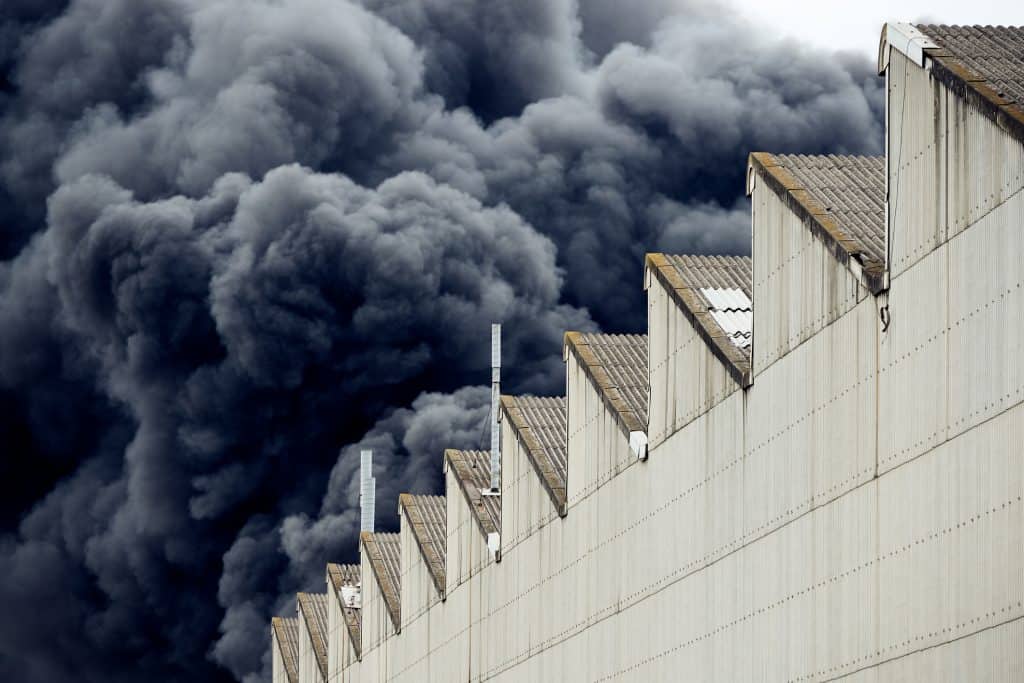
Melbourne, Australia has recently suffered several notable factory fires that resulted from unsafe storage of chemical wastes. These fires have resulted in toxic fumes across residential suburbs, environmental damage to local waterways and some injuries to workers. Victoria’s Minister for Workplace Safety, Jill Hennessy has responded by increasing penalties for breaching occupational health and safety (OHS) laws. This is a good short-term measure and indicates to the community that their government is doing something but is not a sustainable prevention strategy.
Glyphosate – read the label, assess the risk, take precautions
The debate on the risks of using glyphosate products to control weeds continues to ripple around the world largely sparked by the global penetration of media reports from the United States. It is important to look at the risks without the unique litigation climate in the United States. A recent Australian report by SBS television emphasises to the occupational health and safety (OHS) risks of glyphosate.
The report started with mention of reviews into the use of glyphosate products by New South Wales councils and the Victorian Government. It would disappointing if such reviews had not already been conducted given the glyphosate was identified as possible carcinogenic several years ago. That change in the state of knowledge of a hazard should have been sufficient for all glyphosate users to reassess their risks.
This was followed up by information on the residual environmental impacts that was reminiscent of Rachel Carson’s Silent Spring but is not strictly an OHS matter.
Farm safety gets more funding
Further to the recent article on the Victorian Government’s Budget Papers, farm safety programs received the funding to support the pledges made by the Australian Labor Party in last year’s Victorian election campaign. As with many occupational health and safety (OHS) announcements, details are hard to obtain but the Victorian Farmers Federation (VFF) has helped.
The Victorian Budget papers pledged funds to
- employ two additional Farm Safety Officers.
- increase health checks for farmers.
- deliver a new campaign to raise greater workplace safety awareness.