OHS in politics this week

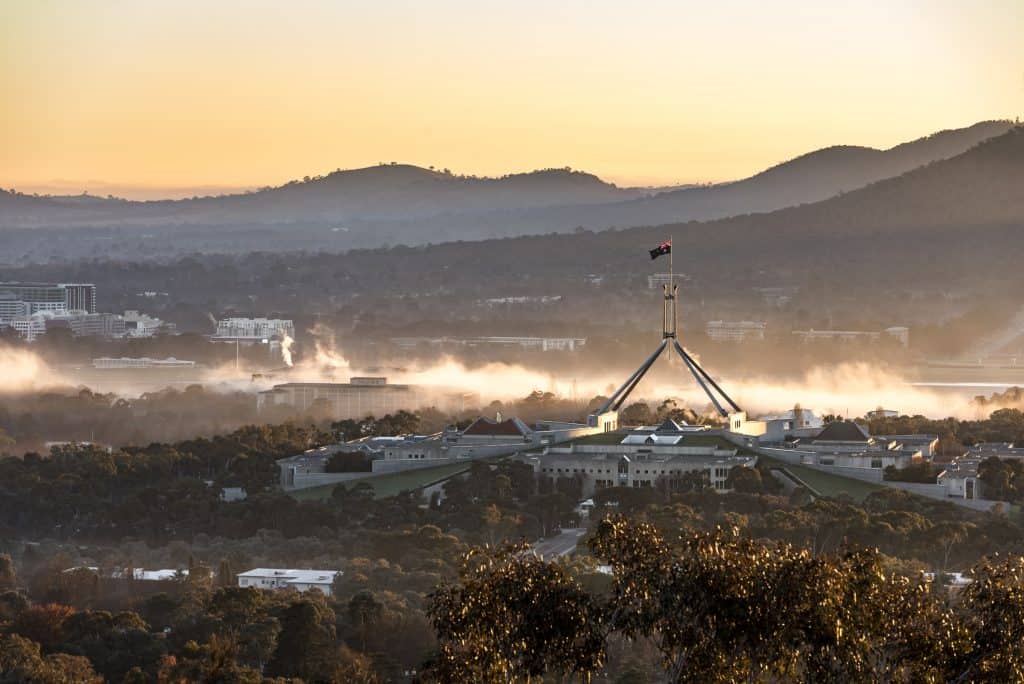
Foggy Winter Morning,Aerial view of the Parliament House Canberra,taken at Red Hill Lookout, Canberra,Australia.

Occupational health and safety (OHS) popped up in the Australian Parliament this week in odd, oblique ways. OHS was tied to

  • asbestos imports,
  • the Ensuring Integrity Bill,
  • a construction company owner in Western Australia, and
  • sexual harassment.

Question and Answers

On September 19 2019 several questions were put about the importation of asbestos containing products. The Government through the Home Affairs Minister, Peter Dutton, advised that:


Subscribe to SafetyAtWorkBlog to continue reading.
Subscribe Help
Already a member? Log in here

Listening anew to the voice that has always been there

The growth of visible and prominent customer services, such as those in the collective term of “gig economy” – has coincided with an increased consideration of alternative socioeconomic structures and broader political diversity, especially in the UK and to a lesser extent Australia and New Zealand. One manifestation of this change is an emerging consideration of Co-operatives and worker ownership. This may seem outside the occupational health and safety (OHS) purview of this blog but co-operatives often allow workers more input into business operations and therefore more influence on OHS standards and management. However, should this influence come from increased worker wealth or is OHS more fundamental than money?

Subscribe to SafetyAtWorkBlog to continue reading.
Subscribe Help
Already a member? Log in here

Oral biffo over safety in Queensland Parliament

Before Christmas, the Victorian Government will be presenting a Bill for Industrial Manslaughter laws to the Parliament. The core elements of accountability and penalty are expected to be little different to the Bill that failed to pass Parliament earlier this Century by a bee’s whatsit. The debate is likely to be on the same benefits and costs, so one can reread Victoria’s Hansard from 2002 or look at the debate in Queensland Parliament last week where that Government’s “Safety Reset” has generated arguments about which party is more committed to occupational health and safety (OHS).

Subscribe to SafetyAtWorkBlog to continue reading.
Subscribe Help
Already a member? Log in here

The Interconnectedness Challenge

The solutions to most occupational health and safety (OHS) issues are multidisciplinary meaning that solutions are rarely simple and rarely come from a single source of information or knowledge. Recently I have been challenging my colleagues to spread their voices and experience beyond their own disciplines to illustrate how a worker’s health and safety is affected by a broad range of hazards and environments. I extend that challenge to all organisations including employer and industry groups like the Business Council of Australia (BCA) which has recently released a report on “The state of enterprise bargaining in Australia”.

Many organisations undertake research into different elements of work but rarely take an overall perspective, or one that analyses the interconnection of societal and occupational conditions and pressures. The latest BCA report is one example

Subscribe to SafetyAtWorkBlog to continue reading.
Subscribe Help
Already a member? Log in here

Interesting but not representative

The Australian Council of Trade Unions (ACTU) released the results of its latest occupational health and safety (OHS) survey. In past surveys respondents have been trade union members. This survey was opened to non-union members, but to what extent is unclear but this has not stopped the ACTU speaking of the respondents as workers rather than workers who are all union members.

This differentiation is important. In the 1990s when union membership was much larger, the argument that the survey results were representative of Australia’s workforce was stronger although still debatable. Representation is harder to claim now with union membership being well below 20% overall and below 10% in the private sector.

Subscribe to SafetyAtWorkBlog to continue reading.
Subscribe Help
Already a member? Log in here

Grab the political OHS opportunity

Yesterday, Australia’s Parliament opened for its Winter session. As per protocol, the Governor-General officially opened the process with a speech (page 13) about his government’s agenda. It is no surprise that it is heavy on economic reform but there was a few lines about lawlessness that are of interest.

The Governor-General’s words are aimed at the lawlessness of certain trade unions but we could impose occupational health and safety (OHS) on the statements as well. On the issue of Regulatory Reform and Industrial Relations, the Governor-General said the government:

“… will partner with businesses in identifying the barriers, blockages and bottlenecks to investment. Confidence to invest relies on productive and harmonious workplaces. This means tackling lawlessness in workplaces whenever and wherever it may occur…….

This work will be evidence based. It will protect the rights and entitlements of workers and identify a way forward that will benefit our economy and, most importantly, the workers who rely on it.”

Subscribe to SafetyAtWorkBlog to continue reading.
Subscribe Help
Already a member? Log in here

The party politics of safety

The Safety Institute of Australia, commendably, approached the major political parties running in Australia’s current federal election campaign. Only the Australian Labor Party (ALP) responded to the SIA, but the policy documents of the Australian Greens and Liberal and National Parties are available online and their relevance to occupational health and safety (OHS) deserves attention.

The ALP information should be familiar to SafetyAtWorkBlog readers:

• “Show national leadership and meet with work, health and safety ministers from across Australia in the second half of this year to decide on the best course of action of the recommendations to come out of the Boland review.
• Work with state and territory governments to implement a harmonised industrial manslaughter offence.
• Establish a national advisory committee made up of representatives from each state and territory who have been personally impacted by a serious workplace injury or death to develop recommendations for federal, state and territory governments to act upon.”

Subscribe to SafetyAtWorkBlog to continue reading.
Subscribe Help
Already a member? Log in here
Concatenate Web Development
© Designed and developed by Concatenate Aust Pty Ltd