New OHS laws could change the management of quad bikes

Dr Tony Lower has written an opinion piece in the December 2011 edition of the Medical Journal of Australia (not available without a subscription however a related media release is) about farm safety.  One statistic he quotes says:

“In tractors, rollover fatalities have decreased by 60% after the introduction of regulations requiring compulsory rollover protection structures.”

The very successful introduction of rollover protection structures (ROPS) in Australia was given a major boost by OHS regulators offering substantial rebates for the fitting of ROPS on top of the regulatory requirements.  A safety “spoonful of sugar” as it were. Continue reading “New OHS laws could change the management of quad bikes”

OHS app is attractive but may be no better than a paper system

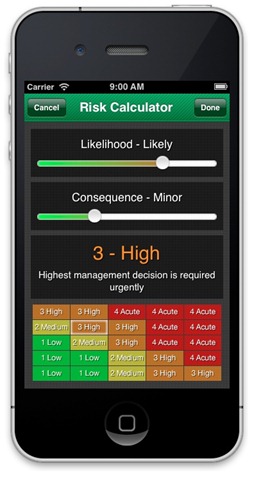
Over the last few months I have been using my iPad to take photographs of good and bad workplace practices.  These photos are usually shown to a site or business manager after a visit so that control measures can be identified.  The advantage of an iPad is that no one has to squint at a small screen to try to see the hazard.  I have kept my eyes open for potentially useful OHS apps for the iPad.  One app recommended to me is iJSA.

iJSA, designed for the iPhone initially, is packed with features that could assist the tech-savvy OHS professional in developing Job Safety Analyses (JSA) (Job Hazard Analysis in the United States).  However any app must prove to be better, more convenient and more effective than existing measures and I am not sure that iJSA does this. Continue reading “OHS app is attractive but may be no better than a paper system”

OHS Strategy to nowhere

Throughout 2011, Safe Work Australia (SWA) has been conducting consultative workshops in the development of the next ten-year National OHS Strategy.  SafetyAtWorkBlog reported previously on the Melbourne meeting.  SWA has released their report into that Melbourne meeting.

The meeting had a set of criteria for the stakeholders to consider.  Sadly, there was no forewarning of the issues to be discussed so the workshop took some time to gain traction.  With only one day of consultation, it would have been more productive to release the agenda topics a day or two earlier.  These topics, each of which could have generated at least a half-day’s debate, are listed below

“Social/Economic/Emerging Issues in the Workforce, Business and Technology…

Hazards – Enhancing the capacity of workplaces to respond to:

  • Disease-Causing Hazards …
  • Injury-Causing Hazards …
  • Psychological Injury-Causing Hazards …

Work Health and Safety Systems – Challenges and Solutions in Safe Design and Work Systems, Skills and Training, and in Safety Leadership and Organisational Culture…..”

The report has responses to each of these topics but many of the suggestions are already known.  The lack of creativity in the suggestions is largely disappointing.  The responses to “what will success looks like in ten years” are mostly extensions of programs that are already in place or a perpetuation of the “way things are done now”.  Innovation was largely missing, perhaps due to the participants not being able to lose their own agendas.  The earlier SafetyAtWorkBlog article discussed the negative impact of the shadow of harmonisation, a term found only once in SWA’s report. Continue reading “OHS Strategy to nowhere”

Weekly Times sets the tone for quad bike safety research

The Weekly Times newspaper continues to report on the changing attitudes to quad bike safety in Australia.  In its 19 October 2011 edition it featured an article that for the first time in the Australian print media questions the US research statistics on quad bike safety on which motorcycle manufacturers have been relying for many years.

The research by Dynamic Research, predominantly undertaken by John Zellner, has been questioned before but the appearance of such an article in the mainstream, albeit rural, press indicates a degree of research maturity in this area in Australia.  It also indicates the possibilities presented by the internet and social media for promoting change and questioning important matters that do not usually garner mainstream attention. Continue reading “Weekly Times sets the tone for quad bike safety research”

Helmet debate misses the point of safe design

Workplace safety is rarely simple or easy.  It has become a standard recommendation in Australia recently for quad bike riders to wear helmets.  Quad bike manufacturers recommend the wearing of helmets and some OHS regulators are making it mandatory but this should not be the end of the safety discussion.  The Weekly Times newspaper on 21 September 2011 describes the current arguments occurring over the type of helmet to be worn.

It is common for workplaces to experience disputes or discussions over personal protective equipment (PPE).  These discussions are necessary to ensure that the best, the most suitable, PPE is used to control a hazard.  Sometimes safety eyewear can be heat-resistant sunglasses, sometimes this should be goggles.  Sometime head protection comes from a hard hat, sometime from a bump cap.  PPE should never generate new hazards when trying to control another.

The current discussion indicates has arisen over the wearing of motorcycle-style helmets while following a herd of dairy cows during an Australian summer.  Dairy farmers say that the wearing of helmets in these conditions is absurd and farmers will choose to ride quad bikes un-helmeted instead. Continue reading “Helmet debate misses the point of safe design”

Professor Niki Ellis speaks about OHS, CSR and resilience

Next week the National Comcare Conference is held in Melbourne Australia.  One of the keynote speakers at the conference is Professor Niki Ellis, a prominent Australian OHS researchers and consultant  who is also heading up the Institute for Safety, Compensation and Recovery Research (ISCRR).

On a sunny September 5 2011 I was able to spend half and hour with Niki at a noisy cafe outside Victoria’s State Library talking about:

  • The profile of OHS is Australia as a profession
  • The importance of a practical application for OHS research (what Niki refers to as “interventionist research”)
  • The need for innovation in tertiary institutions
  • The legacy of Dame Carol Black’s UK report “Working for a Healthier Tomorrow
  • The challenge for OHS professionals to cope  with emerging psychosocial hazards
  • The role and importance of Corporate Social Responsibility to workplace health and safety
  • The deficiencies of applying resilience to workplace mental health issues

Kevin Jones

Australian OHS experts call for a single OHS regulator and a unified insurance system

Some of Australia’s top work health and safety experts have stressed, to Safe Work Australia, the need for a single national OHS regulator.  Many also called for a radical overhaul of workers’ compensation and insurance structures to achieve a combined insurance/compensation similar to that of New Zealand, the Accident Compensation Commission (ACC).

These calls were made in a  whole day workshop, conducted by Safe Work Australia on 30 August 2011, on the development of the next ten-year national OHS strategy.  This was the latest of around ten consultative sessions whose notes will be summarised and posted online.  The notes from an earlier seminar list the following discussion topics:

  • “The need to focus on work health and safety prevention.
  • Engagement with target groups and industries to ensure advice and support is relevant to enable them to effectively respond to hazards.
  • Engineering hazards out through good design.
  • Influencing the supply chain inside and outside Australia.
  • Prioritising key work health and safety hazards and focusing national attention.
  • Creating opportunities for innovation in work health and safety particularly within the regulatory framework.
  • Enhancing the culture of safety leadership (promoting highly reliable organisations).
  • The importance of safety culture.
  • Enhancing the capability of workers to return to work following accident or illness.
  • Influencing or assisting academia to undertake research – focusing on intervention effectiveness.
  • Developing a shared communication strategy to promote the new principles of the new Strategy.”

These echo many of the comments in today’s seminar and illustrate what was a major missed opportunity.  The theme of today’s workshop was to imagine what OHS (or work health and safety or work health safety & environment, as some suggested) will be like in 2022 but there were few futuristic suggestions.  This was the opportunity to extend some of the practices currently undertaken by ten years. Continue reading “Australian OHS experts call for a single OHS regulator and a unified insurance system”

Concatenate Web Development
© Designed and developed by Concatenate Aust Pty Ltd