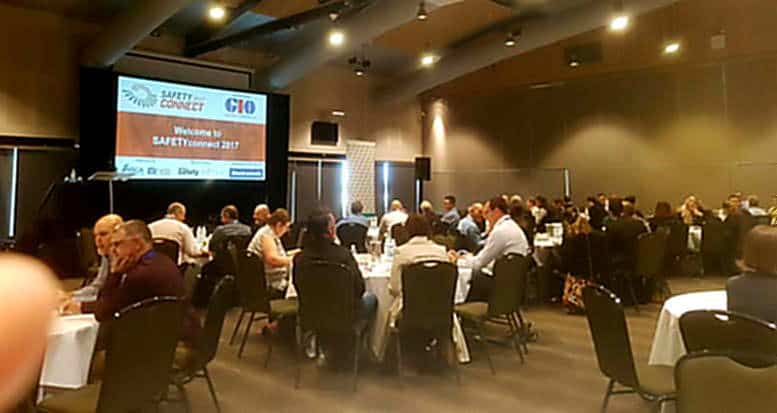
SafetyConnect conference connects

This week’s SAFETYconnect conference hosted by the NSCA Foundation in Sydney had a very good strike rate of interesting speakers on its first day.  Only one speaker missed the safety mark – it was as if they had been handed a marketing presentation instead of safety and, regardless of the safety audience, give it anyway.

This conference was notable for the way that the ‘safety differently’/Safety II movement has moved into mainstream safety management.  The most obvious example of this was a presentation by QantasLink.
Subscribe to SafetyAtWorkBlog to continue reading.
Subscribe Help
Already a member? Log in here

Government could help progress OHS so much more

Innovation in occupational health and safety (OHS) is often encouraged by government but government processes and policy can also discourage and limit this.  An obvious example is where government insists on compliance with OHS laws in its tendering criteria but acknowledges that the tender safety criteria remains outdated and, privately, that OHS compliance is not enough to ensure a safe and healthy workplace.

An important OHS document in the Victorian bureaucracy and construction sector is a

Subscribe to SafetyAtWorkBlog to continue reading.
Subscribe Help
Already a member? Log in here

SWMS deficiencies are symptoms of bigger OHS challenges

The use and abuse of Safe Work Method Statements (SWMS) has been researched in Australia for several years. SafetyAtWorkBlog has seen a copy of an unreleased report prepared for Safe Work Australia that identifies major problems with the use of SWMS but that makes recommendations which seem unlikely to achieve the level of change required.

The  February 2017 report “The Efficacy of Safe Work Method Statement and WHS Management Plans in Construction” (written by

Subscribe to SafetyAtWorkBlog to continue reading.
Subscribe Help
Already a member? Log in here

Reviewing fundamentals is part of cultural change

The most recent stuff-up by the Commonwealth Bank of Australia has strengthened calls for a Royal Commission into Australia’s finance and banking sector. This is of interest to workplace safety professionals because it contains the liveliest current discussion about corporate cultures – how flawed ones are supposedly behind the errors and how proactive ones are supposed to be the solution.

Occurring at the same time is a growing social movement that is recalibrating occupational health and safety (OHS) to see workers as humans of value rather than units of labour.

Paralleling all of this is increased attention on the sociology and psychology of work, perhaps linked to a decline in the neoliberalism of the past forty years.  As Australia enters the time of OHS conferences and Work Safe Month in October, it may be worth considering a couple of fundamental questions, such as absolute safety, AFAIRP, and invisible hazards.

Subscribe to SafetyAtWorkBlog to continue reading.
Subscribe Help
Already a member? Log in here

University sexual assault – an OHS perspective

The community and media responses to the Australian Human Rights Commission report into sexual assault and harassment in Australian universities continue but until the Australian Government responds, it is unclear how the risks will be reduced, particularly as many members of the current Federal Government have been openly hostile to the AHRC and its previous Commissioner, Gillian Triggs.  After having rubbished the Commissioner and the institution, how will the government respond?
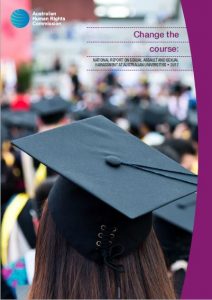
Following on from the very popular SafetyAtWorkBlog article about the report yesterday, it is worth looking at the AHRC recommendations in the occupational health and safety (OHS) context.

It should be noted that OHS places the principal responsibility on the employer, in this instance, the universities and the Vice-Chancellors.  Some have already started to call on the government to play a role, with implications that it should be leading the change: Continue reading “University sexual assault – an OHS perspective”

OHS is PHS (public health and safety) but government needs to catch up

The Australian Human Rights Commission has released a report into the prevalence of sexual harassment and sexual assault in Australia’s university campuses. It has revealed some shocking statistics and brings Australian universities into the global phenomenon of reassessing university obligations for the modern world.

Australia’s occupational health and safety laws and obligations could be used as a structure for preventing assaults and harassment if the government and universities would be brave enough to use them.

Subscribe to SafetyAtWorkBlog to continue reading.
Subscribe Help
Already a member? Log in here

What First Aid can say about a workplace culture

The Australian Financial Review for 31 July 2017 included an article (paywalled) reporting on unfair dismissal proceedings involving a first aid officer, Audrey Gatt, at Crown Resort‘s casino and entertainment complex in Melbourne, Australia. The article includes allegations by Gatt that First Aid was withheld from injured workers and patrons.

Subscribe to SafetyAtWorkBlog to continue reading.
Subscribe Help
Already a member? Log in here
Concatenate Web Development
© Designed and developed by Concatenate Aust Pty Ltd