
Important safety perspectives from outside the OHS establishment

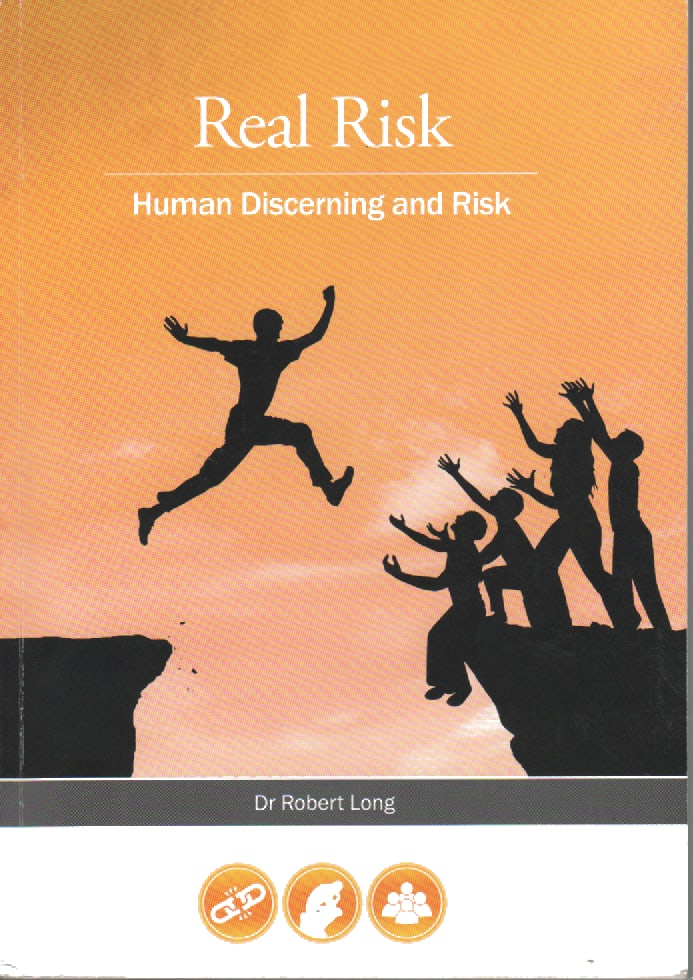
Real Risk - CoverWhen people mention safety, they are often really talking about risk.  In a similar way, people talk about the absurdity of ‘elf ‘n’ safety when they actually mean public liability or food safety or HACCP.  And when some professionals talk about risk management they mean minimising the cost to the employer or controlling reputational damage.

Recently two books were released that illustrate the limitations of the current Western/patriarchal society’s approach to workplace safety. Dr Dean Laplonge has written about gender and its role in making decisions and Dr Rob Long has written his third book on risk “Real Risk – Human Discerning and Risk“.  Both deserve close reading and that reading should be used to analyse how safety professionals conduct their work, the organisational environment in which they work and the cultural restrictions imposed in their technical education.

Laplonge has written a book out of the extensive research and training on gender issues in the mining industry.  “

Subscribe to SafetyAtWorkBlog to continue reading.
Subscribe Help
Already a member? Log in here

Safe Work Method Statements – their role, their use and their curse

Paul Breslin caused a stir in Australia’s OHS sector in 2013 with his costing of one element of managing high risk workplaces, the Safe Work Method Statement (SWMS).  In 2014, an update of Breslin’s research was published in The Australian and New Zealand Journal of Health, Safety and Environment (only available through subscription), in which he states that

“Industry stakeholders claim that the SWMS Process is no longer manageable and that this document process has failed the industry and has basically outlived its usefulness” [and] Recent “criticism has centred on the fact that SWMSs, which were intended to be easy to use documents, have often become so large and complex that they are impractical to use”.

(The latter statement was supported by speakers at a recent (poorly attended) Safety In Construction Conference in Melbourne, Australia.)

Some general industry criticism has been aimed at occupational health and safety (OHS) regulators such as the various WorkSafes and the

Subscribe to SafetyAtWorkBlog to continue reading.
Subscribe Help
Already a member? Log in here

The nonsense of Victoria’s non-harmonisation

[Guest post from Ross Macfarlane]

A rhetorical question: if you were an OHS advisor for, say, a Victorian construction company, would you prefer to rely on a regulatory guidance document issued in 2012, under legislation which is not in force in the State, or one which is well over 20 years old, and issued under another piece of legislation which is not in force in this State?

It is received wisdom in OHS professional circles that the continuing failure of Victoria and Western Australia to implement harmonised work health and safety laws is a triumph of politics over policy – a victim of lobbying by special interest groups, mostly of a conservative persuasion. It is a fact that the goal of nationally harmonised laws was established during John Howard’s Prime Ministership, but it is also a fact that the national model laws were adopted by the Council of Australian Government (COAG) in July 2008 (with a target date for adoption of 1 January 2012,) in a narrow window of time when Labor governments were in power in the Commonwealth and every Australian State and Territory.

I don’t wish in this article to dwell on the politics surrounding of the adoption, rejection or modification of the harmonised laws. Key ideological differences such as the magnitude of penalties and union right of entry are I believe of less consequence than the failure to adopt the common structure and common approach to regulation. Hence I want to focus on some of the anomalies and contradictions that have arisen in Victoria as a result of the laws not being adopted in this State. Continue reading “The nonsense of Victoria’s non-harmonisation”

Ministerial responsibility in finance but not in workplace safety

Ministerial responsibility seems to be advantageous in financial policies but irrelevant to workplace safety going by actions by Australia’s political leaders.  This week former senior (Labor) parliamentarians, Mark Arbib, Peter Garrett, Greg Combet and Kevin Rudd, will be fronting the Royal Commission into Home Insulation to explain their lack of due diligence on workplace safety matters.  This is only a week after the Federal (Liberal) Government released a Commission of Audit report that promoted ministerial responsibility.

The popular perspective is that these ministerial decision-makers will be held to account for the deaths of four young workers but this is unlikely to occur because State occupational health and safety (OHS) laws establish a direct OHS relationship between employers and employees and the senior politicians did not employ anyone who was installing home insulation.  The argument at the Royal Commission mirrors the chain of responsibility concept except that in work health and safety (WHS) legislation, government ministers are not covered by the definition of ‘officer’ and therefore have less OHS/WHS responsibility that anyone heading up a company or organisation.

Labour lawyer

Subscribe to SafetyAtWorkBlog to continue reading.
Subscribe Help
Already a member? Log in here

Can Broken Windows Theory help OHS?

There are very few innovations that originate from within the occupational health and safety (OHS) profession.  Most of the change seems to come from the application of external concepts to workplace activities and approaches.  Recently a colleague was discussing how some of the current OHS initiatives mirror the “broken windows” concept which originated in criminology in the United States.  In some ways Broken Windows Theory mirrors OHS positives but it may also reflect some of the negatives or OHS dead-ends.

Ostensibly Broken Windows Theory discusses how attention to small improvements may generate cultural change.  However the improvements introduced seem to have different levels of success depending on the context in which they are applied.  For instance in OHS, a construction site may mandate that protective gloves are worn for all manual activity but if there is a variable level of manual handling risk, the wearing of gloves will be an accepted practice in one area but haphazard in another.  The intention of a mandated safety requirement is to change the risk and safety culture of a workplace but the different levels of risk mean that the requirement can be seen as “common sense” in one area but unnecessary “red tape” in another.

The criminological application of the theory reached its peak in New York City in the 1980s and 1990s.

Subscribe to SafetyAtWorkBlog to continue reading.
Subscribe Help
Already a member? Log in here

Royal Commission and risk registers

Most of the Australian media is waiting for the former politicians to appear at the Royal Commission into the Home Insulation Program later this month but the Commission has not been quiet in its many public hearings recently.  One of the hearings heard evidence that is particularly significant and relates to risk registers.

According to 

Subscribe to SafetyAtWorkBlog to continue reading.
Subscribe Help
Already a member? Log in here

“It’s easier but it isn’t easy” – OHS leadership tips from IOSH

The Institute of Occupational Safety and Health (IOSH) recently uploaded a swag of videos to YouTube, ostensibly, to promote its upcoming conference.  One video asks if it is harder or easier to inspire leadership on OHS matters.  Most speakers believe it is easier because:

  • there is a stronger social expectation of higher safety standards,
  • managing people is more inclusive,
  • technology allows more effective communication,
  • leaders are coaches,
  • people have a greater awareness of how to be safe.

Some believe it is harder because:

  • it is more difficult to have faith in corporate leaders,
  • companies have a more complex structure of accountability and responsibility,
  • there is greater cynicism of corporate leaders due to the GFC in 2007.

One speaker at IOSH’s upcoming conference says “It’s easier but it isn’t easy” acknowledging past improvements and future challenges.

The IOSH videos are promoting the conference but there is food for thought in all of them.  Conferences in Australia have tried similar teaser ads (some including the author) for conferences but not to the extent that IOSH has through YouTube.  As safety conferences seem to be fading in both length and influence in Australia, such videos will become rarer but, as with rarity, the content may become more valuable.

Kevin Jones

Concatenate Web Development
© Designed and developed by Concatenate Aust Pty Ltd