

Many of the prominent Australian mining companies are in the process of changing their cultures to minimise the risk of sexual assaults and harassment after several recent damning inquiries into worker health and safety. Everyone seems to agree that cultural change can take a long time. I am not convinced. Change will take time if one operates within the existing organisational and operational parameters and structures. But sometimes, the harm to workers is so great that a long time exacerbates unfairness and injustice.
Category: law

Lively/Baldoni discussion misses the cause of the harm
Over the last few weeks, the media has been reporting on legal action taken by Blake Lively over accusations of sexual harassment on the film set of her movie “It Ends With Us”. The focus has been on the allegations of post-incident public relations manipulation, but this is obscuring the primary cause of the legal action – sexual harassment.

What should Victoria’s new WorkSafe Minister do now?
The Victoria Premier, Jacinta Allan, reshuffled her Cabinet and recently allocated responsibility for the Workcover and Transport Accident Commission portfolios to Deputy Premier Ben Carroll. This may be the first time a politician of that position has been given these portfolios. But what should Ben Carroll do now?
Continue reading “What should Victoria’s new WorkSafe Minister do now?”
Two new books that challenge our OHS beliefs
I know the basics of occupational health and safety (OHS), but I struggle to integrate those basics into the changing world of work. As such, I have been reading about work’s socioeconomic, political, and philosophical context and how I can adapt OHS to workers’ needs and employers’ desires. Two books I purchased last week are challenging my understanding of work and OHS. Unsurprisingly, neither of them is about OHS. We often learn more about our own OHS discipline from how others see it.

OHS must be careful discussing complacency
The latest edition of OHS Professional magazine carried a long article by Kerry Smith titled “Understanding and Combating Complacency in the Workplace.” The article uses examples at the worker level when the greatest risk posed by complacency is likely to be with managers, executives, their attitudes to safety, and their own safety management systems.
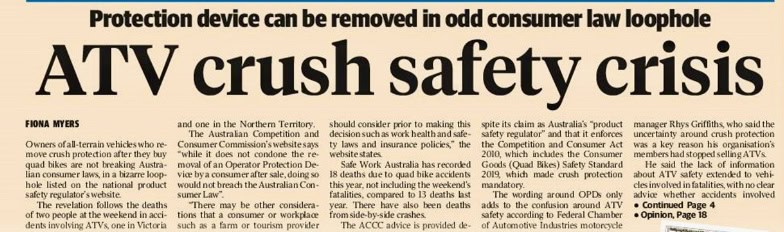
A cultural shift may require a re-analysis of moral priorities
Last week, The Weekly Times, a prominent Australian agriculture newspaper, reported on some peculiar behaviours by farmers and quad bike owners. Under laws introduced by the Australian Competition and Consumer Commission, removing vital occupational health and safety (OHS) operator protection devices is permissible. Why would farmers remove a critical safety device and endanger themselves and others?
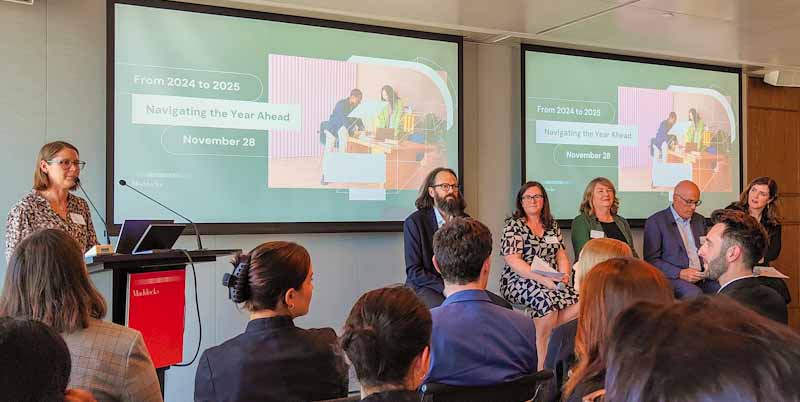
Latest OHS News from Maddocks
Last week, Maddocks law firm conducted an end-of-year summary of its workplace relations issues and a forecast for 2025. Occupational health and safety (OHS) are almost inseparable from industrial relations (IR), so the overlaps between the four or five topics discussed were enlightening and provided a good contrast to the information from other law sources.