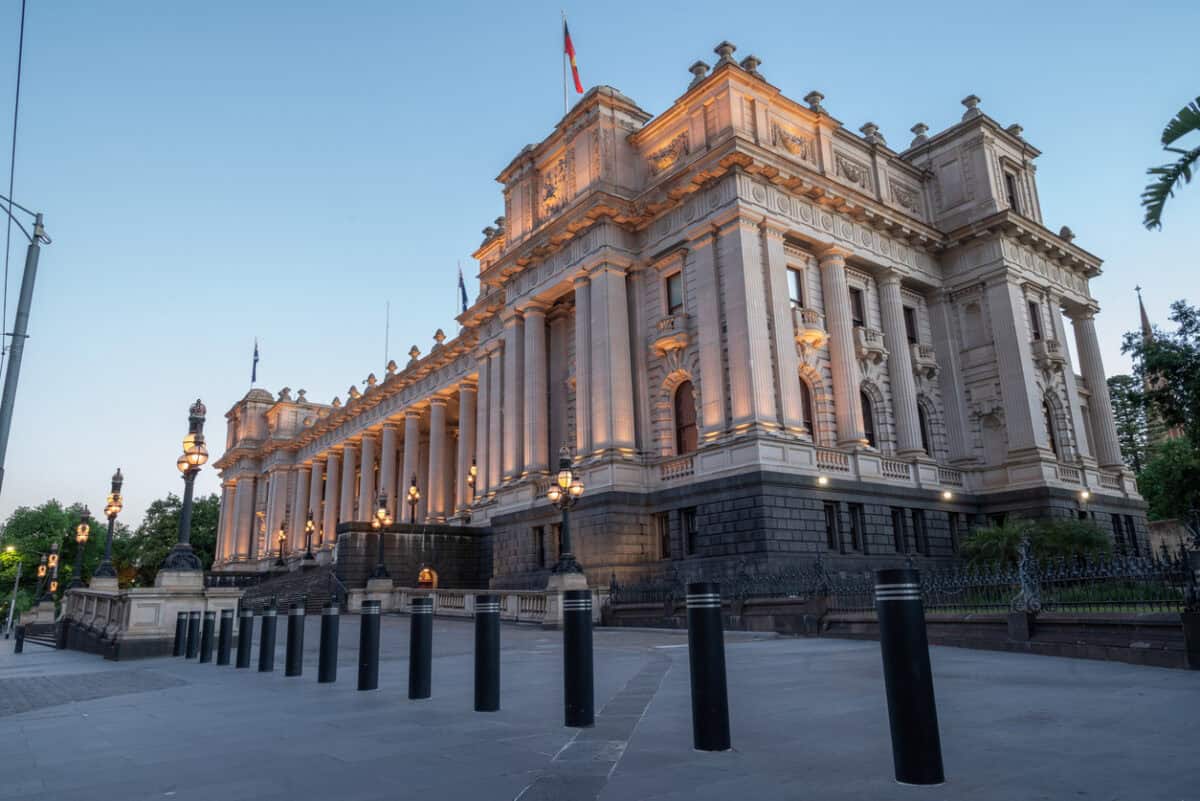
Occupational health and safety (OHS) is rarely addressed in election campaigns, and the Victorian election in November is likely no exception. However, there are OHS issues that need to be discussed and addressed, and there may also be a political advantage.
Category: law
The American Approach to Psychological Safety
Harvard Business Review (HBR) is an active publisher of articles on business management. In 2024, it released a collection of essays on psychological safety as part of its Emotional Intelligence series. HBR’s psychological safety advice is written for a U.S. corporate audience. It largely ignores the legislative duties that shape psychosocial risk management in Australia, so the advice should be considered with great caution.
When Ideology Masquerades as Analysis
I pride myself on listening to a broad range of views, so I purchased a recent book called “The Dark Legacy of Daniel Andrews – Assessing the Social and Economic Costs of Australia’s Most Controversial Premier“. Reading it stretched my patience as few of the various writers acknowledged that Premier Dan Andrews saved many lives during the COVID-19 pandemic, even though his very long lockdowns were economically and psychologically damaging.
I read this book looking for factual accuracy, analytical rigour, ideological framing, and relevance to OHS. It missed almost all my expectations.
How Regulatory Ideology Shapes Work Health and Safety Outcomes
Australian Treasurer Jim Chalmers and economist and Nobel Laureate Joseph Stiglitz are old friends. One of their conversations was turned into the lead article in the February edition of The Monthly (paywalled). Several of their thoughts impinge on how occupational health and safety (OHS) laws are applied and may be reformed.
The Psychosocial Hazard Australia Pretends Isn’t There
Last year, some Australian media, especially the right-wing press like Newscorp and its suite of commentators, were incensed when journalist Laura Tingle stated that she believed that Australia was a racist country. But statistics seem to support Tingle’s belief, and as occupational health and safety (OHS) operates within that culture, is it also racist?
A new discussion paper from OHS consultancy firm fr&nk (based on a series of LinkedIn posts) acknowledges racism is a problem and suggests ways to address this psychosocial hazard.
Wellbeing Budgets Sound Good but Workplaces Show the Truth
Citizen and worker well-being will not be a major focus of the Australian government’s budgets, but it will still influence them. Recently, Professor Paul Read assessed the Wellbeing Budget concept in The Australian Fabians Review (issue 8). His optimism is notable and helps us understand well-being in an occupational and psychological context.
Sovereign Citizens and Work Health and Safety
In Australia, the sovereign citizen movement has gained strength for some time, particularly since the COVID-19 pandemic. It is also, according to The Age newspaper recently, creating administrative problems for the courts – Flash juries and Bible verses: How sovereign citizens clog up Australian courts (paywalled). I began considering how I would manage a worker who held sovereign-citizen beliefs and might object to certain policies and directives used in the occupational health and safety (OHS) context.