
In the Weekend Australian newspaper, workplace relations journalist Ewin Hannan reported on a presentation (paywalled) made by the Employment and Workplace Relations Minister Tony Burke to the Attorney-General’s Department staff. (Safe Work Australia, currently, exists in this department) From Hannan’s report, the focus seems to have been on industrial relations but it’s useful to consider Minister Burke’s words from an occupational health and safety (OHS) perspective given that it is highly likely that Safe Work Australia personnel were one of the “hundreds” attending or listening in. Burke said:
Category: law

Look beyond employee perception surveys for clues about toxic workplaces
CNBC recently published an article called “These are the 5 biggest signs of a toxic workplace“. This American article by Jennifer Liu reflects a common approach in these types of articles of focussing on office-based work and not going beyond the Human Resources (HR) perspective, even when alternative data sources are available.
Those five signs are:

Expand “Safety Differently” to “Work Differently”
Occupational health and safety is as much at risk of hypocrisy as any other business element. Perhaps moreso as it is full of trite cliches. Many people find it easier to identify hypocrisy when it is shown by others and Australian media company SBS provided an example recently.
According to an article in The Age newspaper on June 26, 2002 (not yet available online, image below), SBS had commissioned an independent production company, Fell Swoop Pictures, to produce a series about the exploitation of food delivery gig workers. This is a legitimate topic for depiction, especially after five food delivery workers were killed in Australia recently over a short period of time. The income levels of this type of worker have been a feature of many of the concerns raised by trade unions and others, and that has been highlighted in several formal inquiries into the industry sector.
Sadly Fell Swoop Pictures promoted the opportunity to be an Extra in a series about exploitation without the Extras being paid!!
New Hopkins book aimed at CEOs
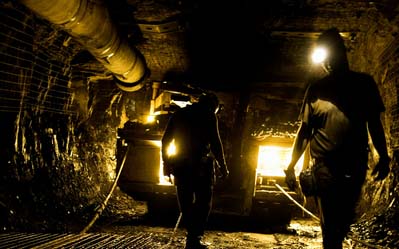
Professor Andrew Hopkins‘ latest book “Sacrificing Safety – Lessons for Chief Executives” complements Queensland’s Board of Inquiry into the Grosvenor mine fire in which five workers were severely burnt, a significant workplace incident for which the company, Anglo American, will not be prosecuted. Hopkins explains that the Board of Inquiry chose not to investigate the organisational causes of the incident; a situation this book seeks to redress.
The book starts with a bang in the Introduction, with a paragraph that will stay with me for some time due to its blunt honesty:
Not all suicides have a mental health condition
Most suicide prevention conferences I have attended have been dominated by mental health analyses, strategies and spruikers. The slow change in that dominance began around Professor Allison Milner’s research in 2018 and her questioning of the evidence of a mental health base but stalled with her untimely death a year later. A recent research paper in the American Journal of Preventive Medicine may be the spark to reignite the discussion on suicides that do not have a mental health connection.

Look to Enforceable Undertakings for OHS lessons
There are more work health and safety lessons from a Near Miss incident than a workplace death. There is also more information about how occupational health and safety (OHS) should be managed in an Enforceable Undertaking (EU) than there is from a prosecution.
Recently there were several EU’s in Queensland that illustrated these OHS management lessons. Here’s a discussion about one of them

On psychosocial hazards, HR and OHS are getting closer……. slowly
In narrow terms, the occupational health and safety (OHS) profession has largely neglected the management of psychological harm in workplaces. Human Resources (HR) has been the “go-to” on this issue, but various government inquiries have identified major shortcomings in the HR approach. In a recent podcast, Tony Morris of law firm Ashurst interviewed an HR and OHS professional on sexual harassment and psychosocial risks at work.
In response to the question of whether these risks are no being accepted as work health and safety risks, Julia Sutherland responded that this reality has been accepted by OHS regulators but implies that the acceptance has not been to the same extent by employers. She reassures employers who have not been approaching these hazards through OHS laws and guidance that they should not be alarmed as the OHS context has only existed for “a couple of years”.