Seeing OHS law as a social law could change how OHS is seen and its future

Occupational health and safety has traditionally been considered under the category of industrial, or industrial relations, but largely this is due to the major advocates of OHS being the trade union movement. So OHS seems to fit with workers’ rights under the issues of wages and conditions, but really OHS is a social law.

According to one definition social law is:

“…any law, rule or regulation (including international treaty obligations) applicable in any jurisdiction concerning 
– labour, 
– social security, 
– the regulation of industrial relations (between government, employers and employees),
– the protection of occupational, as well as public, health and safety, 
– the regulation of public participation, 
– the protection and regulation of ownership of land rights (both formal and traditional), immovable goods and intellectual and cultural property rights, 
– the protection and empowerment of indigenous peoples or ethnic groups, 
– the protection, restoration and promotion of cultural heritage, and 
– all other laws, rules and regulations providing for the protection of employees and citizens.”

OHS meets several elements of this definition.

Subscribe to SafetyAtWorkBlog to continue reading.
Subscribe Help
Already a member? Log in here

Latest OHS News from Maddocks

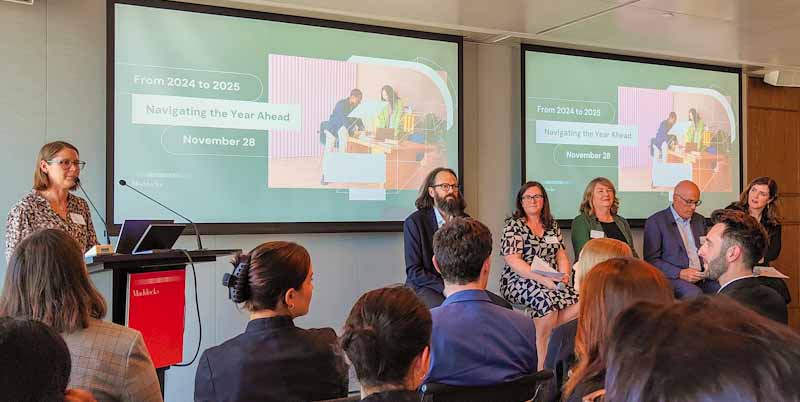
Last week, Maddocks law firm conducted an end-of-year summary of its workplace relations issues and a forecast for 2025. Occupational health and safety (OHS) are almost inseparable from industrial relations (IR), so the overlaps between the four or five topics discussed were enlightening and provided a good contrast to the information from other law sources.

Subscribe to SafetyAtWorkBlog to continue reading.
Subscribe Help
Already a member? Log in here

Latest OHS News from Herbert Smith Freehills

One of the most important sources of information about occupational health and safety (OHS) is seminars organised by law firms. A great example was a webinar hosted by Herbert Smith Freehills on October 30, 2024, as part of its Safety Leadership Series. It was a general discussion on Australia’s most prominent OHS issues but outlined increasingly significant consequences.

Subscribe to SafetyAtWorkBlog to continue reading.
Subscribe Help
Already a member? Log in here

“…the system isn’t broken. It was built this way” – Grenfell Tower and OHS

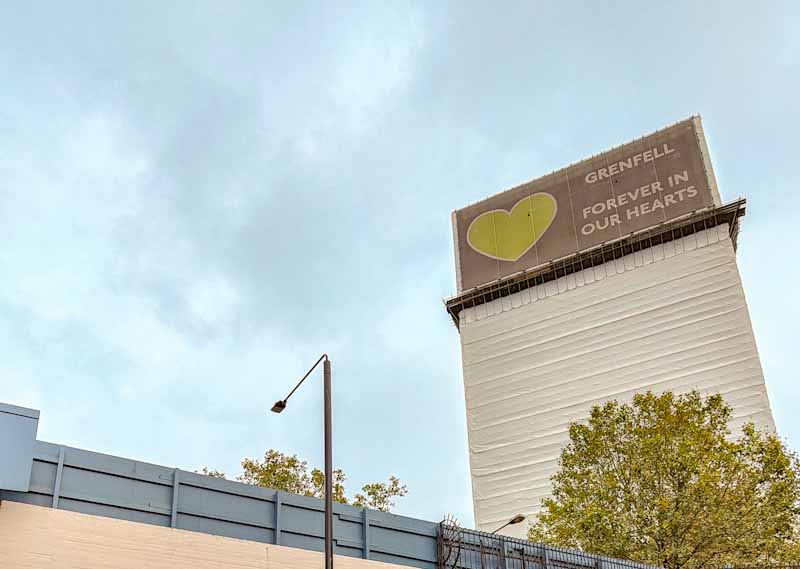
The inquiry report into the Grenfell Tower fire has yet to be seriously considered from the other side of the world. However, the report is being mentioned in Australia’s emergency services and fire sectors.  The inquiry has been thoroughly followed and analysed in the United Kingdom, and many excellent summaries have been published in newspapers, books, and podcasts. Australia’s cladding debate has not been to the same extent as the UK. Still, the UK’s structures, policies, processes, business ethics and neglect are certainly mirrored in Australia, which directly impacts how workplace health and safety operates here.

Subscribe to SafetyAtWorkBlog to continue reading.
Subscribe Help
Already a member? Log in here

OHS questions to ponder

When wearing a motorcycle helmet and motorscooting to and from the office, I (too?) often think about occupational health and safety (OHS) while, of course, being situationally aware (mostly). It is not quite the same as an isolation tank that turned William Hurt into a caveman and a blob, but the quiet allows contemplation.

Below are some of the questions and thoughts from those sessions. Usually, these percolate for a few weeks into a blog article, but I would appreciate readers’ and subscribers’ thoughts. A prize or reward will be sent to the most engaging subscriber.

Subscribe to SafetyAtWorkBlog to continue reading.
Subscribe Help
Already a member? Log in here

Trenching deaths and radio report

I am a fan of NPR’s radio program, All Things Considered. Occasionally, it reports on workplace health and safety matters. On July 19, 2024, it reported on the unacceptable number of deaths from trenching activities in the United States. The content was shocking and disappointing (the default setting for many reactions to occupational health and safety (OHS) matters), but the report’s format is an excellent example of journalism.

Subscribe to SafetyAtWorkBlog to continue reading.
Subscribe Help
Already a member? Log in here

Sentencing and OHS prosecutions but few solutions

Most submissions to the inquiry into Sentencing Occupational Health and Safety Offences in Victoria are now publicly available.  They raise a lot of different issues and some grumbles even though the Sentencing Advisory Council provided some structure to the topics it wanted addressed.

A major purpose of any penalty is to deter harmful and damaging actions from being repeated.  SAC reiterates that any sentence 

  • deters the offender and others from committing similar offences;
  • punishes the offender in a just manner;
  • facilitates the rehabilitation of the offender;
  • denounces the behaviour that the offender engaged in, and
  • protects the community from the offender. (page 7)

The CFMEU’s Dr Gerry Ayers opens his submission with Deterrence by quoting Gunningham and Johnstone from 1999, who wrote:

Subscribe to SafetyAtWorkBlog to continue reading.
Subscribe Help
Already a member? Log in here
Concatenate Web Development
© Designed and developed by Concatenate Aust Pty Ltd