HIP Royal Commission – Gross Negligence and Accountability

Little of the recent commentary on the findings of the Royal Commission into the Home Insulation Program (HIP) have mentioned the opinion of the Royal Commissioner Ian Hanger that the Australian Government acted in a “grossly negligent” manner.  Such a comment deserves considerable analysis by a specialist lawyer but it remains a remarkable criticism in terms of obligations under OHS/WHS laws.

Commissioner Hanger wrote:

“To encourage inexperienced young people to work in an environment where there was a risk of defective electrical wiring, and allow them to install conductive material was, in my opinion, grossly negligent. It is no answer for the Australian Government to say that it was the responsibility of those young people’s employers to protect them.” (para 5.2.20, emphasis added)

Gross negligence has been equated to the term “reckless endangerment” included in Australia’s Work Health and Safety laws.  One legal website site says that:

“Reckless endangerment is the offense of engaging in activity that has a disregard for risks with foreseeably dangerous consequences.”

Commissioner Hanger’s comments certainly seem to fit reckless endangerment as the risks, not only of electrocution but simply from working in domestic roof spaces, were well known.

Subscribe to SafetyAtWorkBlog to continue reading.
Subscribe Help
Already a member? Log in here

HIP Royal Commission – Risk Registers

Cover of ReportoftheRoyalCommissionintotheHomeInsulationProgramSafetyAtWorkBlog has written previously about the evidence of Margaret Coaldrake to the Royal Commission into the Home Insulation Program (HIP) given at the public hearings and also the occupational health and safety role of risk management and risk registers. The release of the Royal Commission’s final report on 1 September 2014 provides further details on a risk management process that is common to all large projects.

Commissioner Ian Hanger spent considerable time on the issue of the risk register as this was one of the crucial elements in the project’s whole decision-making process up to Ministerial level.

Risk Register

Commissioner Hanger was scathing of the risk management process that not only ignored the risk of worker fatalities but purposely dropped this risk from the register. He was unforgiving in his criticism of Margaret Coaldrake. He criticised her judgement. In working with her Minter Ellison colleague Eric Chalmers:

“it was up to [Coaldrake] to make sure that she and the people working with her were qualified to provide the service that Minter Ellison consultants had been retained to do.” (para 7.11.15)

Subscribe to SafetyAtWorkBlog to continue reading.
Subscribe Help
Already a member? Log in here

Important safety perspectives from outside the OHS establishment

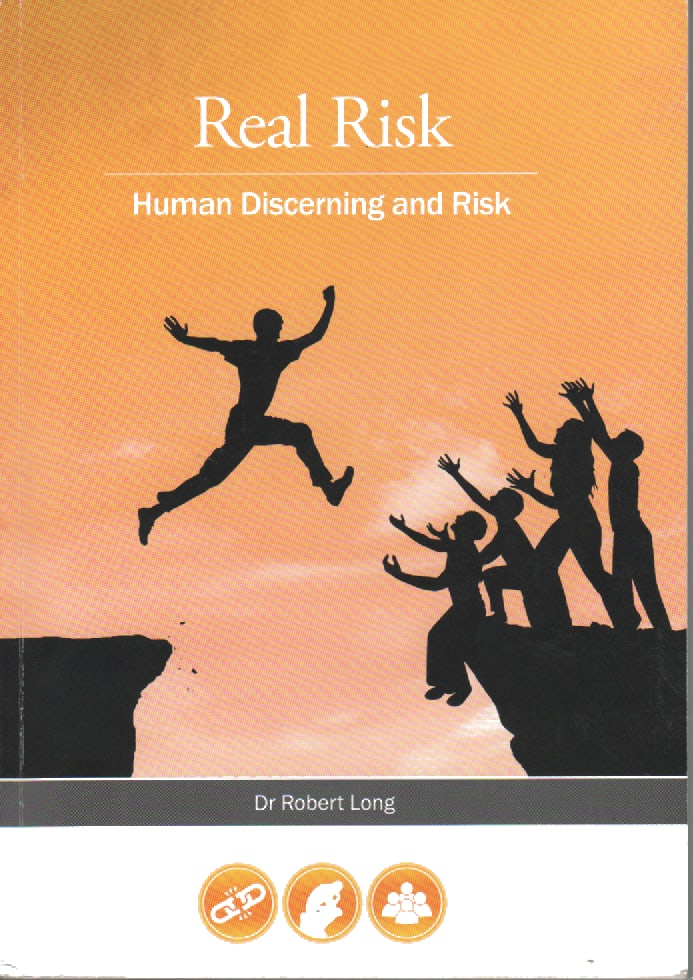
Real Risk - CoverWhen people mention safety, they are often really talking about risk.  In a similar way, people talk about the absurdity of ‘elf ‘n’ safety when they actually mean public liability or food safety or HACCP.  And when some professionals talk about risk management they mean minimising the cost to the employer or controlling reputational damage.
Recently two books were released that illustrate the limitations of the current Western/patriarchal society’s approach to workplace safety. Dr Dean Laplonge has written about gender and its role in making decisions and Dr Rob Long has written his third book on risk “Real Risk – Human Discerning and Risk“.  Both deserve close reading and that reading should be used to analyse how safety professionals conduct their work, the organisational environment in which they work and the cultural restrictions imposed in their technical education.

Laplonge has written a book out of the extensive research and training on gender issues in the mining industry.  “

Subscribe to SafetyAtWorkBlog to continue reading.
Subscribe Help
Already a member? Log in here

Analysis needed on new workplace bullying data

In December 2013 I wrote:

“The Age is correct in saying that claims of workplace bullying are “set to soar”. This has been predicted for some time, even privately by members of the Fair Work Commission, but the number of claims does not always indicate the level of a problem.” (link added)

Recently the Fair Work Commission (FWC) released its

Subscribe to SafetyAtWorkBlog to continue reading.
Subscribe Help
Already a member? Log in here

Disseminating OHS information should not be optional

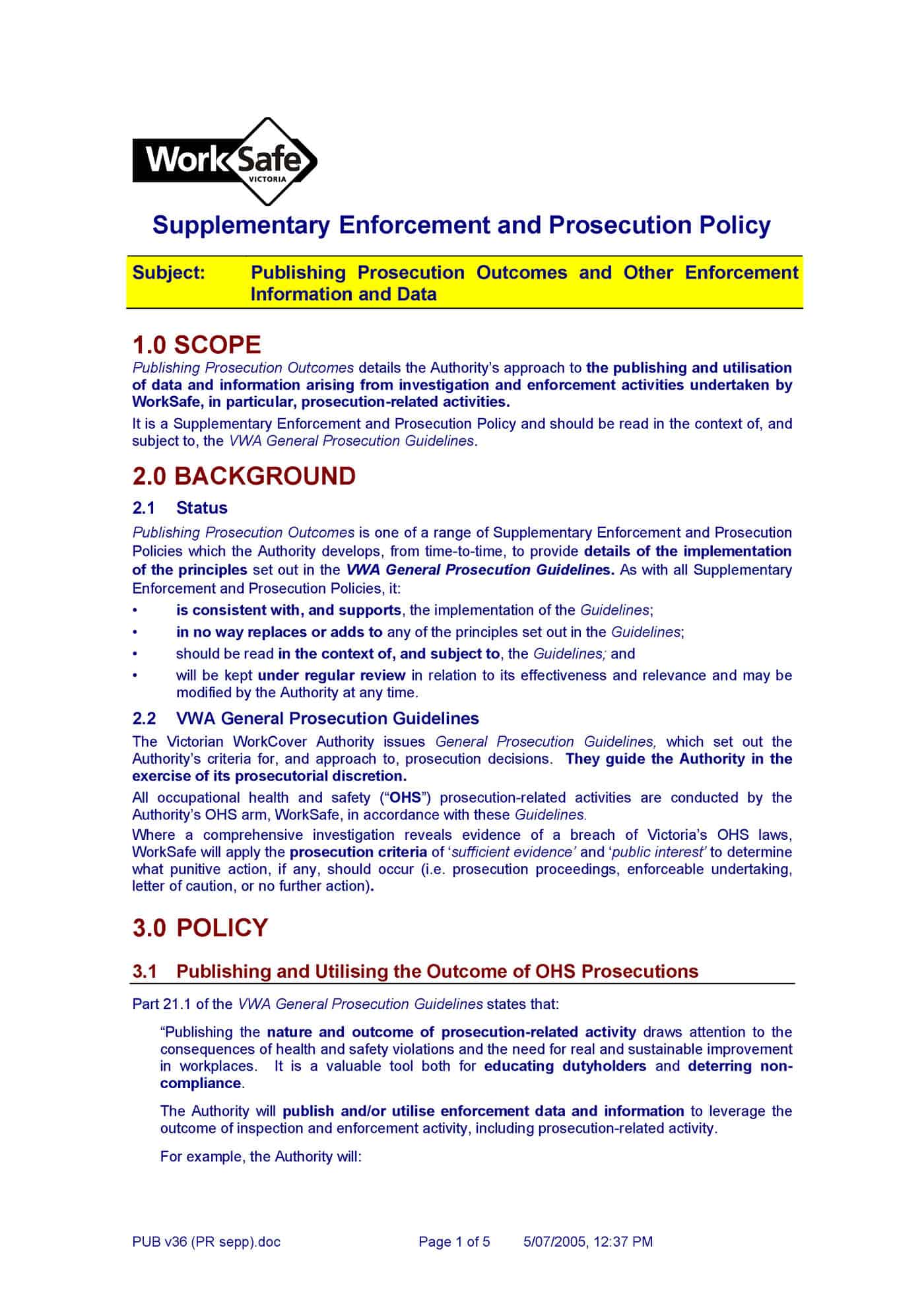
Cover of VWA publishing_prosecution_outcomes 2005WorkSafe Victoria has been reviewing a series of enforcement and prosecution policies for some time.  One of these policies set for re-issue relates specifically to the publication of prosecutorial information through its website and media releases and, although the “new” policy is not yet available, it may be worth remembering the previous policy, last revised in 2005.

Media Releases

WorkSafe Victoria’s “Supplementary Enforcement and Prosecution Policy on Publishing Prosecution Outcomes and Other Enforcement Information and Data” (no longer available on-line) says  that

“WorkSafe will release media statements and authorised representatives will grant media interviews, as appropriate, to the print, electronic, and/or broadcast media.” (original emphasis)

The reason behind this mode of dissemination, and others, is outlined elsewhere in the policy:

Subscribe to SafetyAtWorkBlog to continue reading.
Subscribe Help
Already a member? Log in here

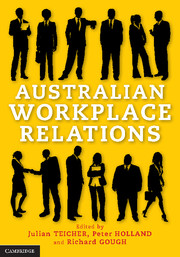
New industrial relations book does service to OHS (for a change)

It is common for industrial relations to be written about without any mention or serious analysis of occupational health and safety (OHS). But a new textbook on Australian industrial relations includes a very good chapter of OHS that, significantly, cross-references other chapters in the book to provide a unified approach that reflects both the title and its intent. The book is called “Australian Workplace Relations” and the workplace health and safety chapter is written by Elsa Underhill.

Underhill has written on the OHS effects of precarious employment extensively and this issue is the basis of her chapter.  She sees this as major cause of many of the OHS issues, particularly the growth in psychosocial risks in modern society and provides copious amounts of Australian and international research in support. Continue reading “New industrial relations book does service to OHS (for a change)”

Moral conflicts in store for Australian politicians and bureaucrats

iStock_000016528694XSmall2014 is going to present tough challenges to Australia’s politicians and corporate leaders.  The Royal Commission into the Home Insulation Program, in particular, is going to illustrate and perhaps generate ideological conflict.

The Home Insulation Program (HIP) was established quickly to address a looming economic crisis.  Politicians and business leaders wanted Australia to avoid the global recession and they needed creative solutions.  Various importance governance and safety elements appear to have been sacrificed to achieve the economic ends.  In 2014, the politicians of the time and bureaucrats will be grilled over why they made these decisions.  Various inquiries have already identified that these decisions contributed to the deaths of four young workers.  In 2014, these decision- and policy-makers will be held to account for the fatal consequences of their economic decisions.

There has long been a conflict between the pursuit of profit and the pursuit of safe working conditions.  The Royal Commission, and the surrounding debate, is likely to place this conflict squarely in the highest levels of Australia’s government and public service.  Below are some of the issues that the Australian government and business sector are likely to face in 2014. Continue reading “Moral conflicts in store for Australian politicians and bureaucrats”

Concatenate Web Development
© Designed and developed by Concatenate Aust Pty Ltd