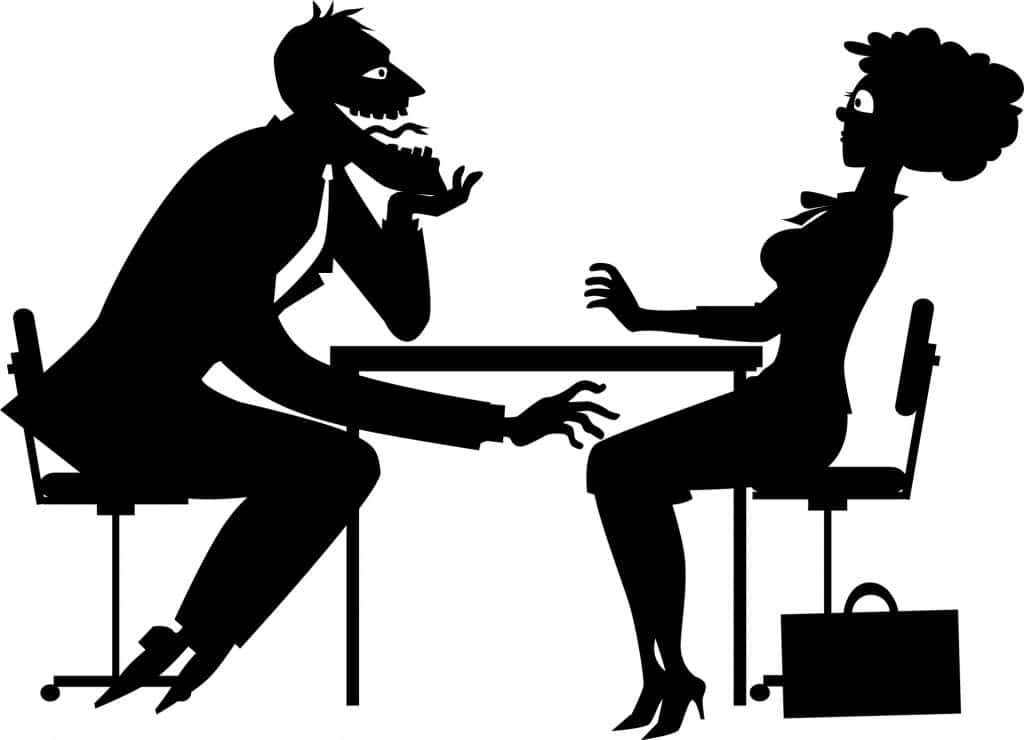
Sexual harassment changes are percolating slowly

Discussion on the report into sexual harassment in Australian workplaces went missing last weekend which included International Women’s Day. March 8 generalised much of the discussion on the need for new approaches to feminism, wages and gender equity. This is not to say that organisations had forgotten about the National Inquiry’s Final Report or the occupational health and safety (OHS) context, but few were as blunt about the issue as broadcaster Virginia Trioli and workplace lawyer Liberty Sanger on ABC radio this week.

Subscribe to SafetyAtWorkBlog to continue reading.
Subscribe Help
Already a member? Log in here

Can poor safety management = negligence?

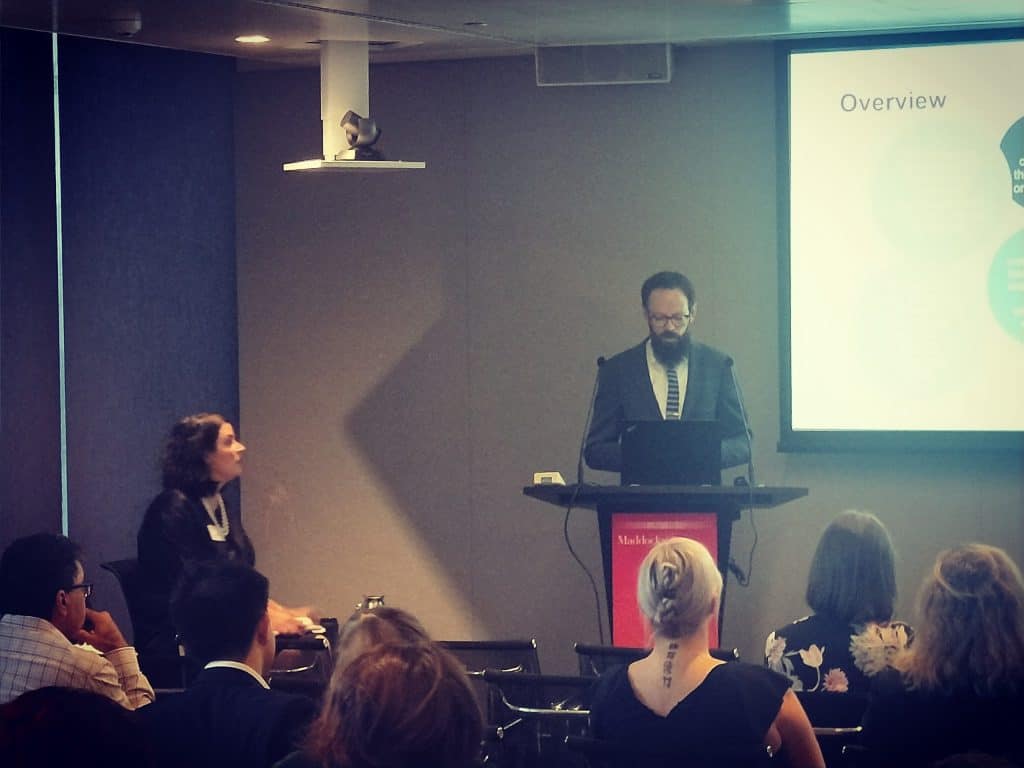
L to R: Catherine Dunlop and Dale McQualter

In relation to the release, last week, of the Brady Review SafetyAtWorkBlog wondered:

“It is worth asking whether a reliance on Administrative Controls could be interpreted as a level of negligence that could spark an Industrial Manslaughter prosecution.”

A seminar hosted by law firm Maddocks this week offered an opportunity to pose this as a question.

Subscribe to SafetyAtWorkBlog to continue reading.
Subscribe Help
Already a member? Log in here

Industrial Manslaughter – politics, suicide and misrepresentation

The 2020 business year has started with a bunch of occupational health and safety (OHS) seminars. Given last year’s moves towards Industrial Manslaughter laws in several Australian States, a discussion of these laws is inevitable and there are some voices calling out the politics of the issue. Herbert Smith Freehills’ Steve Bell is one of them.

Subscribe to SafetyAtWorkBlog to continue reading.
Subscribe Help
Already a member? Log in here

OHS law could prevent the psychological harm of sexual harassment

The prevention of psychological harm generated by sexual harassment has been a recurring theme in the SafetyAtWorkBlog. It is heartening to see similar discussions appearing in labour law research.

An article, published in the Australian Journal of Labour Law, called “Preventing Sexual Harassment in Work: Exploring the Promise of Work Health and Safety Laws” written by Belinda Smith, Melanie Schleiger and Liam Elphick strengthens the role that occupational health and safety (OHS) laws can play in preventing sexual harassment and its harm.

Subscribe to SafetyAtWorkBlog to continue reading.
Subscribe Help
Already a member? Log in here

Consumer Product Safety System review should be on the OHS radar

Following on from the product safety theme in yesterday’s article, it is noted that the Australian Treasury has opened a consultation phase on improving the effectiveness of the Consumer Product Safety System. The report makes specific reference to workplace health and safety laws.

This consultation is a direct result of the recent review of Australian Consumer Law:

“The Australian Consumer Law Review final report recommended the introduction of a General Safety Provision (GSP) into the Australian Consumer Law (ACL) requiring traders to take reasonable steps to ensure the safety of a product before selling it onto the market.”

page 7

The GSP has similarities to the duties of the PCBU (person conducting a business or undertaking) under the model Work Health and Safety (WHS) laws.

Subscribe to SafetyAtWorkBlog to continue reading.
Subscribe Help
Already a member? Log in here

Looks good but could be better

The Australian Financial Review on October 1 2019 contained an exclusive report on consulting firm (paywalled) Deloitte’s approach to mental health at work matters coinciding with National Safe Work Month. The original document is unlikely to be publicly released but Edmund Tadros‘ report provides some quotes and insights. The initiative seems very positive until you consider it in light of organisational changes recommended to control and prevent this psychological hazards from Safe Work Australia (SWA) guidance.

Tadros quotes Deloitte’s Australian CEO Richard Deutsch:

“Mr Deutsch said in the message that individual differences could mean “what I find stressful you may find motivating, and vice versa. I don’t want anyone to feel their health and wellbeing is compromised because of work”.

This broad statement fits with the employer’s duties under occupational health and safety (OHS) laws, so it’s a good start. But doubts about the strategy start to emerged when Deutsch mentions workload, a contentious issue for Deloitte’s junior staff:

Subscribe to SafetyAtWorkBlog to continue reading.
Subscribe Help
Already a member? Log in here

Communicating about OHS in New Zealand

Safety conferences rarely generate media interest unless the relevant occupational health and safety (OHS) Minister is speaking or there has been a recent workplace death or safety scandal. At the recent SafetyConnect conference held by the NSCA Foundation in Melbourne, SafetyAtWorkBlog was able to chat with the Editor of New Zealand’s SafeGuard magazine, Peter Bateman. Peter has been editing the magazine and writing about workplace health and safety for a long time and, as an outsider to the OHS profession, he has some useful perspectives on how to communicate about safe and healthy workplaces.

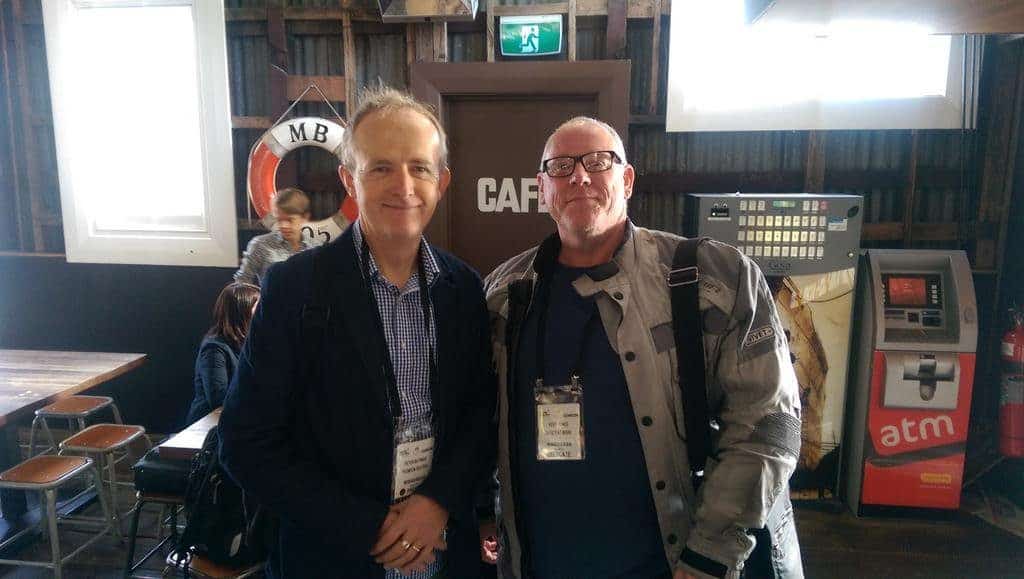
Peter Bateman and Kevin Jones in 2015

SAWB: Peter, great to see you at the Safety Connect conference in Melbourne, hosted by the National Safety Council of Australia Foundation.  So, day one, thanks for coming over from New Zealand.  You’ve been coming to safety conferences for a long time.  How important are safety conferences to your magazine given that Safeguard runs its own conferences as well?

PB: We’ve had the opportunity, through growing the credibility of the Safeguard brand through the magazine, that’s given us I think the trust and the credibility with readers so that when we launched the awards actually, the first event we launched way back in 2005 and then the main conference a couple of years later.  And they were small, but they were successful in their own way and we’ve just been fortunate to grow them year on year, so New Zealand Workplace Health and Safety Awards have been going for 15 years and the main Safeguard National Health and Safety Conference for almost as long.  Then from that we’ve managed to create some more specialist one-day conferences as well.

SAWB: I think I’ve seen a LegalSafe one.

PB: LegalSafe, which is more on the compliance side for those people who want more compliance side even though that’s not my particular area of interest.  But I recognise that a lot of people are very focused on compliance and fair enough.  Then more recently we’ve developed HealthyWork which started off as a way of bringing together traditional occupational health interests with the emerging wellbeing side but has really gone more into the wellbeing and psychosocial stuff as we’ve progressed. And in the last couple of years we’ve launched SafeSkills for H&S reps.

Subscribe to SafetyAtWorkBlog to continue reading.
Subscribe Help
Already a member? Log in here
Concatenate Web Development
© Designed and developed by Concatenate Aust Pty Ltd