A mouse that is trying to roar

Robert Gottliebsen continues to support the campaign led by Self-Employed Australia’s Ken Phillips, to have senior members of the Victorian government prosecuted for breaches of the Occupational Health and Safety (OHS) Act. However, his arguments are becoming weaker.

On February 13 2022, in his column in The Australian (paywalled), Gottliebsen made big claims for Phillips’ legal action, which is being crowdfunded and advised by anonymous (but “some of Australia’s top OHS”) lawyers. He concluded his latest article saying:
Subscribe to SafetyAtWorkBlog to continue reading.
Subscribe Help
Already a member? Log in here

Good COVID OHS book

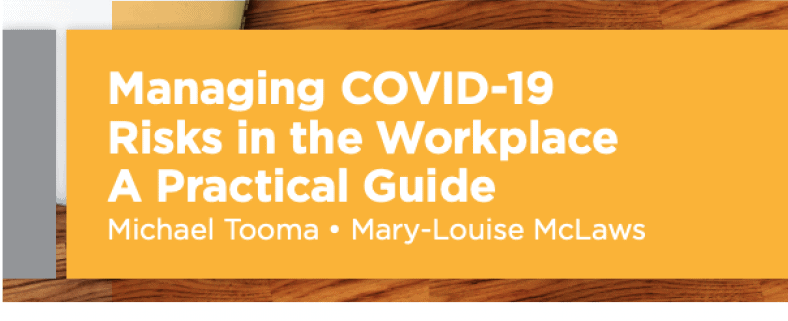
Late last year, lawyer Michael Tooma and epidemiologist Mary-Louise McLaws published “Managing COVID-19 Risks in the Workplace – A Practical Guide”. Given how COVID-19 is developing variants, one would think that such a hard copy publication would date. However, the book is structured on the occupational health and safety (OHS) obligation of managing risks, and whether the variant is Delta, Omicron or Omega (if we get that far), the OHS principles and risk management hold up.

Subscribe to SafetyAtWorkBlog to continue reading.
Subscribe Help
Already a member? Log in here

Danger Money corrupts OHS

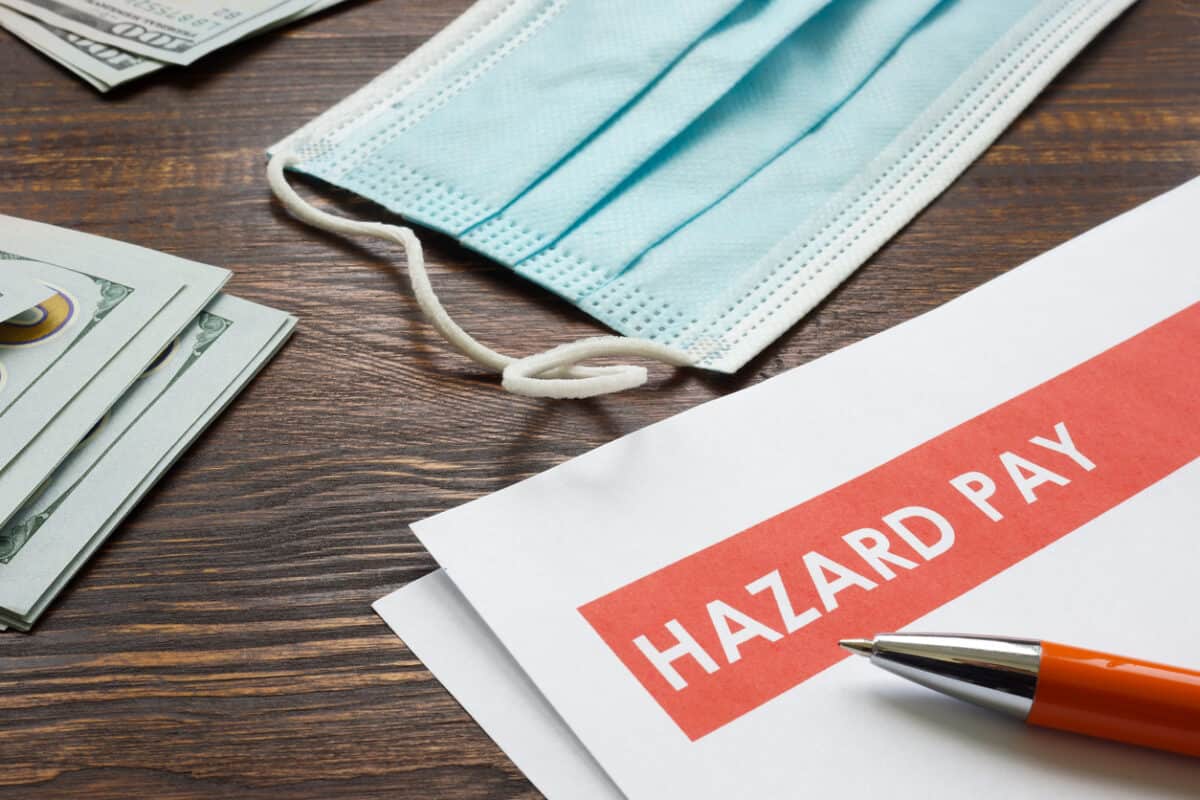
The traditional manner for employers to get unsavoury or hazardous work tasks done is to offer more money. This is referred to as Danger Money in some countries and Hazard Pay in others. There has been a resurgence in Danger Money during the COVID-19 pandemic, offered by some employers and requested by some workers and unions. This negotiation is a collaborative avoidance of both groups’ occupational health and safety (OHS) obligations and should be opposed vigorously by OHS associations and advocates.

Subscribe to SafetyAtWorkBlog to continue reading.
Subscribe Help
Already a member? Log in here

Lessons for many in the prosecution of Pipecon

The prosecution of Pipecon over two of its workers who died in a trench collapse in March 2018 has opened in Ballarat’s County Court this week. Day one of the plea hearing was reported in the local newspapers and provided details of the circumstances of the events leading up to the deaths of Charlie Howkins and Jack Brownlee.

The investigation of Pipecon generated great bitterness in Ballarat and not only for the Howkins and Brownlee families. There were strong rumours that Pipecon would plead not guilty and argue that their workers were responsible for the trench collapse. Understandably people were angry that the responsibility for the worksite would be transferred to the dead workers.

Several weeks ago, the Court heard that Pipecon would plead guilty to breaches of the Occupational Health and Safety (OHS) Act. Those alleged breaches are being presented in the current plea hearing. As the case is being heard in the County Court, in time, additional details of the findings of the Court will be publicly released, as opposed to cases heard in the Magistrates’ Court.

Subscribe to SafetyAtWorkBlog to continue reading.
Subscribe Help
Already a member? Log in here

COVID vaccination concerns exist in workplaces too

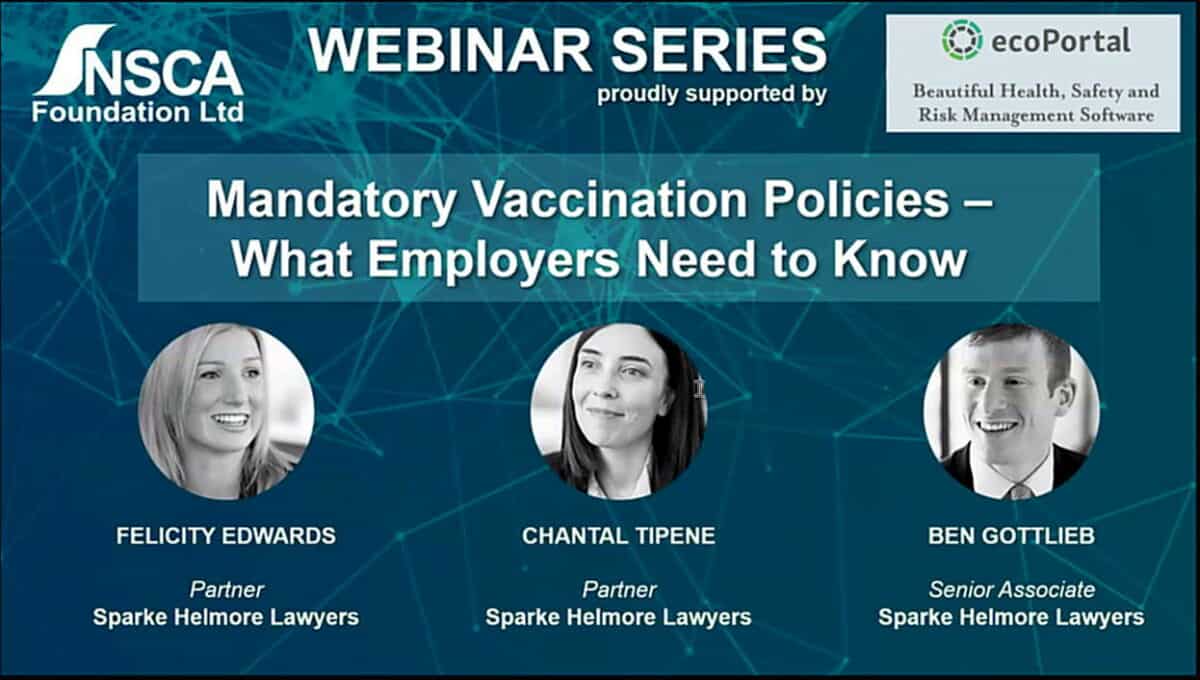
Recently NSCA Foundation conducted an online seminar on mandatory vaccinations. As happens with many online seminars, this one became more of a lecture because there was insufficient time allocated to answer the questions from the audience. The online seminar was in three sections – Occupational Health and Safety (OHS), Industrial Relations (IR) and Privacy. The information from Sparke Helmore lawyers was fine and current, but the questions from the audience provide an interesting insight on some of the main COVID vaccine challenges facing employers.

The seminar started with a useful poll. Below are the questions and results:

Subscribe to SafetyAtWorkBlog to continue reading.
Subscribe Help
Already a member? Log in here

Time for a rebrand to Organisational Health and Safety?

Outside of unionised workplaces, psychological hazards are usually managed as part of the Human Resources (HR) function. HR’s principal reference point is the industrial relations (IR) laws. Occupational health and safety (OHS) overlaps with IR and HR but is usually treated as the annoying little brother following his siblings, who know better because they are older and closer to adulthood.

This situation must change for employers to effectively prevent mental ill-health in their workplaces, but it will require more concessions, or maturity, from Human Resources professionals. Lawyer Alena Titterton hinted at this change in a recent article for the Australian Institute of Health and Safety.

Subscribe to SafetyAtWorkBlog to continue reading.
Subscribe Help
Already a member? Log in here

Ventilation is an obvious COVID-19 control but could be a bugger to use

Vaccines are currently the most effective tool available to minimise the spread of COVID-19 to large populations. Fortunately, effective vaccines have been able to be manufactured at such a rapid pace. But previous pandemics have not had vaccines and have had to rely, primarily, on hygiene and isolation. Part of the hygiene practice was to ensure that buildings were well-ventilated. Ventilation actions on COVID-19 were part of Europe’s response to the pandemic in 2020, but Australia has only just started to accept the need for improved ventilation as it was very late to the risks of aerosol transmission.

As vaccinated workers return to workplaces in many of Australia’s urban centres, employers will need to assess their occupational health and safety (OHS) duties in new ways, and ventilation will be a significant challenge.

Subscribe to SafetyAtWorkBlog to continue reading.
Subscribe Help
Already a member? Log in here
Concatenate Web Development
© Designed and developed by Concatenate Aust Pty Ltd