We let people off the hook when we keep talking about organisations and corporations

Over the last few decades, occupational health and safety (OHS) thinking has emphasised that the tangible hazards and risks at work are primarily created by unsafe systems of work or by poor organisational culture or maturity.

I am not sure that “organisational” is the most appropriate adjective. There are better alternatives: terms that re-humanise the decision-making process and acknowledge that culture comprises people.


Subscribe to SafetyAtWorkBlog to continue reading.
Subscribe Help
Already a member? Log in here

What changes does Leadership Require

In the landscape of occupational health and safety (OHS), executive leadership is often framed through the lens of compliance. However, as I and others have long argued, the law is the minimum; leadership must aim higher. Across hundreds of SafetyAtWorkBlog articles, a consistent theme emerges – safety leadership must evolve from bureaucratic oversight to moral accountability.

Continue reading “What changes does Leadership Require”

Unsafe Back Then, Unsafe Now. Why Leadership Must Change

To truly understand occupational health and safety (OHS) issues, it is necessary to examine OHS concerns beyond one’s own industry. Recently, this blog has reported on some parliamentary debates on OHS in the horse racing industry. The November edition of The Monthly includes an exposé of the OHS of Australia’s horse racing industry by freelance writer, Madison Griffiths, with lessons for all of us on morality, Godliness, accountability and leadership. The article is paywalled but well worth the purchase.

Subscribe to SafetyAtWorkBlog to continue reading.
Subscribe Help
Already a member? Log in here

Why Known Hazards Still Kill – Falls from Heights

Recently WorkSafe Victoria revealed that in 2025:

“In the first half of this year, 174 Workcover claims have been lodged from the construction industry, from falls alone. A further 34 businesses have been charged and another 28 duty holders faced legal action, accumulating more than 2.54 million in fines, undertakings and costs. That already tops the entire 2024 figure of $1.65 million from 33 charged or prosecuted entities.”

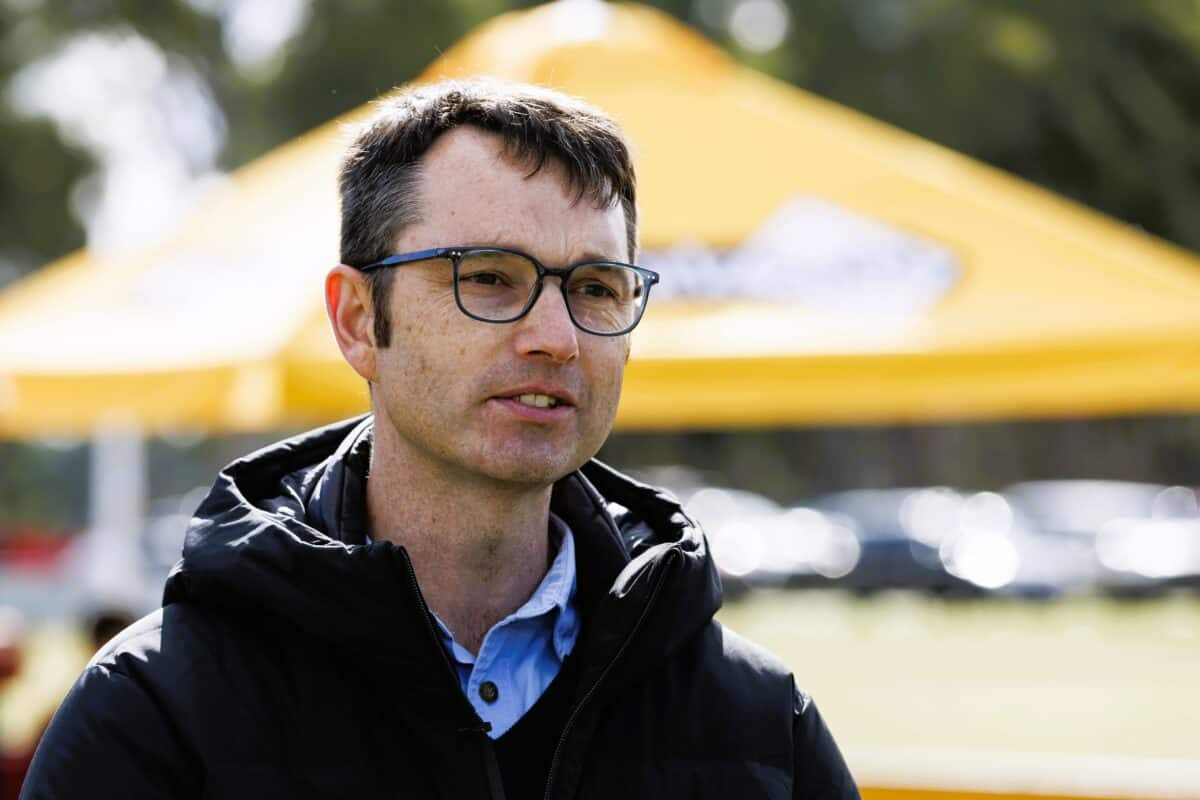
I had the opportunity to ask WorkSafe’s Chief Health and Safety Officer, Sam Jenkin (pictured above), why such a well-known workplace hazard persists.

Subscribe to SafetyAtWorkBlog to continue reading.
Subscribe Help
Already a member? Log in here

Why do we need a “positive duty” to prevent harm?

In 2023, a Royal Commission into Violence, Abuse, Neglect and Exploitation of People with Disability recommended that the Commonwealth Disability Discrimination Act 1992 be amended to introduce a positive duty on all duty-holders to eliminate disability discrimination, harassment and victimisation. This echoes the imposition in 2022 of a positive duty to prevent sexual harassment. Occupational health and safety (OHS) legislation has had its positive duty to prevent work-related harm since 1985. So why this current push for positive duties?

Subscribe to SafetyAtWorkBlog to continue reading.
Subscribe Help
Already a member? Log in here

Governments should set the OHS bar much higher

It should be clear to readers by now that I am not a lawyer. My interest is in the practical application and compliance with occupational health and safety (OHS) laws. Those laws often encouraged employers to look for the source of workplace harms and hazards, with government agencies advising that addressing these causes is the most effective and cost-effective way to manage OHS. In this context, it seems to me that clients can significantly influence OHS, as they may be a major source of work-related harms and risks. But their role is often downplayed.

Subscribe to SafetyAtWorkBlog to continue reading.
Subscribe Help
Already a member? Log in here

When Leadership Fails the Soul

Dean Yates is a prominent Australian speaker on the issue of moral injury. Yesterday, at a WorkSafe Tasmania seminar, Yates brought the 250 attendees up to date on the status of moral injury and its occupational context. Although this seminar was a Safe Work Month event, Yates’ information requires some thought to fit with the occupational health and safety (OHS) and psychological hazards contexts.

Subscribe to SafetyAtWorkBlog to continue reading.
Subscribe Help
Already a member? Log in here
Concatenate Web Development
© Designed and developed by Concatenate Aust Pty Ltd